- •Mold that grew from a covered water event (storm-created opening, burst pipe) is usually covered, mold from flood, surge, or long-term leaks usually isn't.
- •Coverage is capped by a fungi sublimit, $10,000 is a common Florida default; buy-up endorsements run $25K-$50K. Whole-house post-storm remediation can cost $10K-$30K+.
- •On a typical form the sublimit caps mold remediation only, the underlying water damage repair is paid under ordinary dwelling coverage, outside the cap. Policies vary; read yours.
- •The timing trap: carriers read mold as proof of "constant or repeated seepage" and deny the whole claim. Dated photos + mitigation records defeat it.
- •Mold colonizes wet materials in 24-48 hours (EPA/CDC). Report it as a supplemental storm claim fast, FL runs a 1-year / 18-month clock.
Mold follows the water, legally, not just physically
Mold is almost never a covered peril in its own right. Standard homeowners forms exclude "fungi, wet or dry rot, or bacteria" as a cause of loss, and then give a slice of coverage back when the mold is the result of something the policy does cover. The legal question in every mold claim is therefore not "is there mold?" but "what water made it grow?"
If the water was covered, rain entering through a wind-created roof opening, a burst supply line, an appliance discharge, the resulting mold generally comes back into coverage through the limited-fungi provision, subject to the sublimit discussed below. If the water was excluded, rising flood or storm surge, groundwater, or the long-term seepage the carrier could not have known about, the mold that follows it is excluded too. One organism, two completely different claims, decided entirely by the plumbing of the policy.
THE EXCLUSION: TYPICAL "FUNGI, WET OR DRY ROT, OR BACTERIA" WORDING"We do not insure for loss caused directly or indirectly by … constant or repeated seepage or leakage of water … over a period of weeks, months or years … [or] loss consisting of, or caused by, 'fungi', wet or dry rot, or bacteria."
THE GIVE-BACK: TYPICAL "LIMITED FUNGI" COVERAGE WORDING"We will pay up to the Limited Fungi, Wet or Dry Rot, or Bacteria limit shown in the Declarations … for loss caused by 'fungi', wet or dry rot, or bacteria, when such loss results from a Peril Insured Against … This is the most we will pay regardless of the number of occurrences, locations, or claims made."
Read both boxes in your own policy, wording varies by carrier and form year, and the declarations page states your actual fungi limit. Two structural points matter. First, the give-back is an aggregate cap: testing, tear-out of contaminated materials, treatment, and remediation labor all draw from the same pool. Second, the cap applies to the mold work, the underlying covered water damage (the roof, the saturated drywall that had to come out regardless, structural drying) is payable under your ordinary dwelling limit, outside the cap. Carriers that stuff the whole water loss under the fungi sublimit are misallocating the scope, and that is contestable.
The sublimit ladder, and what remediation actually costs
Fungi sublimits are a scar from the early-2000s mold-litigation crisis, when eight-figure verdicts made uncapped mold exposure untouchable for carriers. The industry's answer was the structure above: exclude, then restore a capped amount. In today's Florida market, $10,000 is a common default, Citizens' forms carry limited fungi coverage at that order of magnitude, and some admitted carriers write it as low as $5,000, with optional buy-up endorsements at $25,000 and $50,000 for additional premium. Now put those numbers against the cost curve.
The mold sublimit ladder vs. what remediation runs
The two cost bars are example figures placed within cited survey ranges, and the three limit bars are common FL-market form values, put on one dollar scale ($0-$50K) only to show how a fixed fungi sublimit relates to cleanup cost. The point is the gap, not any exact number.
Sublimits are aggregate, testing, tear-out, and treatment all draw from the same pool.
What's assumed here: the two cost bars ($3.8K single-area, $30K+ whole-house) are single example points chosen inside the cited survey ranges (HomeAdvisor's $1,223-$3,756 typical job; This Old House's $10K-$30K whole-house) to show scale. They are not quotes, averages for your job, or survey data, and real remediation cost varies widely by region, mold extent, materials, and access. The $10,000 / $25,000 / $50,000 limits are common FL-market form values (Citizens and admitted-carrier fungi endorsements); your declarations page states your actual fungi limit, which may differ. Get a real written estimate and read your own policy, do not rely on these numbers.
ILLUSTRATIVE EXAMPLE · COST POINTS DRAWN FROM HOMEADVISOR 2025 ($1,223-$3,756 TYPICAL JOB) & THIS OLD HOUSE 2026 ($10K-$30K WHOLE-HOUSE) · LIMIT BARS = COMMON FL-MARKET FUNGI FORM VALUES
The chart is the argument for two practical moves. Before the storm: price the buy-up, the step from $10,000 to $25,000 of fungi coverage is usually cheap relative to what it buys back. After the storm: police the allocation. Every dollar of ordinary water-damage repair the carrier books against the fungi sublimit is a dollar of cap capacity you lose, and once the sublimit is exhausted on misallocated scope, the carrier will call the remaining mold work "over the limit."
The timing trap: when your mold becomes their evidence
Here is the move that turns a capped mold claim into a total denial. Mold takes time to become visible. You find it weeks after the storm, behind a baseboard or inside a closet wall, and you report it. The carrier's adjuster photographs mature growth and staining and writes the loss up as the product of "constant or repeated seepage or leakage of water over a period of weeks, months or years", the long-term-leak exclusion in the first callout box above. Now the mold is not a covered consequence of the storm; it is the carrier's proof that your roof or plumbing leaked long before the storm, and the entire water claim, drywall, flooring, roof interior, goes down with it.
The trap works because it inverts the biology. Mold does not need months: EPA and CDC guidance puts initial colonization of wet building materials at 24 to 48 hours, with visible growth commonly developing within one to three weeks. Mature-looking growth a month after landfall is exactly what a single storm-date intrusion produces when a house sits without power, air conditioning, or dry-out in a Florida or Lowcountry summer. The carrier's "this took months" narrative is an opinion, and it is beatable with dated evidence: photos of the intrusion on the storm date, mitigation invoices from the days after, moisture readings, and an independent assessor's source-and-age opinion. In Florida, Sebo's concurrent-causation doctrine adds a second front: where covered wind-driven water and an excluded contributor combine and the policy lacks anti-concurrent-causation wording, the exclusion does not automatically control.
The four standard mold denials
"Long-term seepage, not the storm"
The timing trap above. The mold’s maturity is offered as proof of a pre-existing leak, and the seepage exclusion takes down the whole water claim. Counter: dated intrusion evidence + the 24-48-hour colonization science + assessor opinion.
"Excluded water source"
Mold traced to flood or surge water is excluded with the flood loss itself. That fight belongs to the flood policy and the surge-vs-wind allocation war. Counter: establish the covered entry point (roof opening, wind-driven rain through a breach) for the water that actually fed the growth.
"Everything is under the fungi cap"
The carrier books roof repair, drywall replacement, and structural drying against the fungi sublimit (commonly $10,000 in the FL market) and declares the claim exhausted. Counter: allocation. On a typical form only mold assessment, containment, removal, and treatment belong under the cap; covered water repairs are ordinary dwelling scope. Policies vary; read yours.
"Failure to mitigate"
Policies impose a duty to take reasonable emergency measures. Carriers argue the mold grew because you didn’t dry the house fast enough, even when power was out countywide for two weeks. Counter: document what was possible when: outage records, contractor availability, mitigation receipts, and access restrictions.
A denial letter that arrives with any of these theories is the start of the file, not the end of it. The anatomy-of-a-denial-letter guide covers how to read the cited provisions against your actual policy, and the wind-driven-rain guide covers the entry-point fight that usually decides which water fed the mold.
Remediation done right: containment, tear-out, clearance
Professional remediation follows a defined protocol, the IICRC S520 standard is the industry reference, and EPA guidance draws the DIY line at about 10 square feet of visible growth. Anything larger, or anything inside wall cavities and HVAC systems, is professional work. The protocol matters to your claim because every step generates the documentation that proves scope: what was contaminated, what had to come out, and what it cost.
The sequence: an assessment maps the contamination and identifies the moisture source; a remediation protocol is written from it; the work area goes under containment, sealed polyethylene barriers with negative air pressure and HEPA-filtered exhaust, so tear-out doesn't seed spores through the rest of the house; contaminated porous materials (drywall, insulation, carpet) are removed and bagged, semi-porous surfaces are HEPA-vacuumed and treated; drying equipment brings the structure back to normal moisture levels; and an independent clearance test, post-remediation verification sampling, confirms the fungal ecology is back to normal before the containment comes down and rebuild begins.
Florida regulates who can do this. The Mold-Related Services licensing law (Fla. Stat. §§ 468.84-468.8424) requires state licenses for mold assessors and mold remediators, and bars the same company from performing both the assessment and the remediation on the same property within 12 months. That conflict-of-interest wall exists for your protection: the firm that profits from the tear-out should not be the firm deciding how big the tear-out is. Hire the assessor first, independently. South Carolina, by contrast, has no state mold-licensing program, vet credentials (IICRC certification, insurance, references) yourself.
Claim mechanics of the cleanup: get the carrier's written agreement on the remediation protocol and scope before the work where possible; keep every invoice itemized so mold-cap dollars and ordinary water-repair dollars stay in separate buckets; and preserve samples of removed materials plus photo documentation of every cavity opened. That record supports the supplemental claim when hidden contamination expands the scope.
The health-claim boundary: this is a property fight
Mold and health is where claims go sideways. CDC guidance is plain that damp indoor environments and mold exposure are associated with respiratory symptoms, and nobody should live in active contamination, take symptoms to a physician, full stop. But your homeowners policy is property insurance: it pays for damage to the structure and contents, and it excludes bodily injury to the insured. Framing the claim around health effects invites the carrier to route it toward exclusions and independent-medical sideshows instead of the remediation invoice.
On the property claim, health evidence has exactly one job: reasonableness. A physician's note recommending the family relocate during remediation supports the additional-living-expense claim; documented symptoms support the urgency of emergency mitigation. Keep the property file about the water source, the scope, and the protocol, and keep any injury-based legal theory as a separate conversation with counsel. This page, per the rules of this site, is about the property coverage only.
Irma and Ian: how the mold wave actually arrives
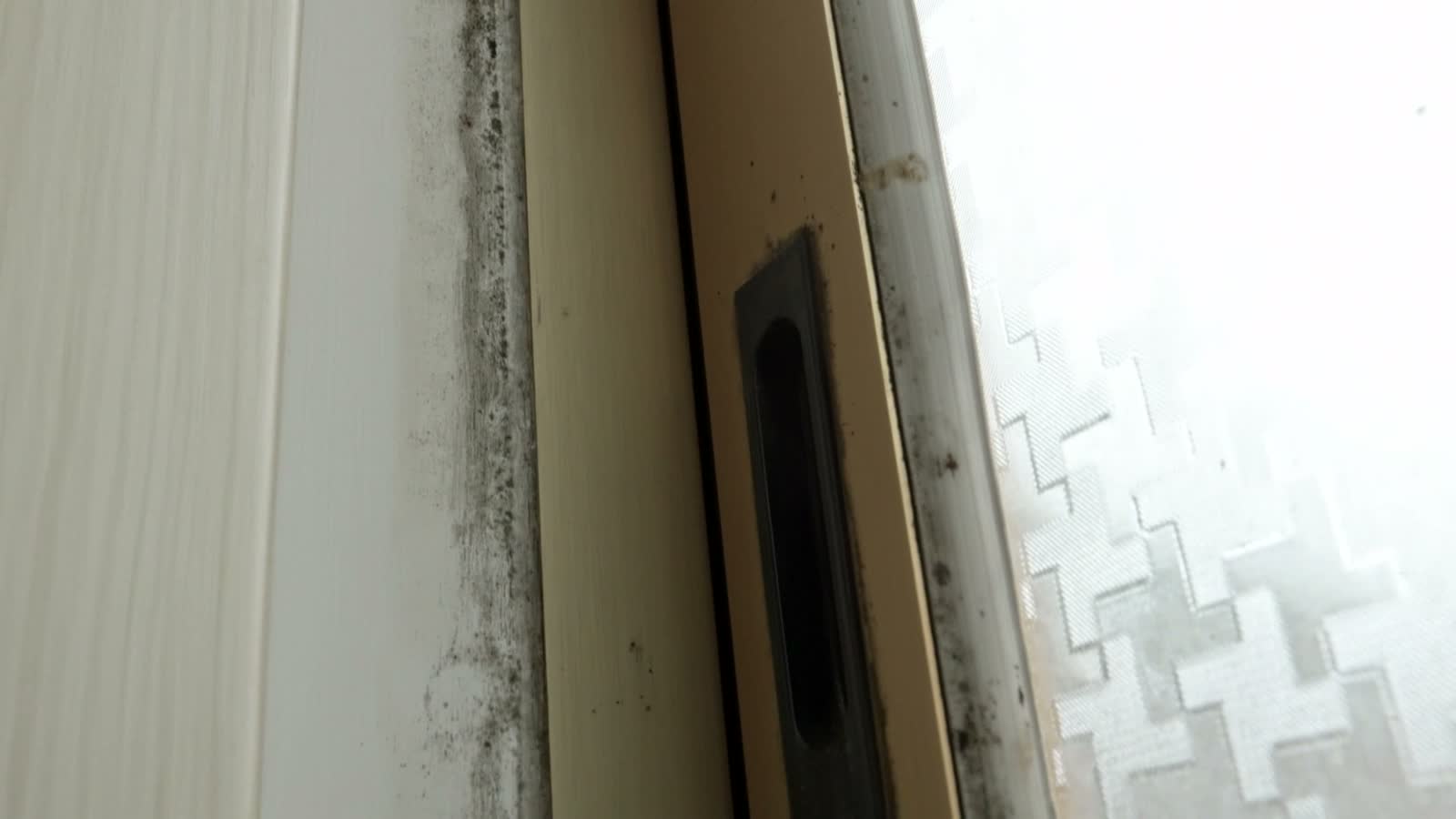
Every major Florida storm produces the same two-act structure. Act one is the storm claim: roof, water intrusion, emergency tarp. Act two arrives on a delay, mold surfacing weeks to months later in houses that sat hot, wet, and powerless, reported as supplemental claims into files the carrier considered closed.
Irma (2017) was the volume case: 1,125,588 claims statewide per FLOIR's final reporting, most of them wind-and-water roof claims, each one a mold candidate. With adjuster inspections lagging weeks behind a statewide event and power out for two-thirds of the state at peak, houses stayed wet, and the mold supplemental became a standard feature of Irma files. Florida's then-3-year claim window meant mold-driven supplements were still being filed and fought years later, feeding the late-claim causation wars the wear-and-tear guide covers.
Ian (2022) was the severity case: surge-soaked barrier islands, then record freshwater river flooding inland that kept homes in Orlando-area neighborhoods and North Port wet for days to weeks. Mold followed on both tracks, but with a coverage split. Surge- and river-fed mold fell with the flood exclusion (an NFIP flood policy covers mold only in limited circumstances, and only where the insured couldn't prevent it); wind-and-rain-fed mold rode the homeowners claim against the fungi cap. In a storm where roughly 28 percent of residential claims closed without payment, the mold supplemental was often the difference between a livable house and a gutted one, and post-Ian law compressed the clock: 1 year to notice a claim, 18 months for supplementals. The Irma-era luxury of a slow mold claim is gone.
Documenting the mold claim
Four records decide most mold claims. All four exist only if you create them, starting the day of the storm, not the day you smell the closet.
Date-stamp the water event
The entire mold fight is about when the water arrived. Time-stamped photos and video of the storm intrusion, wet ceiling, standing water, the roof opening, pin the loss to a single covered date. Without them, the carrier is free to argue the moisture is months old.
Keep every dry-out record
Water-mitigation invoices, moisture-meter readings, dehumidifier logs, and tarp receipts prove two things at once: that you performed your duty to mitigate, and that the property was dry until the storm made it wet. Dated mitigation records are the direct answer to a seepage theory.
Independent mold assessment
A licensed mold assessor (state-licensed in Florida) maps the contamination, samples the species, and, critically, gives an opinion on moisture source and age. An assessor’s report tying growth to a single recent water event is the counter to the carrier’s "long-term" narrative.
Post-remediation verification
Clearance testing after remediation, independent sampling showing the structure returned to normal fungal ecology, closes the claim file properly, documents the full scope actually required, and supports supplemental claims when contamination proved larger than the first estimate.
Shot-by-shot photo method: our photo documentation guide · deadline math for your storm: deadline countdown · quick coverage read: is this covered?
Florida vs. South Carolina
- Sublimits: $10,000 fungi limits are a common market default (some forms $5,000); buy-ups to $25K/$50K sold by some carriers. Check the declarations page.
- Licensing: mold assessors and remediators are state-licensed (Fla. Stat. §§ 468.84-468.8424); one firm cannot do both jobs on the same project, hire the assessor independently.
- Deadlines: 1 year to notice the claim, 18 months for supplemental claims (§ 627.70132); carrier pay-or-deny in 60 days. Mold supplements must move fast.
- Doctrine: Sebo concurrent causation where the policy lacks ACC wording, matters when covered rain and an excluded contributor combined to feed the growth.
- Escalation: DFS mediation, appraisal where the policy provides it, mandatory pre-suit notice.
- Sublimits: same national form structure, fungi exclusion plus a capped give-back, commonly $10,000 or per-endorsement. The declarations page, not the state, sets the number.
- Licensing: no state mold-licensing program, anyone can call themselves a remediator. Vet IICRC certification, liability insurance, and references yourself.
- Deadlines: "prompt" notice per policy terms; no fixed pay-or-deny statute (reasonableness standard); 3-year contract suit period.
- Exposure profile: Lowcountry humidity plus events like the 2015 floods and Ian's Georgetown landfall, freshwater-flood mold there was mostly excluded with the flood loss itself.
- Escalation: SC DOI consumer complaint; improper-claims-practices law (S.C. Code § 38-59-20) as the conduct backstop.
Sublimits, deadlines, and licensing rules shown are general market patterns as of July 2026. Your policy form and current statute control. Verify both before acting.
Mold coverage, the questions everyone asks
Does homeowners insurance cover mold after a hurricane?
Usually yes, if the mold resulted from a covered water event, such as rain entering through a wind-created roof opening. Most policies exclude mold as a peril but give coverage back through a "limited fungi, wet or dry rot, or bacteria" provision when the mold follows covered water. That give-back is capped by a sublimit, commonly $10,000 in the Florida market, and mold from excluded water (flood, storm surge, long-term seepage) is generally not covered at all.
Why is there a $10,000 cap on mold?
Carriers added fungi sublimits industry-wide after the early-2000s mold-litigation crisis, when large verdicts (most famously in Texas) made uncapped mold exposure uninsurable in carriers’ view. Standard forms now exclude mold, then restore a capped amount. In Florida, $10,000 is a common default, and some carriers sell buy-up endorsements to $25,000 or $50,000. The cap typically includes testing, remediation, and tear-out, which is why it exhausts fast.
Does the mold sublimit cap my whole water claim?
No, and carriers sometimes apply it as if it did. The sublimit applies to mold remediation: assessment, containment, removal, and treatment of contaminated materials. The underlying covered water damage, the roof repair, the wet drywall that would be replaced anyway, structural drying, is payable under the ordinary dwelling coverage, outside the fungi cap. Scope allocation between the two buckets is one of the most common mold-claim fights.
The carrier says the mold proves a long-term leak and denied everything. Is that the end?
No. Mold can establish itself on wet building materials within 24 to 48 hours, per EPA and CDC guidance, visible growth weeks after a storm is entirely consistent with a single storm-date intrusion. The carrier’s seepage theory is an opinion that must survive your evidence: dated photos of the intrusion, mitigation invoices, moisture logs, and a licensed assessor’s source-and-age opinion. Denials built only on "mold = old leak" are routinely contested.
Will insurance pay for mold testing and clearance testing?
Assessment and post-remediation verification are generally payable as part of the covered mold loss, but they usually draw down the same fungi sublimit. Get the assessment scoped early so the dollars are spent proving the claim, not fighting over it. In Florida, use separate licensed firms: state law bars a company from performing both the assessment and the remediation on the same project.
Can I claim health problems from mold under my homeowners policy?
Not under the property side. First-party property coverage pays for damage to the structure and contents. It is not health insurance, and policies exclude bodily injury to the insured. Health symptoms belong with your physician, and any injury-based legal theory is a separate question for counsel. On the property claim, health evidence has one legitimate role: documenting why remediation urgency and temporary relocation (additional living expense) were reasonable.
How long do I have to file a mold claim after a storm in Florida?
The mold rides the underlying storm claim’s clock. For Florida hurricane and windstorm claims, notice must generally be given within 1 year of the date of loss, with supplemental claims within 18 months (Fla. Stat. § 627.70132, as amended). Mold that appears months after landfall should be reported as a supplemental development of the original storm claim, promptly, in writing, before the carrier can argue late notice or prejudice.
- US EPA EPA: Mold Remediation in Schools and Commercial Buildings (guidance incl. 24-48 hr growth, 10 sq ft threshold) ↗
- CDC CDC: Homeowners and Renters Guide to Mold Cleanup After Disasters ↗
- FEMA FEMA: Don’t Wait to Clean Up or Make Repairs (post-flood mold) ↗
- FLA. LEGISLATURE Fla. Stat. §§ 468.84-468.8424, Mold-Related Services (assessor/remediator licensing) ↗
- FLA. LEGISLATURE Fla. Stat. § 627.70132, notice of property insurance claims ↗
- CITIZENS (FL) Citizens Property Insurance, policy forms (fungi, wet or dry rot limited coverage) ↗
- THIS OLD HOUSE This Old House, mold remediation cost guide (2026) ↗
- HOMEADVISOR HomeAdvisor, mold removal cost data (2025) ↗
- IICRC IICRC S520, Standard for Professional Mold Remediation ↗
- FLOIR FLOIR Hurricane Irma claims data (final catastrophe reporting) ↗
- FLOIR FLOIR Hurricane Ian catastrophe claims data ↗
- JUSTIA Sebo v. American Home Assurance Co., 208 So. 3d 694 (Fla. 2016) ↗
Not legal advice; consult an attorney about your specific claim. Cost figures reflect the cited national cost surveys; your market varies.
Mold is a causation fight, and the sublimit is a floor
Mold is rarely a standalone claim. It grows from a covered water loss: a wind-opened roof, a burst supply line, storm-driven rain. Florida HO-3 policies commonly cap mold remediation at $10,000, higher by endorsement; South Carolina limits vary and often run lower. Causation decides the file: if the water event was covered, the resulting mold is covered up to the sublimit; if the carrier ties growth to a slow leak or deferred maintenance, the exclusion applies. Read your declarations page for the mold sublimit before you accept any number.
Carriers narrow mold three ways: labeling growth long-term to trigger the exclusion, applying the sublimit to the whole loss rather than just remediation, and disputing the moisture source. Each answers to evidence. Photograph the affected area before remediation, log moisture readings, and keep the timeline linking growth to the dated event. A wet roof the carrier calls wind-driven rain is a documented mold source, and depreciation gets applied to line items that are not depreciable. If your mold claim was denied, capped short, or tied to maintenance, the free claim review below reads your denial and declarations page against the covered water loss underneath.
Mold capped at $10K, or denied as an "old leak"? Test the theory.
Upload the denial or estimate, your storm-date photos, and any mold assessment. You'll get a straight answer on whether the seepage theory survives your timeline, and whether the carrier is hiding covered water repairs under the fungi cap.

 HURRICANELAW.PRO
 A comprehensive property-insurance claim resource for policyholders: denied and underpaid claims, coverage and bad-faith law, storm dossiers, carrier profiles, city guides, and the complete claims playbook. Florida and South Carolina.
▸ SEE THE FULL SITE MAP →Coverage summaries, policy-language quotations, dollar figures, deadlines, and chart examples throughout this site are general information based on typical or standard policy forms and are illustrative only: they are not a quote, a guarantee of coverage, or a promise of any outcome. Every insurance policy is different: your own policy, endorsements, and state law control, so read your policy and confirm current statutes. Weather imagery courtesy of NOAA, the National Hurricane Center, and the National Weather Service. Legal services are provided by Halversen Law. Nothing on this site is legal advice; consult an attorney about your specific claim.
Legal matters are handled by Halversen Law, a law firm licensed in Florida and South Carolina.