
The storm
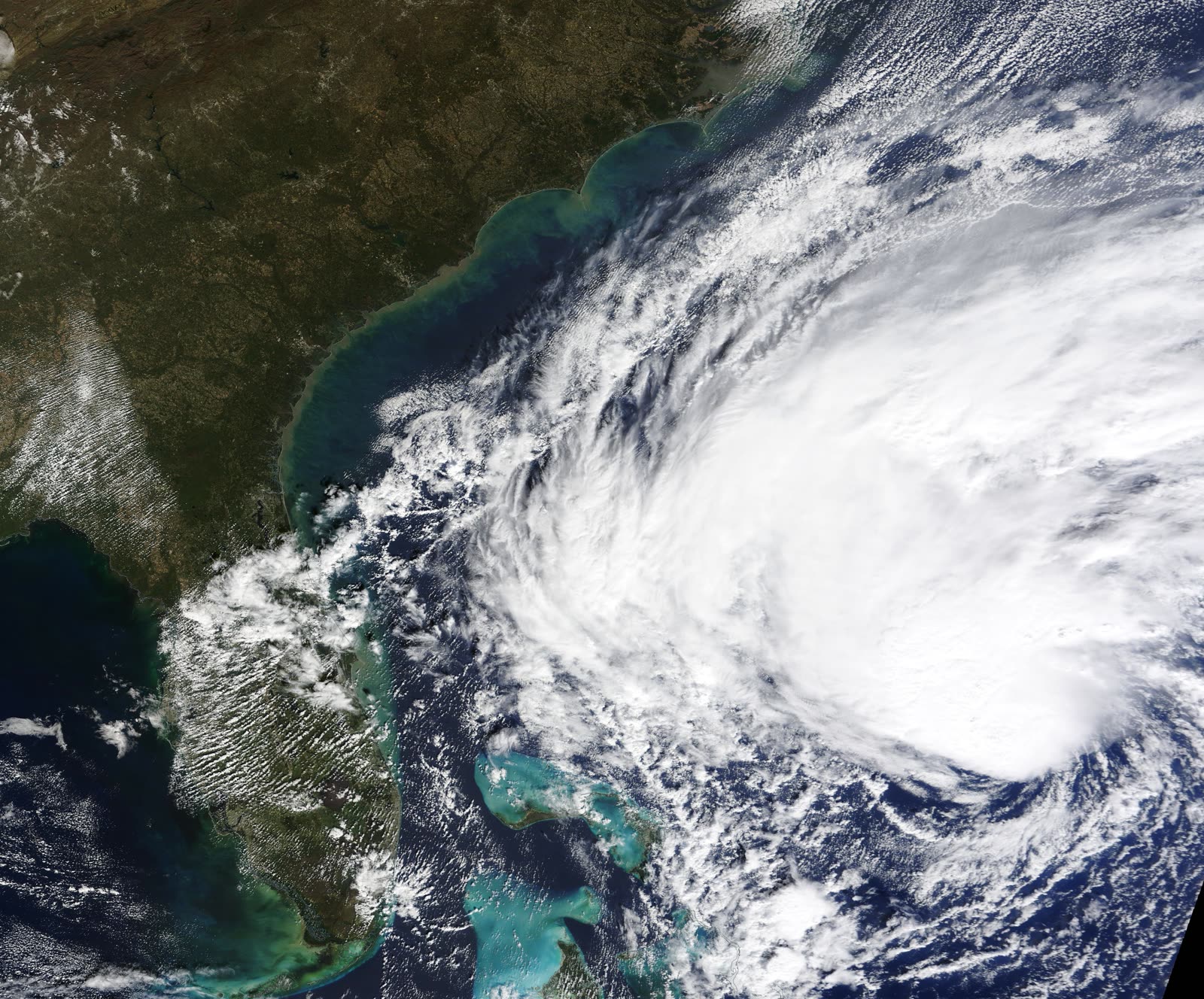
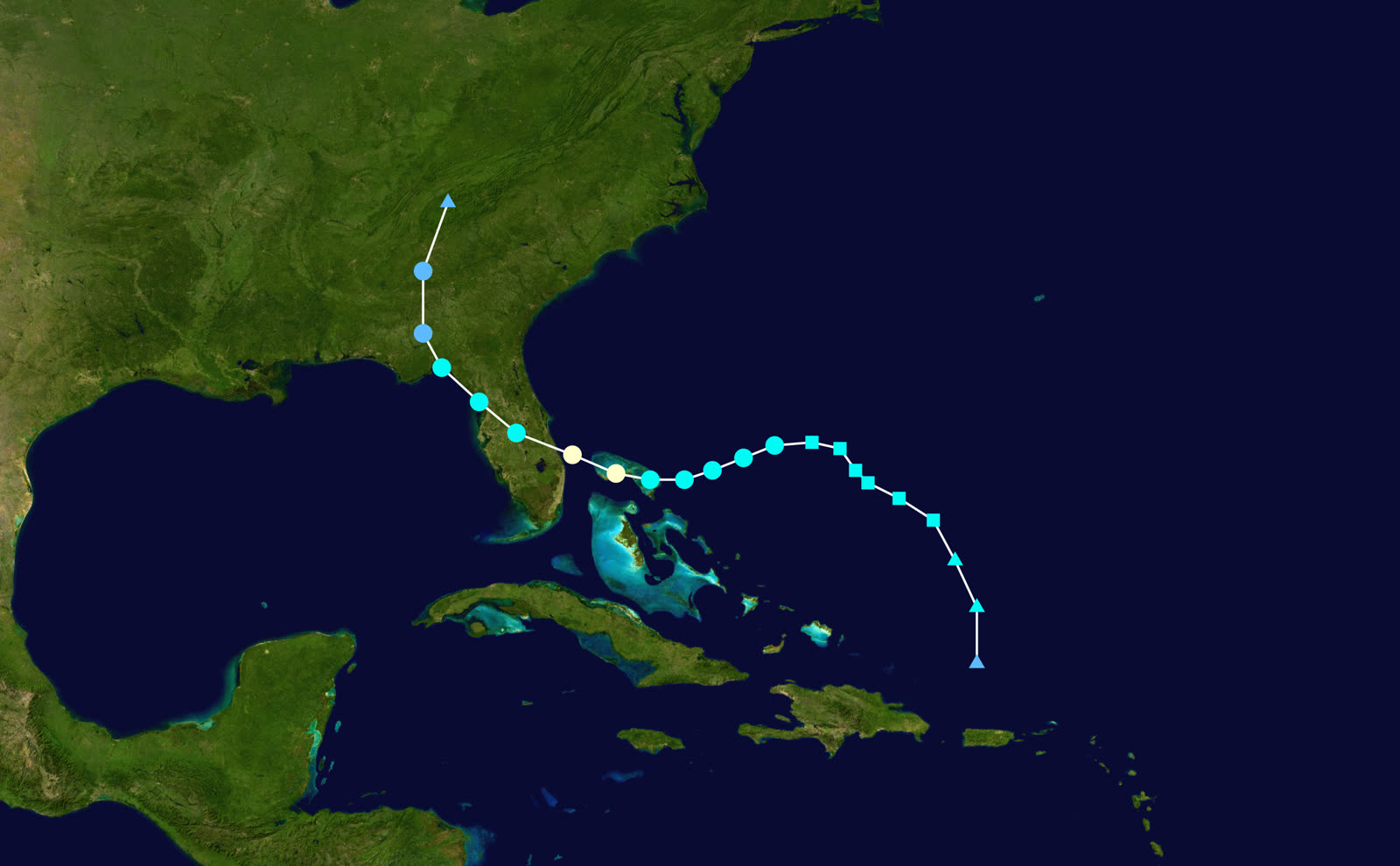
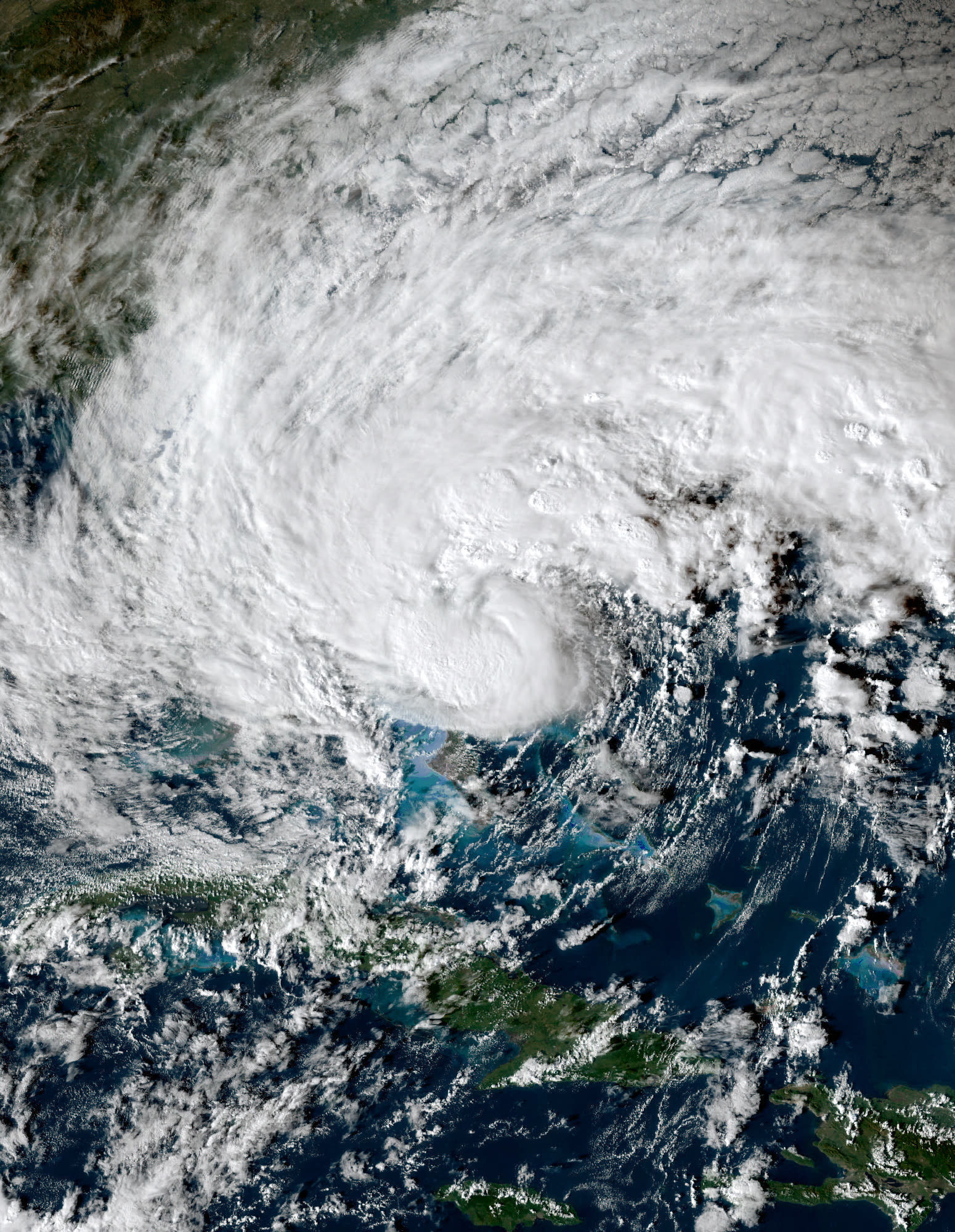
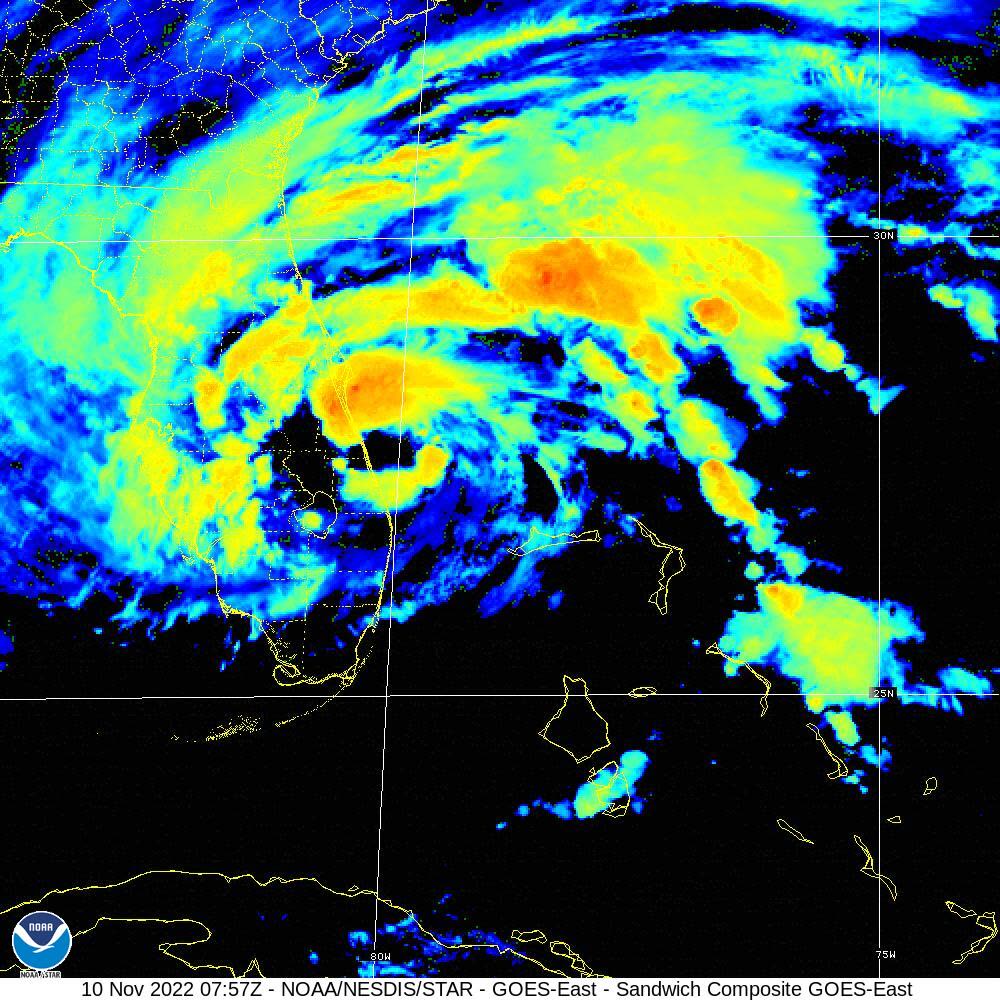
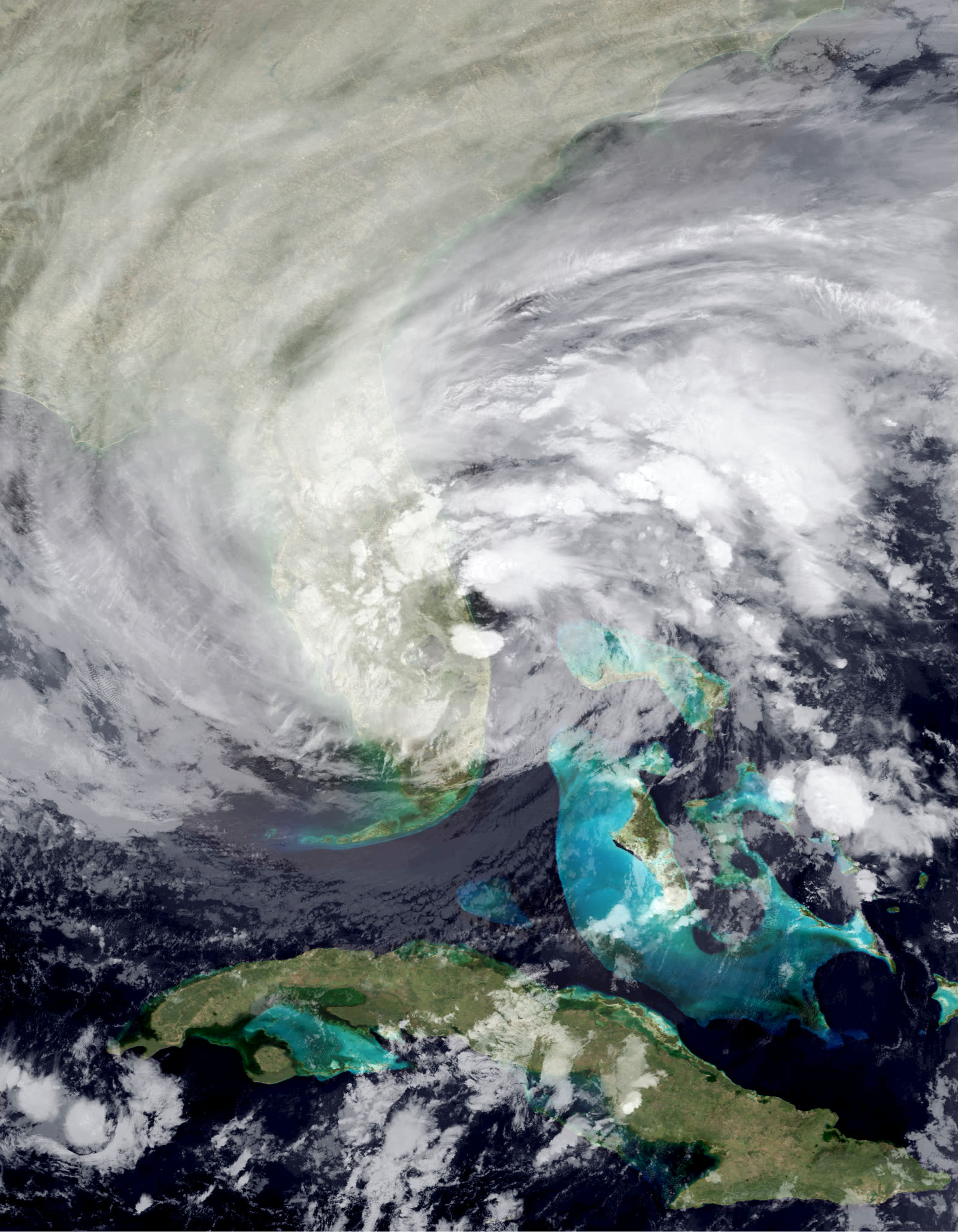
Nicole should have been a footnote. It formed as a sprawling subtropical storm on November 7, 2022, crossed the northwest Bahamas, and came ashore on North Hutchinson Island just south of Vero Beach at 3 a.m. EST on November 10, a minimal Category 1 at 75 mph, and only the third November hurricane landfall in Florida's recorded history.
What made Nicole destructive was size and timing, not strength. Its tropical-storm wind field spanned nearly 500 miles, driving days of pounding onshore waves along the entire east coast, six weeks after Hurricane Ian's exit had already stripped the state's Atlantic beaches and undermined their dunes. Nicole's 3-5 foot surge arrived on top of high autumn tides and finished what Ian started. Five Florida deaths and roughly $1 billion in damage were attributed to the storm.
The damage
The catastrophe concentrated 100 miles north of landfall, in Volusia County. At Daytona Beach Shores and Wilbur-by-the-Sea, seawalls that Ian had cracked, some freshly and privately rebuilt at six-figure cost, failed outright. Foundations were undercut; pool decks and building backsides fell into the surf. Building officials deemed roughly two dozen condo and hotel towers unsafe and ordered evacuations; at Wilbur-by-the-Sea, 17 of 29 damaged single-family homes were declared unsafe, and several collapsed onto the beach. Volusia County's damage assessment reached $522 million, with $370 million in Daytona Beach Shores alone.
Elsewhere the storm read as a strong nor'easter: dune loss from Palm Beach to Jacksonville, scattered wind damage, 3-6 inches of rain across Central Florida.
The insurance aftermath
FLOIR's Nicole data call closed at 28,092 claims and $253 million in estimated insured losses, but 11,946 claims, about 42% of everything filed, closed without payment, one of the highest closed-without-payment shares of any recent Florida storm. The reasons trace straight to what Nicole actually did.
Erosion is the core problem. Homeowners and condo policies insure structures against wind and (rarely) collapse, not the land under them. Undermined seawalls, lost dunes, and condemned-but-standing buildings fell largely outside coverage: land movement and erosion are excluded, seawalls are often uninsured or separately scheduled, and a building evacuated by government order but not yet physically collapsed may have no triggering "direct physical loss" at all. Policyholders argued for ordinance-and-law coverage, the policy part that pays code-driven costs when officials condemn or require upgrades, making Nicole a rare storm where ordinance & law limits, usually an afterthought, decided outcomes.
Ian-Nicole allocation was the second fight. Thousands of east-coast properties had open Ian claims when Nicole hit. Two storms, two hurricane deductibles, and two carriers' adjusters pointing at each other's storm: owners without dated post-Ian documentation had no way to prove which storm did what.
Nicole also landed in the middle of Florida's market crisis, one month before the December 2022 special session (SB 2-A) that eliminated assignment-of-benefits agreements and one-way attorney fees for new claims. Nicole was among the last storms adjusted under the old rules.
What policyholders learned
- Erosion and land loss are excluded, everywhere. Only damage to insured structures counts; the beach, dune, and most seawalls are not the insurer's problem. Coastal owners learned to check for separate seawall/other-structures scheduling.
- Ordinance & law coverage is what pays when officials condemn. Owners with O&L endorsements had a path to code-upgrade and demolition costs; those with stripped-down policies did not.
- Document between back-to-back storms. Dated post-Ian photos were the only evidence that separated Ian damage from Nicole damage, and determined which deductible and which claim applied.
- "Unsafe" is not "destroyed" in policy language. An evacuation order alone did not trigger coverage; engineers' reports establishing physical damage to the structure did.
- A weak storm on a weakened coast is a major event. Carriers priced Nicole as a Cat 1; Volusia's half-billion-dollar loss came from cumulative vulnerability, a pattern repeating along Florida's armored coastline.
Not legal advice; consult an attorney about your specific claim. Damage figures are nominal (not inflation-adjusted) unless noted.