- •Burst pipe = covered water loss. Slow leak = the 14-day seepage fight. The pipe repair itself = never covered (maintenance).
- •Tear-out is the hidden mechanic: the policy pays to open the slab or wall to reach the pipe, often the biggest number in the claim.
- •Cast-iron drains in pre-1975 FL homes drove a statewide claim-and-litigation wave; carriers answered with exclusions, sublimits, and non-renewals.
- •Where a limited-water endorsement applies, post-2022 FL policies commonly cap non-storm water losses (a $10,000 figure is typical), and courts say tear-out counts inside the cap (Banks). Your declarations page sets the actual limit.
- •Keep the failed part, get the camera footage, itemize tear-out separately from pipe repair. The evidence decides these claims.
The burst pipe: the claim the policy was built for
A supply line lets go, a fitting cracks, a hose bursts, a frozen line splits, and pressurized water runs until someone shuts the main. This is the loss the "accidental discharge" peril was written for, and in the standard case it pays without drama: water damage to the structure, contents, dry-out costs, and additional living expenses if the house is unlivable during repairs. Water damage and freezing claims run at roughly one in 60 insured homes per year nationally (Triple-I), and the burst supply line is the archetype.
Two carve-outs apply even to the easy claim. The policy never pays to repair the pipe itself, the failed component is excluded maintenance. And if the loss traces to long-running seepage rather than a sudden release, Florida's 14-day exclusion enters the picture. That fight has its own guide. Everything on this page is about what happens when the pipe story is more complicated than "it burst."
Supply vs. drain, two different fights
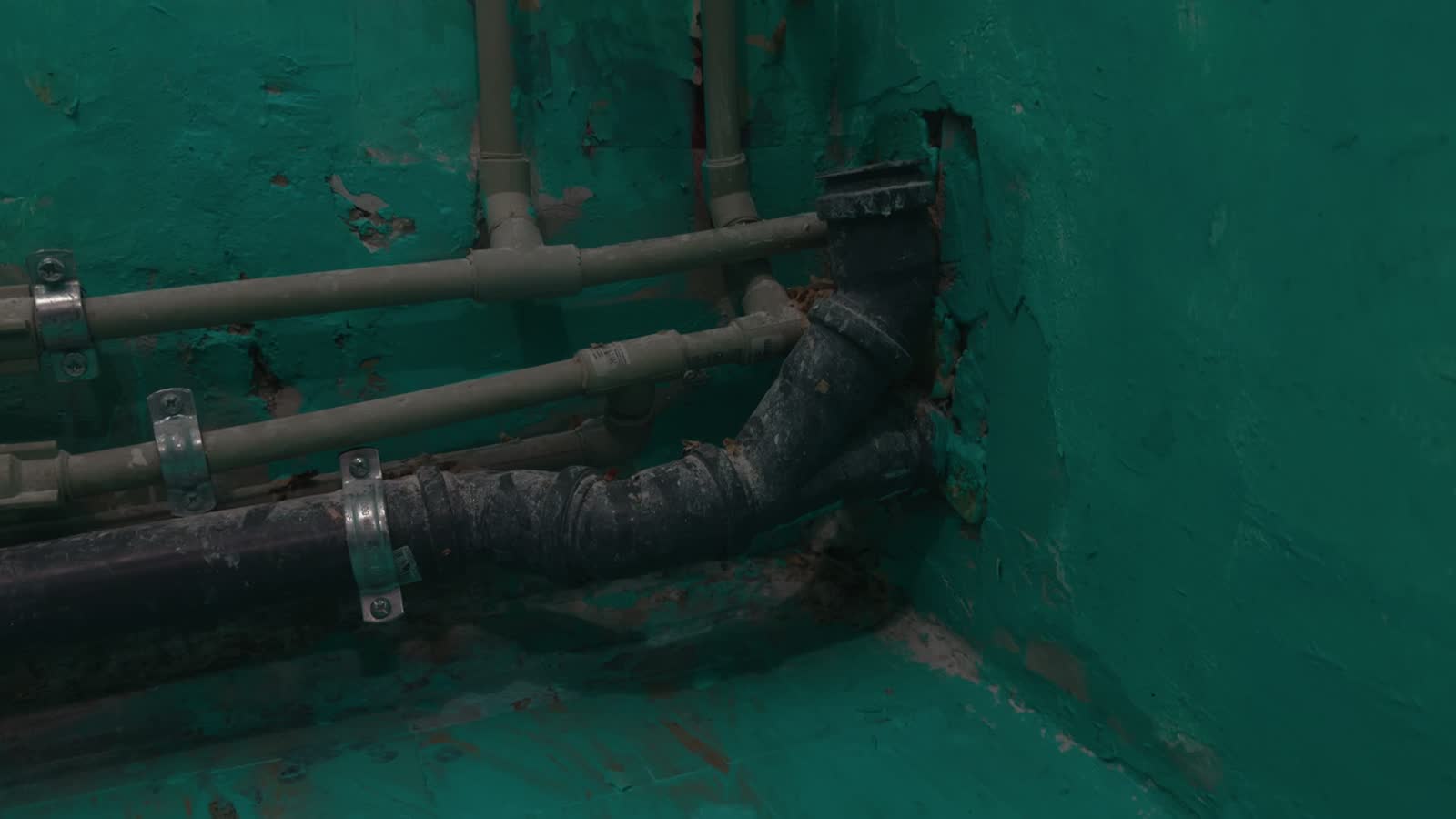
Your house has two water systems, and they fail differently. The supply side is pressurized: when it fails, water moves fast, the loss is unambiguous, and "sudden and accidental" is easy to show. The drain (sanitary) side is gravity-fed: failures are slow, corrosion, channeling, root intrusion, bellied lines, and often invisible until sewage backs up, a floor stains, or a slab starts to smell.
The claim dynamics track the plumbing. Supply-side claims fight about duration (the 14-day clause) and sublimits. Drain-side claims fight about causation, because a corroded drain is, on the carrier's telling, pure wear and tear, and wear and tear is excluded. In Florida, that drain-side fight became an industry event of its own.
Cast iron: the pre-1975 litigation wave
Until roughly 1975, Florida homes were plumbed with cast-iron drain lines, and Florida built a lot of houses before 1975, especially across South Florida, Tampa Bay, and the older coastal cities. Cast iron has a service life of about 50 to 75 years, less in Florida's conditions: humid air, salt environments, aggressive soils, and decades of drain chemicals corrode the pipe from inside and out. The math is simple, an enormous stock of housing hit end-of-pipe-life at the same time.
The result, through the late 2010s and early 2020s, was a claims wave with its own name in the industry: cast-iron claims. The pattern: a drain failure or backup, a claim for the resulting damage plus the tear-out to access the lines, a carrier denial on wear-and-tear/corrosion grounds, then suit. Insurance-industry press described aging pipe systems as a leading target of Florida's largest policyholder firms, with carriers answering that the claims were really uncovered re-plumbing projects dressed as water losses. Both things were sometimes true, which is why the claims turned entirely on evidence and policy wording.
THE EXCLUSION CARRIERS CITE ON CAST-IRON CLAIMS (TYPICAL WORDING)"We do not insure for loss… caused by… wear and tear, marring, deterioration… rust or other corrosion… However, we do insure for any resulting loss from items… not [otherwise] excluded…"
The two halves of that clause are the two halves of every cast-iron dispute. The pipe corroded, excluded. The sewage and water that escaped when it failed damaged the house, a resulting loss, covered unless another exclusion catches it. Carriers litigated the boundary hard, and in People's Trust Ins. Co. v. Banks (Fla. 3d DCA 2023) won a notable framing battle: the court accepted that corrosion-driven deterioration fell within that policy's exclusionary scheme (treating wear and tear as an "act of nature" under the policy's definitions) and enforced the endorsement's $10,000 cap, tear-out included. The market response was broader than any case: inspections demanding sewer scopes on older homes, non-renewals of houses with original cast iron, and the sublimit era described below.
If you own a pre-1975 Florida home with original drains, the practical position is: your pipes are a known underwriting issue, your policy has probably narrowed since you first bought it, and if a failure happens the claim will be won on the camera footage, the failed section, and the tear-out itemization, not on the adjuster's goodwill.
Tear-out: "we pay to open the wall, not fix the pipe"
The strangest mechanic in property insurance lives in the water peril: the policy excludes the pipe repair but pays for the construction work around it. The standard wording:
THE TEAR-OUT PROVISION: STANDARD HO-3-STYLE WORDING (TYPICAL)"We do pay for the cost to tear out and replace any part of a building… necessary to repair the system or appliance from which the water… escaped. We do not cover loss to the system or appliance itself."
One slab leak, six line items
What the policy pays vs. what it excludes when a pipe fails inside the structure.
Dry-out, sanitizing, damaged materials, and contents.
Cut the slab, open walls, remove cabinets to reach the failed section.
Re-pour concrete, drywall, flooring, paint, restore what tear-out removed.
The failed section is maintenance, never covered.
Replacing the aging system is on the owner.
On slab and in-wall failures, tear-out and put-back routinely exceed the pipe repair many times over, itemize them separately in every estimate.
Standard HO-3 tear-out provision · People's Trust Ins. Co. v. Banks (Fla. 3d DCA 2023) and aligned 4th/5th DCA decisions · Illustrative diagram. Your policy form controls.
The practical consequences: on a slab leak, the covered access-and-rebuild work is usually the bulk of the money, so a denial framed as "plumbing repairs aren't covered" is answering a question nobody asked. And on a policy with a limited-water endorsement, the same mechanic runs in reverse: Florida's Third, Fourth, and Fifth DCAs have held tear-out costs count inside the sublimit, so a $10,000 cap can be exhausted by the concrete work before the first sheet of drywall hangs. Which endorsement you have is worth knowing before the water is on the floor.
Polybutylene: the pipe nobody will insure
The supply-side counterpart to cast iron is polybutylene, the gray plastic pipe installed in millions of U.S. homes between roughly 1978 and 1995, heavily in Sun Belt states including Florida and South Carolina. Chlorine in municipal water attacks the material from the inside; it embrittles and fails suddenly, with none of the visible warning corrosion gives. The failures produced Cox v. Shell Oil (1995), a class settlement near $950 million, among the largest product-liability resolutions in U.S. history, and the manufacture of the pipe ended.
The insurance consequence outlived the settlement: polybutylene is now primarily an underwriting problem. Many carriers will not write, or will non-renew, a home with active poly plumbing, or will offer only limited water coverage until it is replaced. A burst-poly loss on an in-force policy is still a sudden discharge claim, but expect the carrier to scrutinize prior knowledge: if you knew the home had poly and a history of failures, arguments about foreseeability and neglect surface. If a four-point inspection flags poly, the re-plumb quote is also a quote for keeping your insurance.
The $10K sublimit era: water exclusion endorsements after 2022
Florida's 2022-2023 insurance overhaul (SB 2-D and SB 2-A) rebuilt the litigation landscape, one-way attorney fees gone, assignment-of-benefits agreements banned for property claims, notice windows shortened to one year under § 627.70132. In parallel, carriers rebuilt the water coverage itself. Across the Florida market, Citizens and private carriers alike, non-weather water losses are now commonly subject to one of three structures:
- Limited water damage endorsement. Non-storm water losses capped, $10,000 is the standard figure, usually taken in exchange for a premium credit, sometimes required for homes with older plumbing. Courts enforce the cap, tear-out included (Banks).
- Full water exclusion endorsement. Non-weather water losses excluded entirely; occasionally offered where a home's plumbing fails underwriting, with buy-back after a re-plumb or passing inspection.
- Managed repair programs. Coverage stays broader, but the carrier's right to select the mitigation and repair contractors is written into the policy, trading your control of the repair for their control of the cost.
None of this is hidden. It is on the declarations page and in the endorsement list, signed at binding or renewal. But it is routinely discovered at claim time. Check three things today: whether a water sublimit or exclusion endorsement is on your policy, what your mold sublimit is (see the mold guide, the two caps interact), and whether an inspection or re-plumb would restore full coverage. On a pre-1975 or poly-plumbed house, that check is worth more than any post-loss argument on this page.
How to document a pipe claim
Pipe claims are decided by physical evidence that exists for exactly one window, between discovery and repair. Four moves:
Photograph and keep the failed section
The failed pipe section is the single most important exhibit in the claim. Photograph it in place before the plumber cuts it out, then keep the cut section. A clean fracture or split supports "sudden"; the carrier will read any corrosion as "gradual." Do not let it leave in the plumber's truck.
Get the video-scope footage
On drain-line claims, a plumber's sewer camera inspection is standard, and the footage is evidence. Get your own copy the day it's shot. Breaks, offsets, channeling, and collapse show on camera; so does the difference between a localized failure and a system at end-of-life. Carriers scope too. Have your own record.
Facts on the invoice, not adjectives
A plumber's invoice reading "old corroded pipe, failing for years" writes the carrier's denial for it. Ask for factual language: location of failure, material, what was observed, what was done. Duration and causation opinions belong to engineers working from evidence, and on a disputed claim, you may want your own.
Price the tear-out separately
Get the repair estimate broken into line items: pipe repair, access (tear-out of slab, wall, cabinetry), put-back (concrete, drywall, flooring, paint), and water-damage remediation. The pipe line is excluded; most of the rest is covered. A lump-sum estimate lets the carrier treat the whole number as "plumbing repair", itemization is coverage.
Timeline discipline for the 14-day clause: the sudden-water guide's protocol · photo methodology: the photo protocol · deadlines: claim timelines.
The hurricane angle on pipe claims
Pipe failures are mostly a non-storm loss, which is exactly why the storm connection matters when it exists. After Ian and the Helene, Milton double hit, water losses surfacing weeks after landfall sat on a coverage fault line: storm-caused (hurricane deductible, wind peril, storm deadlines) versus plumbing-caused (water peril, sublimits, the 14-day clause) versus flood-caused (excluded entirely, see the flood guide and surge vs. flood). Saltwater inundation corroding supply connections, structural racking stressing rigid drain joints, debris-loaded municipal backups, each writes a different claim. The dossier lesson from Helene's 42% closed-without-payment rate applies here in miniature: the causation story you can document beats the one you can only tell.
Florida vs. South Carolina
- Market: epicenter of the cast-iron wave and the sublimit response; $10K limited-water endorsements and managed repair are now standard offerings.
- Case law: Hicks (first 13 days covered, insurer's burden); Banks and aligned DCA decisions (sublimits enforced, tear-out inside the cap).
- Deadlines: 1-year claim notice / 18-month supplemental (§ 627.70132); 60-day pay-or-deny (§ 627.70131); 5-year contract suit period; pre-suit notice under § 627.70152.
- Underwriting: four-point inspections on older homes examine plumbing material and age; cast iron and poly drive non-renewals and conditional offers.
- Market: no cast-iron wave at Florida scale, but the same aging-pipe stock in Charleston and the older coastal towns, and polybutylene throughout 1980s, 90s subdivisions.
- Wording: ISO-style "weeks, months or years" seepage language is more common than Florida's hard 14-day count; ambiguity is construed against the drafter.
- Deadlines: "prompt" notice per policy; no fixed pay-or-deny statute (reasonableness standard); 3-year contract suit period.
- Escalation: SC DOI consumer complaint, appraisal, and the improper-claims-practices law (S.C. Code § 38-59-20).
Deadlines shown are general rules as of July 2026 and have exceptions. Endorsement structures vary carrier to carrier, the declarations page and endorsement list on your own policy control. Verify against your policy and current statute.
Pipe claims, the questions everyone asks
Is a burst pipe covered by homeowners insurance?
Yes, in the standard case. Sudden and accidental discharge of water from plumbing is a covered peril under open-peril (HO-3-style) policies: the resulting water damage to the home and contents is paid. What is not paid is the repair of the pipe or appliance that failed. That is excluded as maintenance, though the policy typically pays to tear out and replace building materials needed to reach the failed section.
What about a slow leak I just discovered?
That is where coverage narrows. Most Florida policies exclude damage from constant or repeated seepage or leakage over 14 or more days; under Hicks v. American Integrity (Fla. 5th DCA 2018), damage from the first 13 days remains covered, and the insurer must prove what the excluded period caused. Full breakdown in our sudden-water-damage guide.
My pre-1975 Florida home has cast-iron drains. Will insurance replace them?
Not the pipes themselves, corrosion and deterioration are excluded, and courts have upheld that (in People's Trust v. Banks, Florida's Third DCA even accepted "wear and tear" as an "act of nature" under that policy's wording). What can be covered: water/sewage damage from a failure, and tear-out/access costs, subject to your policy's wording and any water sublimit. Some carriers also decline to write or renew homes with original cast iron, a pre-purchase sewer-scope matters.
What is "tear-out" coverage exactly?
Standard policy language pays "the cost to tear out and replace any part of a building... necessary to repair the system or appliance", while excluding the system repair itself. On a slab leak that means the policy can owe for cutting and re-pouring concrete, removing and rebuilding cabinets, drywall, and flooring, usually far more than the pipe repair it surrounds. Under limited-water endorsements, though, Florida courts have held tear-out counts against the sublimit.
My policy has a $10,000 water damage limit. Is that legal?
Generally yes, limited-water endorsements became widespread in Florida after the 2022 reforms, usually offered with a premium credit and sometimes tied to plumbing age. Florida DCAs (including People's Trust v. Banks, 3d DCA 2023) have enforced $10,000 sublimits and held tear-out costs count inside the cap. Key questions: did you knowingly accept the endorsement, does it apply to your loss type, and does an inspection or re-plumb let you buy back full coverage.
Does insurance cover repiping the whole house?
Almost never as a claim payment, replacement of the plumbing system is excluded maintenance, and carriers pay to repair the damage a failure caused, not to upgrade the system that failed. Where whole-home re-plumbs happen on the carrier's dime, it is usually a negotiated resolution of a larger claim, or a code-driven requirement supported by ordinance-and-law coverage. Some carriers effectively force the issue the other way: re-plumb or be non-renewed.
A hurricane caused my pipe problem. Does that change anything?
It can. Storm-related causes, a tree strike on a vent stack, structural movement, power surges killing a well pump, contamination backups during flooding, shift the claim from the water peril to the storm peril, with different exclusions (and, for flooding, the flood carve-out; see our flood guide). Causation and dates become the whole argument; document the storm link immediately. Sewer backup generally requires its own endorsement in both FL and SC.
- INSURANCE JOURNAL "Cast Iron Drainpipes Latest Target in Florida Claims" (June 2022) ↗
- CLAUSEN MILLER People's Trust Ins. Co. v. Banks (Fla. 3d DCA 2023)-$10K sublimit includes tear-out ↗
- JD SUPRA / CHARTWELL "Wear and Tear" is an "Act of Nature", Banks case analysis ↗
- BUTLER Hicks v. American Integrity Ins. Co. of Fla., 241 So. 3d 925 (Fla. 5th DCA 2018), case analysis ↗
- WIKIPEDIA Polybutylene pipe, history, failure mode, and the Cox v. Shell settlement ↗
- TRIPLE-I Homeowners claims frequency & severity, water damage and freezing ↗
- FL LEGISLATURE Fla. Stat. § 627.70132, notice of property insurance claim (1 yr / 18 mo) ↗
- FL LEGISLATURE Fla. Stat. § 627.7011, replacement cost coverage and payment rules ↗
- SC LEGISLATURE S.C. Code § 38-59-20, improper claim practices ↗
Not legal advice; consult an attorney about your specific claim. Policy language quoted is typical market wording; your form controls.
The policy pays to open the wall, not to fix the pipe.
A burst-pipe claim turns on one sentence: the sudden and accidental discharge of water is covered, the pipe that failed is not. The carrier pays to tear out the wall, dry the structure, and rebuild, but excludes the cracked fitting and the plumbing repair itself. It reads the same on the standard HO-3 form. The exclusion the carrier reaches for: water that leaked slowly, over weeks, is denied as long-term seepage, not sudden discharge. Whether your loss reads as sudden or gradual decides the entire claim, and the carrier decides it from your photographs and timeline.
Speed is the case. Document the failure the day you find it: photograph the standing water, the source, and the moisture line, note the date and time, and shut the supply off before you mitigate. Keep every receipt and the failed fitting. Move fast on drying, because mold after a covered leak is often sub-limited to a few thousand dollars. Florida requires prompt notice, with 18 months for a supplemental; the filing steps lay out the notice-and-mitigate sequence. Carriers underpay by scoping only the visible stain and ignoring the saturated framing behind it. A public adjuster can rebuild the tear-out estimate to the actual moisture map, and the free review below tells you where the number is short.
Pipe claim denied as "wear and tear"? Check what the tear-out is worth.
Upload the denial letter, the plumber's invoice, and any camera footage or photos of the failed section. You'll get a straight answer on whether the corrosion argument holds, and what the resulting damage and access work in your claim may still be worth.

 HURRICANELAW.PRO
 A comprehensive property-insurance claim resource for policyholders: denied and underpaid claims, coverage and bad-faith law, storm dossiers, carrier profiles, city guides, and the complete claims playbook. Florida and South Carolina.
▸ SEE THE FULL SITE MAP →Coverage summaries, policy-language quotations, dollar figures, deadlines, and chart examples throughout this site are general information based on typical or standard policy forms and are illustrative only: they are not a quote, a guarantee of coverage, or a promise of any outcome. Every insurance policy is different: your own policy, endorsements, and state law control, so read your policy and confirm current statutes. Weather imagery courtesy of NOAA, the National Hurricane Center, and the National Weather Service. Legal services are provided by Halversen Law. Nothing on this site is legal advice; consult an attorney about your specific claim.
Legal matters are handled by Halversen Law, a law firm licensed in Florida and South Carolina.