PROPERTY-INSURANCE CLAIM HELP · FL & SC FL CITIESSC CITIESGUIDESTATESNEWSSITE MAPABOUT
HurricaneLaw.Pro HURRICANELAW.PRO
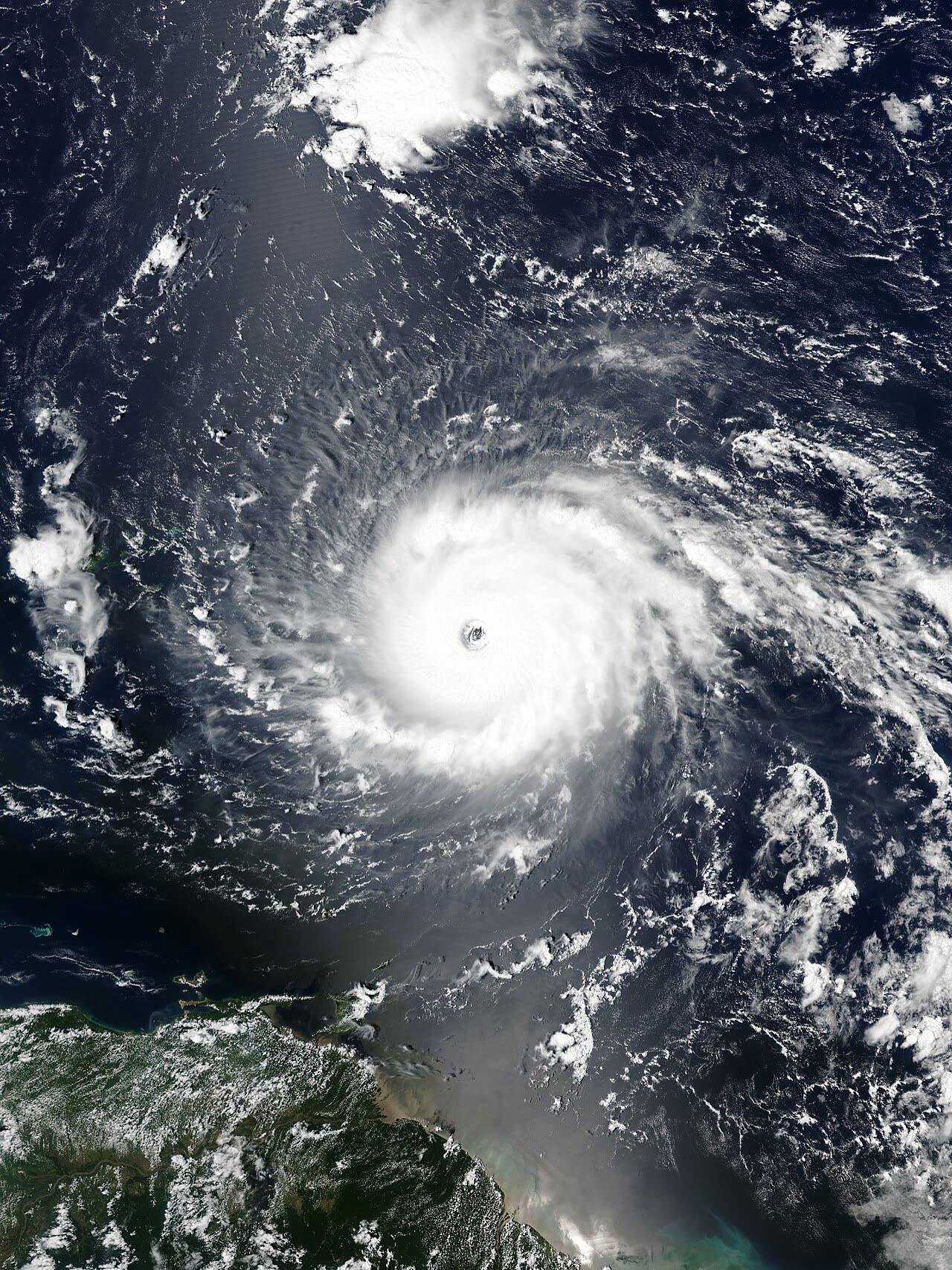
Irma at Category 5 peak intensity — near 180 mph — approaching the Leeward Islands, September 5, 2017
STORM ARCHIVE / 2017 LANDFALL 24.7°N 81.5°W
CAT 4 AT LANDFALL PEAK CAT 5 FL · 2017 · 180 mph

Hurricane Irma

Landfall: Cudjoe Key, FL; 2nd landfall Marco Island, FL · 2017-09-10. 1.1 million Florida claims and $20.7 billion in estimated losses — the storm whose assignment-of-benefits litigation explosion forced the 2019 HB 7065 reforms.

NOAA / NASA Suomi NPP
AT LANDFALL
CAT 4
PEAK INTENSITY
CAT 5 · 180 mph
PRESSURE
929 mb
STORM SURGE
5–10 ft
DAMAGE
$50B
DEATHS
44 direct
01 THE PATH

Where it hit, start to finish

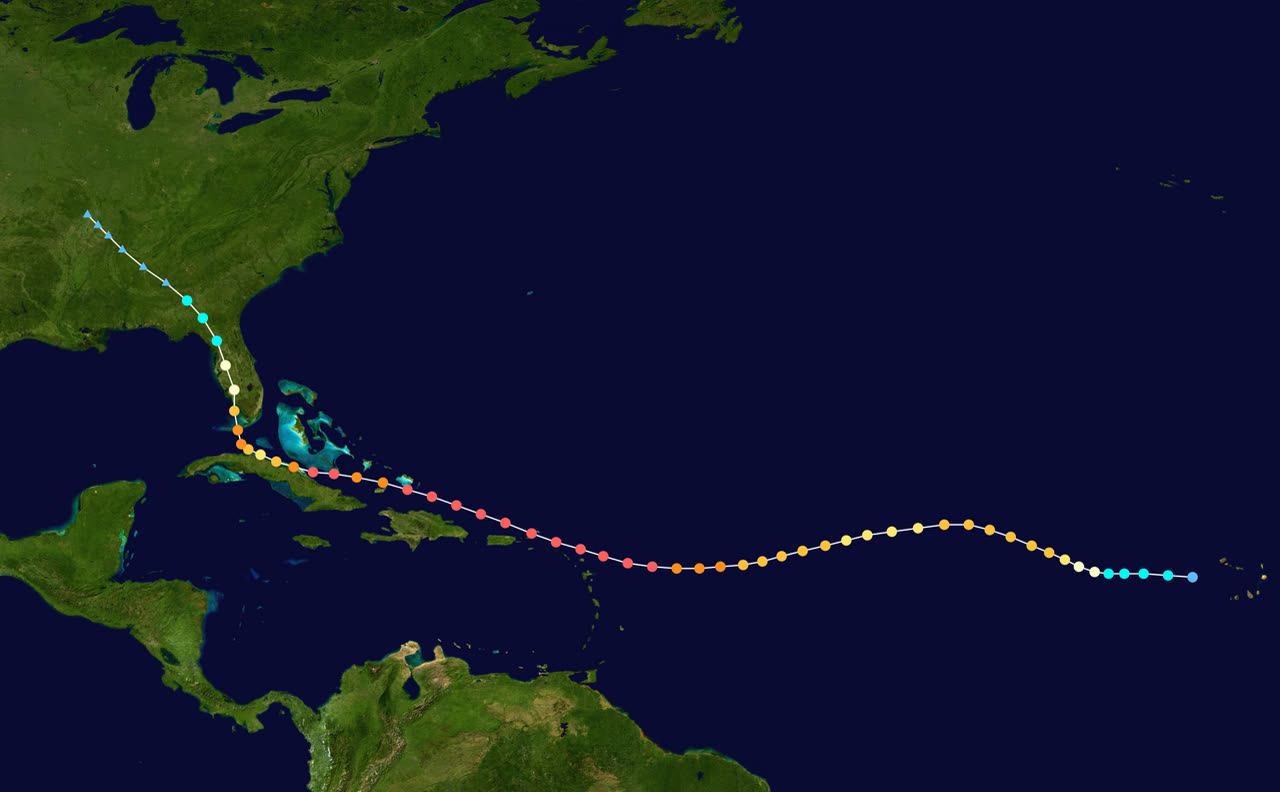
TRACK · HURRICANE IRMANOAA / NHC best-track data
Best track of Hurricane Irma, August 30 - September 12, 2017 — Caribbean, Cuba, and the double Florida landfall
Barbuda
CAT 5 DIRECT HIT · 180 MPH · SEPT 6

Irma's eye crossed Barbuda at peak intensity; roughly 95 percent of structures were damaged or destroyed and the island was evacuated entirely.

St. Martin / U.S. Virgin Islands
CAT 5 CORE · SEPT 6

Catastrophic damage on St. Martin, St. Thomas, and St. John as Irma held Category 5 intensity for roughly three days.

North coast of Cuba
CAT 5 CUBAN LANDFALL · SEPT 8-9

First Category 5 landfall in Cuba since 1924; land interaction weakened Irma before its Florida approach.

Cudjoe Key, FL
CAT 4 LANDFALL · 130 MPH · SEPT 10

Landfall at 929 mb on the morning of September 10. FEMA's initial assessment: 25 percent of houses in the Keys destroyed, 65 percent significantly damaged.

Marco Island / Naples, FL
2ND LANDFALL · CAT 3 · 115 MPH

Second landfall that afternoon; Naples recorded a 142 mph gust and storm surge flooded Everglades City.

Jacksonville, FL
RECORD ST. JOHNS RIVER FLOOD

Surge and rain pushed the St. Johns River to 5.57 ft at downtown Jacksonville, topping Hurricane Dora's 1964 record — on the opposite side of the state from landfall.

Statewide Florida
6.5M EVACUATED · 2/3 OF STATE DARK

The largest evacuation in Florida history; power outages peaked near two-thirds of the state, and claims came from all 67 counties — 1.1 million in total.

02 THE RECORD IN IMAGES
ALL IMAGERY U.S. GOV / PUBLIC DOMAIN
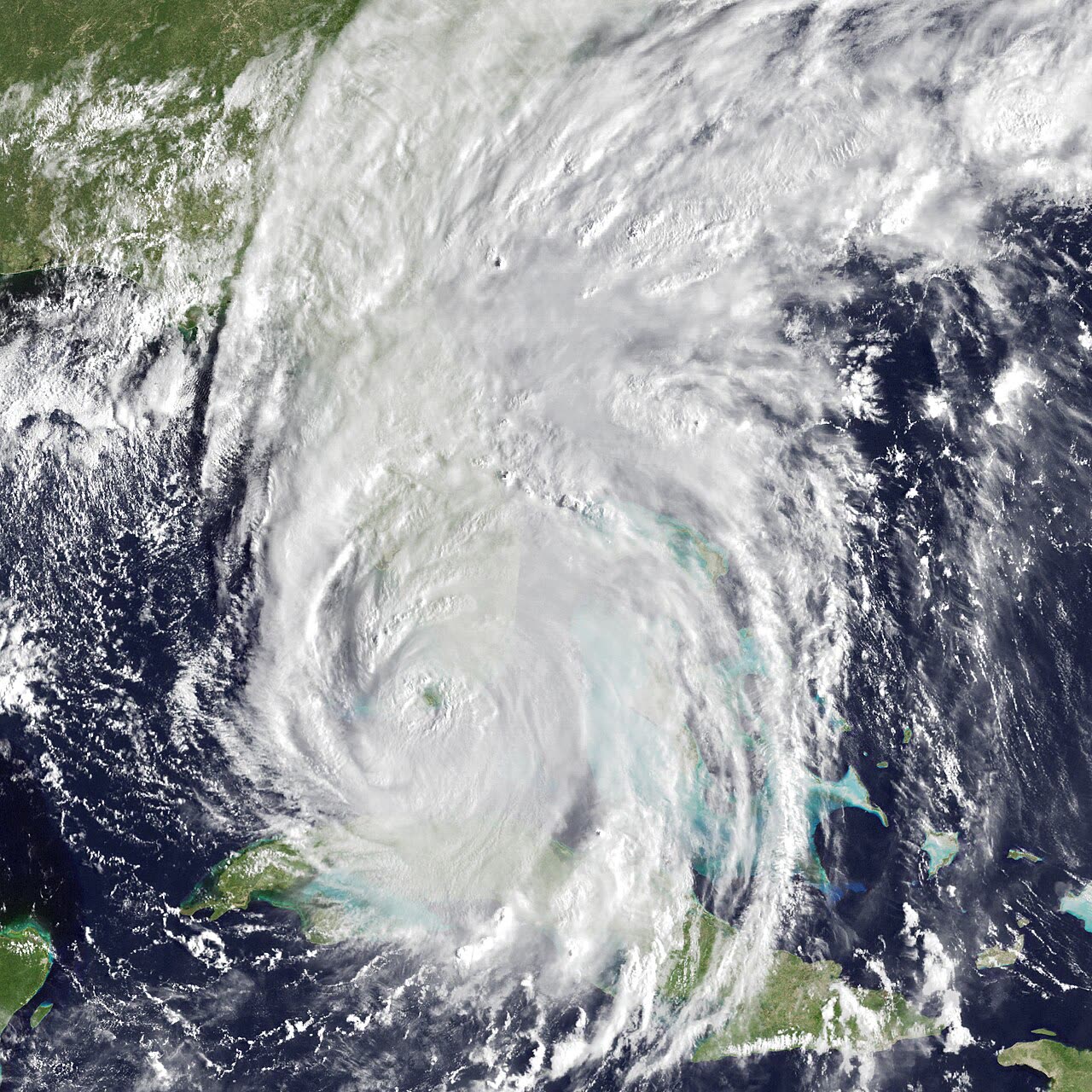
SATELLITE NASA Earth Observatory
Irma turning north into the Florida Keys on landfall morning, September 10, 2017
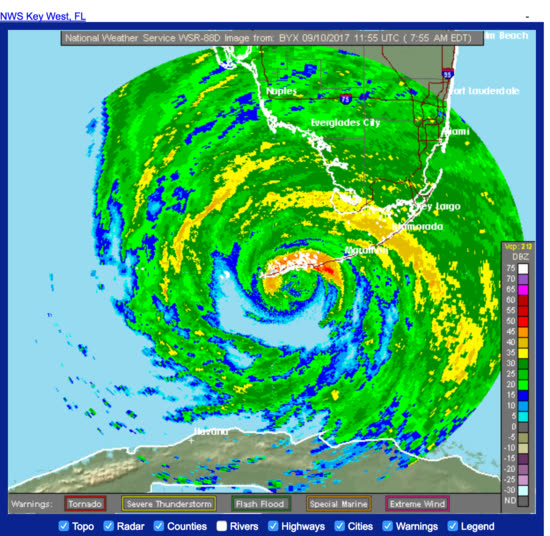
RADAR NOAA / NWS Key West
Radar at 7:55 a.m. EDT as Irma's eye reached the lower Florida Keys, September 10, 2017
SATELLITE NASA Earth Observatory
Barbuda before and after Irma — roughly 95 percent of the island's structures were damaged or destroyed
SATELLITE NASA / NOAA
Florida's night lights before and after Irma — outages peaked near two-thirds of the state
DAMAGE FEMA
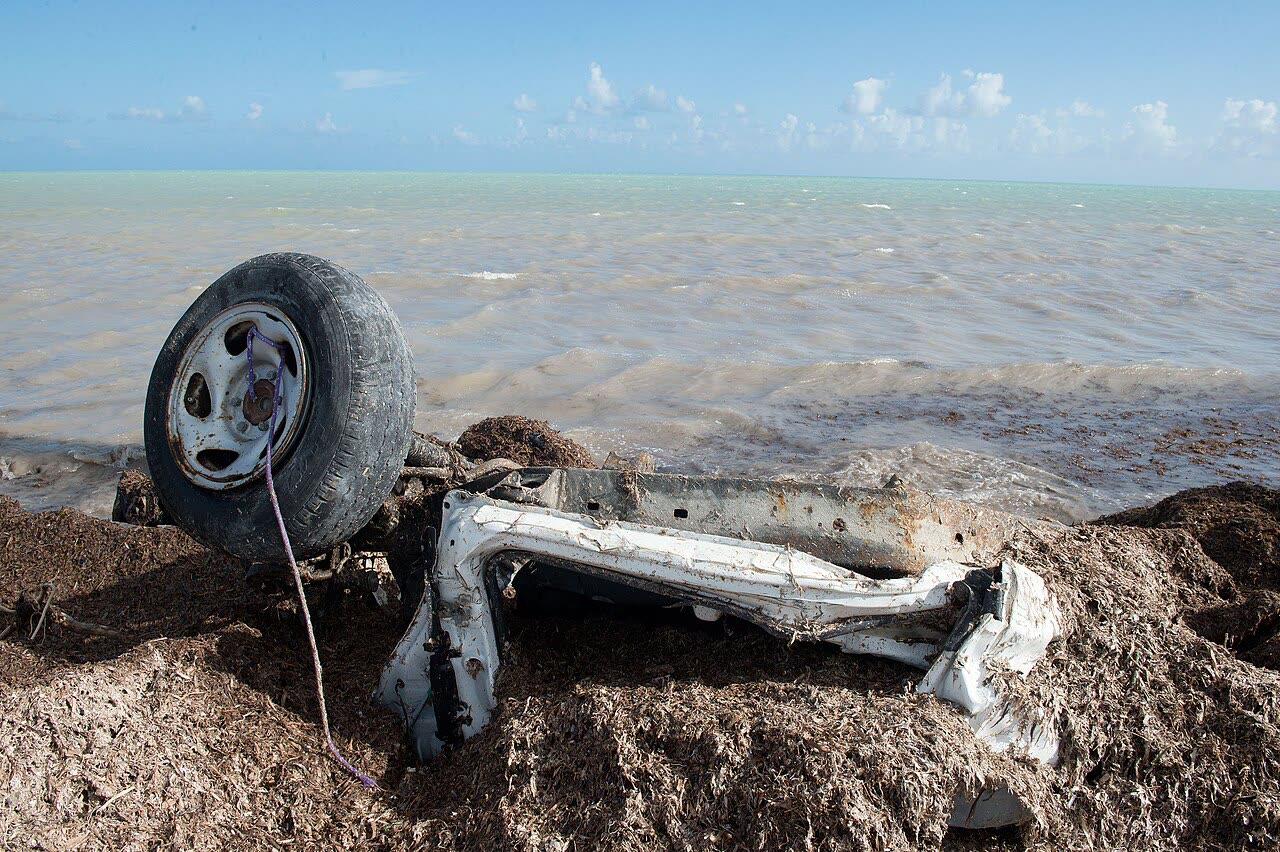
Debris field in Lower Matecumbe Key — FEMA's initial assessment found 25 percent of Keys homes destroyed, 65 percent significantly damaged
DAMAGE USFWS
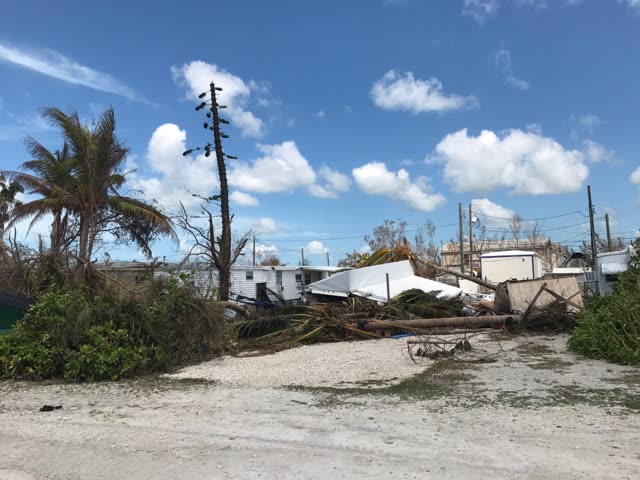
Hurricane damage on Summerland Key, among the hardest-hit of the lower Keys
FLOOD U.S. Coast Guard
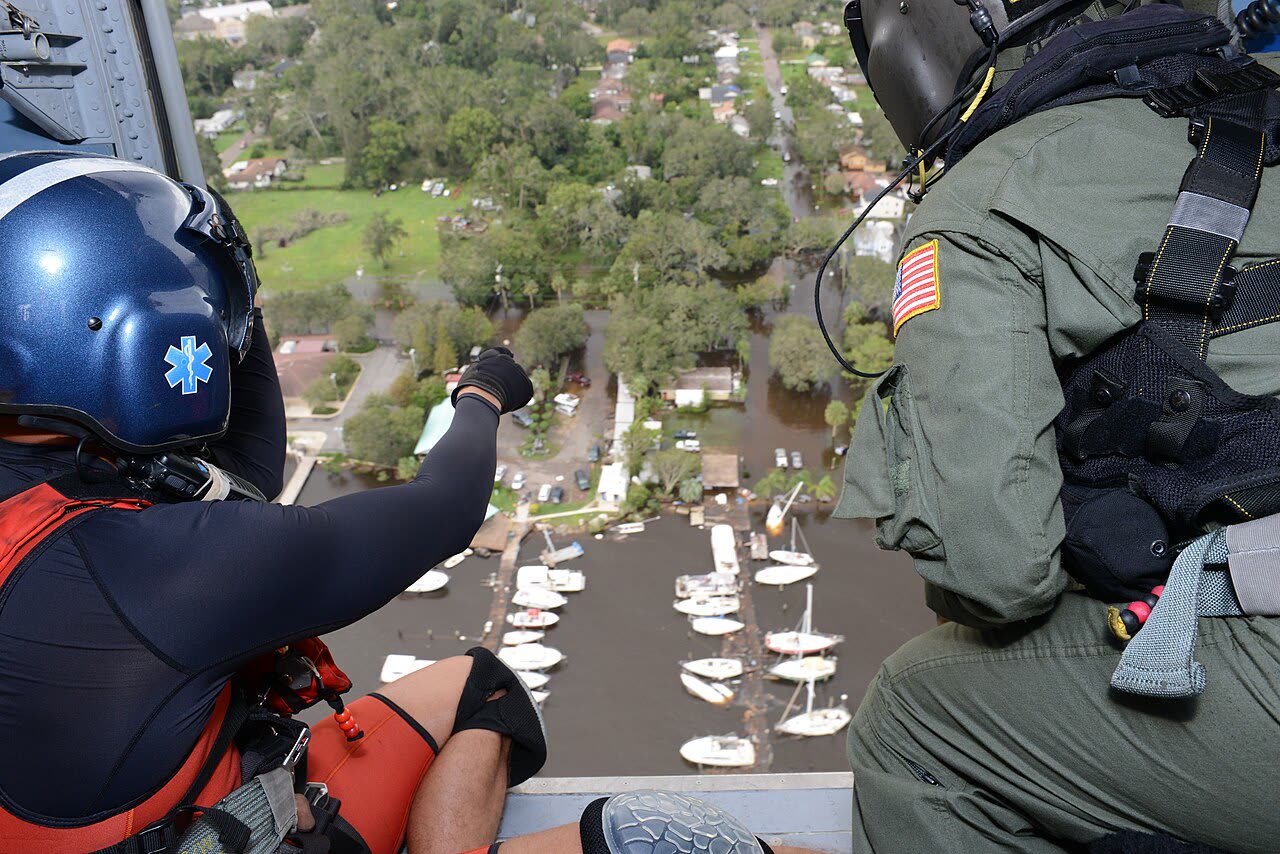
Coast Guard aircrew over a flooded Jacksonville neighborhood, September 11 — the St. Johns River broke its all-time flood record
AERIAL U.S. Customs and Border Protection
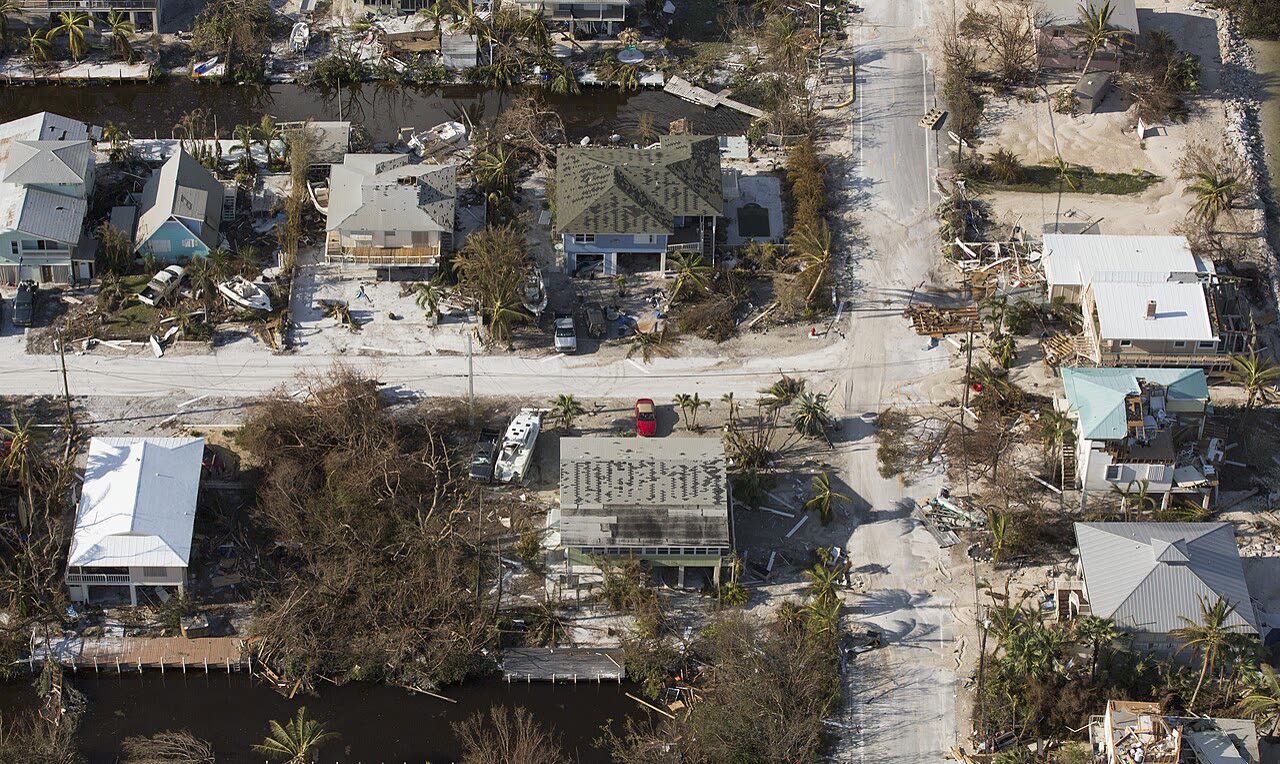
CBP aerial of damaged homes in the Florida Keys, September 12, 2017 — two days after the Cudjoe Key landfall

The storm

Irma was one of the strongest Atlantic hurricanes ever observed. A Cape Verde system that became a hurricane on August 31, 2017, it reached Category 5 on September 5 with sustained winds near 180 mph and held Category 5 intensity for roughly three days — devastating Barbuda, St. Martin, and the Virgin Islands, then raking the north coast of Cuba.

Florida spent a week watching model runs sweep the entire peninsula. The eventual track split the difference: first U.S. landfall at Cudjoe Key in the lower Florida Keys on the morning of September 10 as a Category 4 (130 mph, 929 mb per the NHC Tropical Cyclone Report), second landfall at Marco Island that afternoon as a Category 3 (115 mph).

Irma's wind field was enormous — tropical-storm-force winds spanned roughly 400 miles — so the whole state took damage regardless of track. Surge ran 5–10 ft in the Keys and pushed water into both coasts; Jacksonville, on the opposite side of the state from landfall, recorded record river flooding on the St. Johns. One oddity became folklore: Irma's offshore winds first sucked water out of Tampa Bay before returning it.

The evacuation was the largest in Florida history — an estimated 6.5 million people under orders.

Radar at 7:55 a.m. EDT as Irma's eye reached the lower Florida Keys, September 10, 2017
Radar at 7:55 a.m. EDT as Irma's eye reached the lower Florida Keys, September 10, 2017 NOAA / NWS Key West

The damage

The Keys took the direct hit. FEMA's initial assessment found about 25 percent of houses in the Keys destroyed and 65 percent significantly damaged, with mobile homes and older non-elevated structures faring worst. Marco Island and Naples took Category 3 winds; Everglades City flooded under surge.

Elsewhere the damage was broad rather than deep: roof coverings, soffits, screen enclosures, fences, and trees down across essentially every Florida county. Power outages peaked near two-thirds of the state. Statewide, the storm produced a rare event: simultaneous claim volume from all 67 counties.

NHC attributes $50 billion in damage — at the time the fifth-costliest U.S. hurricane — and 44 direct deaths in the U.S., with dozens more indirect, including 12 heat deaths at a Hollywood, FL nursing home that lost air conditioning, a case that produced criminal charges and a state generator mandate for care facilities.
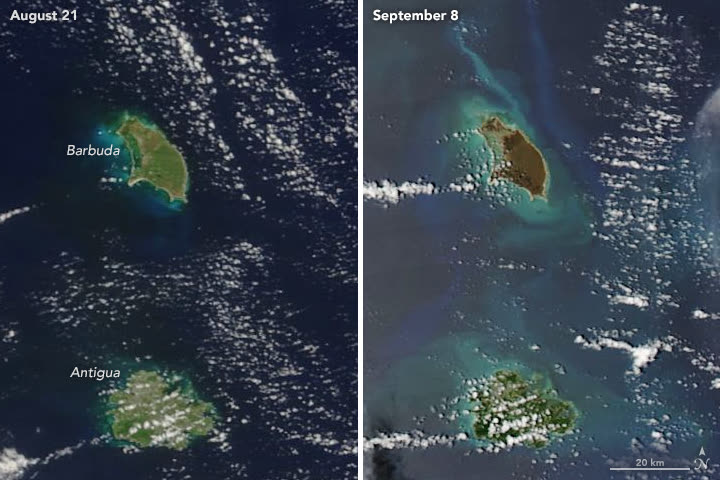
Barbuda before and after Irma — roughly 95 percent of the island's structures were damaged or destroyed
Barbuda before and after Irma — roughly 95 percent of the island's structures were damaged or destroyed NASA Earth Observatory

The insurance aftermath

Irma generated more claims than any Florida storm before it: 1,125,588 claims and an estimated $20.7 billion in losses per FLOIR's final catastrophe reporting (November 2020). Because the damage was statewide and mostly wind, the typical claim was not a slab case but a roof case: shingle and tile damage, water intrusion, pool-cage and fence losses — high volume, moderate severity.

That claim profile fed a litigation machine that was already running. Florida's one-way attorney-fee statute and assignment-of-benefits (AOB) practice — a homeowner signs benefits over to a contractor or water-mitigation firm, which then bills and sues the carrier directly — had grown AOB suits roughly 900 percent from 2008 to 2018. Irma poured a million claims into that system. Recurring pattern: emergency water-dry-out or roofing firms solicited AOBs door-to-door, inflated invoices, and litigated denials; carriers responded by tightening scopes and denying more claims outright, catching legitimate claimants in the crossfire.

Two aftershocks defined the following years:

  • Late-reported claims. Florida's then-3-year hurricane claim window (Fla. Stat. 627.70132) meant Irma claims kept arriving into September 2020, many solicited by contractors and public adjusters re-inspecting roofs years after the storm. Carriers denied late claims on prejudice and causation grounds ("that's wear and tear, not Irma"), producing a distinct litigation wave over what a 2- or 3-year-old roof claim must prove.
  • Loss creep. Industry estimates of Irma's ultimate cost rose for years as litigated and reopened claims developed — a phenomenon reinsurers named in rate filings and a direct input to the Florida premium spiral that followed.

The legislative response came in 2019: HB 7065 (creating Fla. Stat. 627.7152) required AOBs to be written, itemized, and rescindable within 14 days, imposed pre-suit notice and demand requirements on assignees, and rewrote the fee entitlement for AOB suits. It slowed AOB abuse but did not end property-insurance litigation growth — that took Ian and SB 2-A's elimination of one-way fees in December 2022. Irma is the storm that proved the pre-reform system could not absorb a million claims; every Florida insurance reform since traces to it.
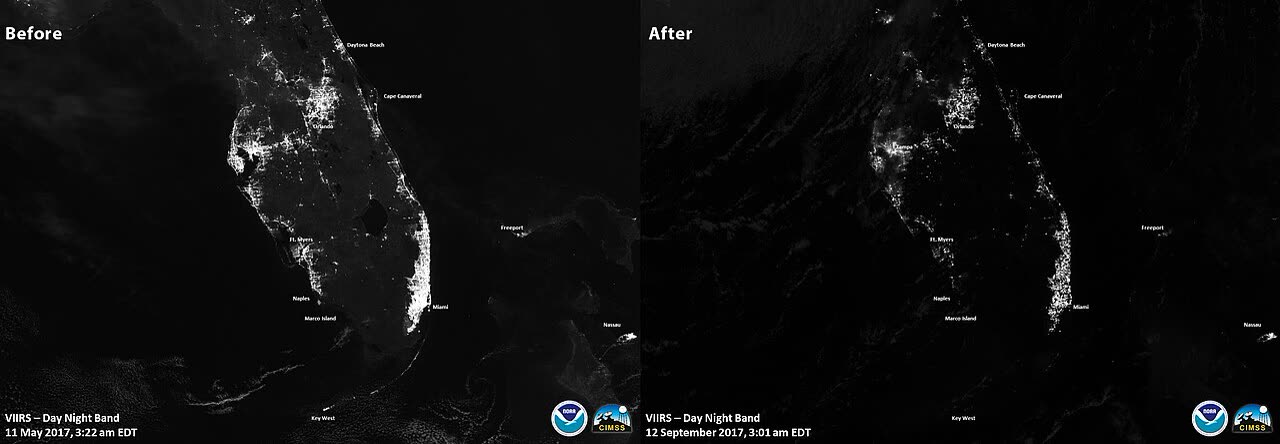
Florida's night lights before and after Irma — outages peaked near two-thirds of the state
Florida's night lights before and after Irma — outages peaked near two-thirds of the state NASA / NOAA

What policyholders learned

  • The AOB fine print mattered. Signing benefits over to a contractor meant losing control of the claim — and sometimes ending up in the contractor's lawsuit. Policyholders who paid contractors directly and kept the claim in their own name kept their settlement leverage.
  • "Wear and tear" became the default roof denial. On aging shingle and tile roofs, carriers attributed damage to deterioration, not wind. Claims that won paired date-specific evidence — pre-storm roof photos, satellite imagery, neighbor damage patterns — with an inspection documenting storm-consistent damage (creased shingles, fresh tile fractures).
  • Depreciation drove payout gaps. Actual-cash-value payments minus percentage deductibles left many mid-sized wind claims near zero. Policyholders learned to claim recoverable depreciation after completing repairs and to submit the completion documentation that releases it.
  • Late filing was legal but costly. Claims filed within the statutory window but years after the storm faced steep causation skepticism. Early filing — even a protective claim for damage not yet fully known — produced cleaner files and fewer prejudice arguments.
  • Statewide events stretch everything. With every county affected, adjuster inspections lagged weeks. Policyholders who documented damage immediately (dated photos before tarping, mitigation receipts) protected both the claim and the property.
  • The nursing-home deaths reframed "indirect" loss. Business-interruption, spoilage, and additional-living-expense coverage for prolonged power loss became standard questions in Florida policy reviews after Irma.

Independent informational resource — not legal advice. Damage figures are nominal (not inflation-adjusted) unless noted. Insurance-law summaries are drafted for education; consult an attorney about your specific claim.

AT LANDFALL · HURRICANE IRMA · 2017
5–10 ft
OF STORM SURGE · KEYS
HURRICANELAW.PRO FIELD FOOTAGE
03 THE FULL RECORD

Every official record of Irma

Reports, imagery archives, flood data, and claims records — straight from the agencies.

OUR LAW FIRM PARTNER · HALVERSEN LAW
Irma claim denied?
CALL FL941-390-3233CALL SC843-542-0454FREE CLAIM REVIEW
RELATED GUIDES
HurricaneLaw.Pro HURRICANELAW.PRO

The independent policyholder resource for Florida & South Carolina — storm archive, coverage law, denials, bad faith, and the complete claims playbook. 51 storms · 46 carriers · 97 public-adjuster firms · 37 city guides.

▸ SEE THE FULL SITE MAP — EVERY PAGE →
STORM ALERTS SOURCED FROM NOAA / NHC
SOUTH CAROLINA
496 Bramson Court, Suite 100
Mount Pleasant, SC 29464
CALL OR TEXT
FLORIDA
Tampa, FL
CALL OR TEXT
CLAIMS 9
DENIALS 8
BAD FAITH 7
COVERAGE 12
COMMERCIAL 8
ROOFS 8
TREES 5
DIRECTORIES
STORMS 51
WEATHER
NEWS & SITE 19
STORM ARCHIVE, CITIES & NEWS
Most recent below. Every storm dossier, city resource, and article is on its hub (linked at each heading) or the grouped site map →. All 46 carriers and 97 public-adjuster firms are in the Directories column above.
STORM ARCHIVE · 51 →
Hurricane Debby 2024Hurricane Helene 2024Hurricane Milton 2024Hurricane Idalia 2023Hurricane Ian 2022Hurricane Nicole 2022Hurricane Ida 2021Hurricane Laura 2020 View all 51 →
FLORIDA CITY RESOURCES · 29 →
Boca RatonBradentonCape CoralClearwaterDaytona BeachDestinFort LauderdaleFort Myers View all 29 →
SOUTH CAROLINA CITY RESOURCES · 8 →
BeaufortCharlestonColumbiaFlorenceGreenvilleHilton Head IslandMount PleasantMyrtle Beach
NEWS & UPDATES · 19 →

HurricaneLaw.Pro is an independent informational resource, not a law firm. Coverage summaries, policy-language quotations, dollar figures, deadlines, and chart examples throughout this site are general information based on typical or standard policy forms and are illustrative only — they are not a quote, a guarantee of coverage, or a promise of any outcome. Every insurance policy is different: your own policy, endorsements, and state law control, so read your policy and confirm current statutes. Weather imagery courtesy of NOAA, the National Hurricane Center, and the National Weather Service. Legal services are provided by our law firm partner, Halversen Law. Nothing on this site is legal advice; consult an attorney about your specific claim.

PrivacyTermsDisclaimerAboutContact
© 2026 HURRICANELAW.PRO — ALL RIGHTS RESERVED 27.9°N 82.5°W · ATLANTIC BASIN MONITOR
OUR LAW FIRM PARTNER
Halversen Law LICENSED · FLORIDA & SOUTH CAROLINA

All legal matters on this site are referred to and handled by our law firm partner, Halversen Law, a licensed law firm in Florida and South Carolina. HurricaneLaw.Pro is an informational resource and is not itself a law firm.

FREE CASE REVIEW