- •Florida runs two tiers: catastrophic ground cover collapse (CGCC) is mandatory in every policy; "sinkhole loss" coverage is an optional endorsement (Fla. Stat. § 627.706).
- •CGCC requires ALL FOUR: abrupt ground collapse + visible depression + structural damage + government condemnation. A cracked-but-livable house fails the test.
- •The 2011 reform (SB 408) followed a claim crisis, 24,671 sinkhole claims and $1.4B+ in costs, 2006-2010, and added a strict "structural damage" definition, testing protocols, and a 2-year claim deadline.
- •Claims are won on geotechnical evidence: SPT borings, GPR, and a § 627.7072-compliant engineering report, not on visible cracks.
- •South Carolina has real karst (Santee Limestone) but no mandatory coverage, the earth-movement exclusion applies unless endorsed.
CGCC is not sinkhole coverage: the comparison
The mandatory coverage and the optional endorsement side by side: the four-part CGCC test element by element, what each element kills in practice, and why most sinkhole damage fails it.
Read the comparison →Two coverages, one word
Florida sits on dissolving limestone, and its insurance law reflects three eras of dealing with that fact. After the 1981 Winter Park sinkhole swallowed a city block on live television, the Legislature made sinkhole coverage mandatory. A quarter-century later, facing a claims surge concentrated in the Tampa Bay "sinkhole alley" counties, the 2007 Legislature split the coverage in two, and the 2011 reform hardened the split into the system in force today (Fla. Stat. §§ 627.706-627.7074).
Tier one, catastrophic ground cover collapse (CGCC): is in every policy. Section 627.706(1) requires every insurer writing property insurance in Florida to cover it. But the statutory definition is built for the house that visibly falls into the earth, not the house that cracks above a subsiding void: all four elements below must be present, including a government condemnation order.
Tier two, "sinkhole loss" coverage, is optional. The insurer must offer it for an appropriate additional premium, and may require an inspection first. It covers structural damage to the building, including the foundation, caused by sinkhole activity, no condemnation required. After 2011, premiums for the endorsement rose steeply in the sinkhole counties (Citizens' actuarially indicated increases ran into the hundreds of percent), and most Florida homeowners today carry CGCC only. Which tier you bought is the first, and often the last, question in the claim.
The triggers, side by side
Sinkhole loss vs. catastrophic ground cover collapse
Same hole in the ground, two completely different coverage tests. The mandatory tier demands all four elements; the optional endorsement pays on structural damage alone.
1 · Abrupt collapse of the ground cover
2 · A depression clearly visible to the naked eye
3 · Structural damage to the building, including the foundation
4 · Condemned and ordered vacated by government order
All four are required, miss any one element and there is no CGCC coverage.
Cost: included in the base premium, in every admitted Florida policy since 2007.
Structural damage to the building, including the foundation, caused by sinkhole activity
"Sinkhole activity" means settlement or systematic weakening of the earth from movement or raveling of soils into voids created by water acting on limestone or similar rock.
No condemnation required
But "structural damage" is a five-part engineering definition keyed to the Florida Building Code (SB 408), cosmetic cracking alone does not qualify.
Cost: separate premium with 1, 2, 5, or 10 percent deductible options. A minority of policies, many owners dropped it after 2011.
Shared machinery, both tiers, post-SB 408
Two-year claim deadline (§ 627.706(5)); standardized testing (§ 627.7072); expert report with a presumption of correctness (§ 627.7073); neutral evaluation at DFS (§ 627.7074); payment tied to stabilization and repair, with a 90-day repair-contract requirement.
Statutory language paraphrased for layout, full text and citations in the sources list below.
SOURCE: FLA. STAT. §§ 627.706-627.7074 (2025). DRAFTED FOR EDUCATION: STATUTE AND POLICY FORM CONTROL.
Read the left column against a real loss and the design is plain: a home can be structurally wrecked by a growing sinkhole, floors displaced, foundation cracked through, and fail CGCC because no official has condemned it and the ground never visibly opened. That homeowner's coverage lives or dies on whether the optional endorsement was purchased. It is the single most consequential checkbox in Florida property insurance.
The statutory language
FLA. STAT. § 627.706(2)(a), "CATASTROPHIC GROUND COVER COLLAPSE""…geological activity that results in all the following: 1. The abrupt collapse of the ground cover; 2. A depression in the ground cover clearly visible to the naked eye; 3. Structural damage to the covered building, including the foundation; and 4. The insured structure being condemned and ordered to be vacated by the governmental agency authorized by law to issue such an order for that structure."
FLA. STAT. § 627.706(2), "SINKHOLE LOSS" / "SINKHOLE ACTIVITY""'Sinkhole loss' means structural damage to the covered building, including the foundation, caused by sinkhole activity. Contents coverage and additional living expenses apply only if there is structural damage to the covered building caused by sinkhole activity." … "'Sinkhole activity' means settlement or systematic weakening of the earth supporting the covered building only if the settlement or systematic weakening results from contemporaneous movement or raveling of soils, sediments, or rock materials into subterranean voids created by the effect of water on a limestone or similar rock formation."
Note what "sinkhole activity" excludes by definition: erosion, expansive clay, decomposing organic soils, compaction of fill. Those are all subsidence, the ground sinking, but they are not sinkhole subsidence, and the earth-movement exclusion catches them. Carriers deny on exactly this line, which is why the geology of why your ground moved matters more than the fact that it moved.
The sinkhole-claim crisis and the 2011 rewrite
The current statute cannot be understood without the crisis that produced it. FLOIR's 2010 sinkhole data call, the study that drove the reform, counted 24,671 sinkhole claims from 2006 through 2010, rising from 2,360 in 2006 to 6,694 in 2010, with total costs exceeding $1.4 billion. Two-thirds of the claims came from three Tampa Bay counties, Hillsborough, Pasco, and Hernando, the corridor the industry named "sinkhole alley." Most claims involved cosmetic cracking; most settlements were paid in cash; and Senate staff found that a large share of cash settlements were never used to repair or stabilize anything.
SB 408, signed in May 2011, rebuilt the system around that finding. Its key moves, still in force: a technical, five-part "structural damage" definition keyed to Florida Building Code displacement and deflection criteria, ending coverage for cosmetic cracking alone; a 2-year deadline to report a sinkhole claim from when you knew or should have known of the loss (§ 627.706(5)); standardized testing protocols for professional geologists and engineers (§ 627.7072, following Florida Geological Survey standards); a statutory presumption of correctness for the resulting report (§ 627.7073); payment tied to actual stabilization and repair, with a 90-day window to enter a repair contract; and a neutral evaluation program at DFS as the dispute off-ramp (§ 627.7074).
For policyholders the reform cuts both ways. It killed the easy cash claim, but the same statutes give a well-documented claim real machinery: mandated investigation standards the carrier must follow, a right to demand testing, and a neutral-evaluation forum that does not require filing suit. The claims that clear the bar now are the ones built like engineering cases from day one.
Warning signs, subsidence, and the famous holes
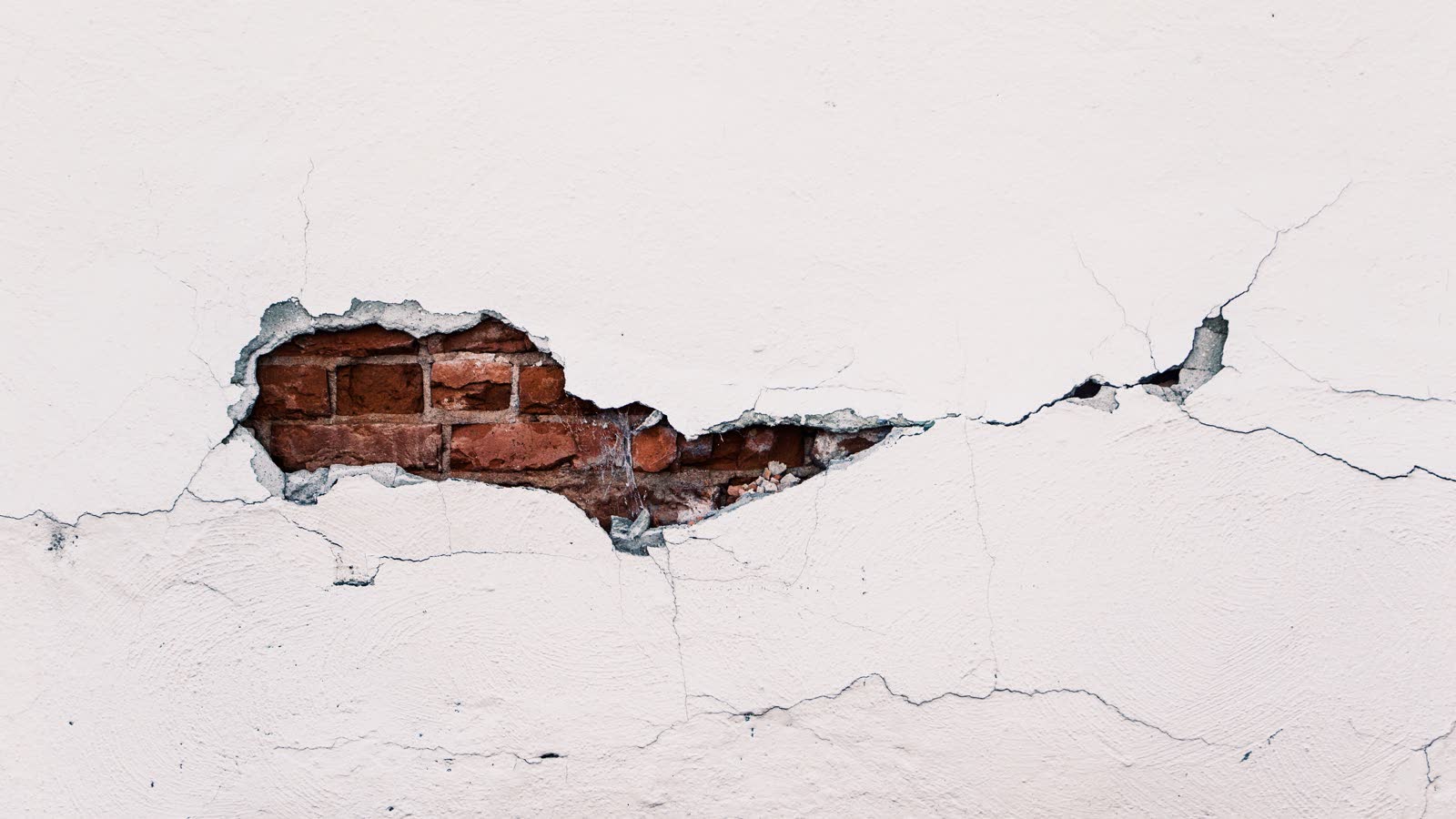
Most sinkhole losses do not announce themselves. Cover-collapse sinkholes, the abrupt, deadly kind, are the minority: Winter Park 1981, which consumed a house, several Porsches, and part of a municipal pool over a single day; or Seffner 2013, where a cover-collapse opened under a bedroom at night and killed Jeff Bush, whose body was never recovered. Far more common is cover-subsidence: sand ravelling slowly into a dissolved void, reading at the surface as stair-step cracks in block walls, cracks radiating from window and door corners, doors and windows that rack out of square, separation between wall and ceiling or floor, and a dish-shaped depression in the yard that holds water after rain.
Every one of those signs has innocent alternative explanations, shrinkage, thermal movement, expansive clay, normal settlement of fill. That ambiguity is the whole claim fight, and it is also why the 2-year "knew or should have known" clock is dangerous: the carrier will argue the first hairline crack started it. When signs appear, photograph and date them, measure crack widths, and report in writing early. A rejected claim can be contested; a late one may be gone. Rain matters too, saturating storms load weakened ground, which is why claim activity spikes after tropical systems stall over the karst belt. If a named storm preceded your damage, note it in the claim: the wind policy and the sinkhole question run on different deadlines.
Testing and the geotech report, how these claims are actually decided
A sinkhole claim is decided in the ground, by instruments. The statutory investigation (§§ 627.707, 627.7072) runs through a professional geologist or engineer using standardized methods: Standard Penetration Test (SPT) borings, the definitive tool, driving a sampler down 30-80+ feet to log soil density and find the loose, ravelled zones and voids over limestone; ground-penetrating radar (GPR) to image shallow anomalies and map where to drill; sometimes electrical resistivity, cone penetrometer soundings, and floor-level (manometer) surveys that measure how far the slab has actually displaced, feeding directly into the SB 408 structural-damage criteria.
The output is a § 627.7073 report certifying whether sinkhole activity exists and whether it caused structural damage "within a reasonable professional probability", and that report carries a statutory presumption of correctness. Practical consequences: if the carrier denies without testing, you can demand testing (sharing up to $2,500 of cost, refunded if a sinkhole loss is confirmed); if the carrier's report goes against you, a competing report from your own geotechnical team is effectively mandatory before neutral evaluation or suit; and every boring log, GPR transect, and manometer survey belongs in your file. Public-adjuster and engineering help is mapped in our experts directory.
The denial patterns
"No structural damage." The workhorse post-2011 denial: testing confirms some sinkhole activity, but the engineer concludes the damage doesn't meet the five-part SB 408 definition. Counter with your own engineering, floor-level surveys and code-based deflection analysis, not photographs of cracks.
"Not sinkhole activity." The borings get reinterpreted: expansive clay, organic soils, buried debris, erosion. Sometimes true; often contestable. Neutral evaluation (§ 627.7074) exists for exactly this expert-vs-expert deadlock.
"CGCC criteria not met." For owners without the endorsement: the house is damaged but standing, so element 4 (condemnation) fails. Check whether a building official has in fact posted the structure unsafe, the difference between "damaged" and "condemned and ordered vacated" is the difference between zero and policy limits. And "late notice" under the 2-year rule, fight it on when a reasonable person would have connected the signs to a sinkhole, and see how to read the denial letter before responding to any of these.
South Carolina's karst pockets, minor, but real
South Carolina is not Florida, but it is not sinkhole-free. The Eocene-age Santee Limestone underlies a band of the coastal plain, roughly the Santee/Lake Marion country through Orangeburg, Dorchester, and Berkeley counties, and it dissolves the same way Florida's limestone does. State geologic-hazard mapping documents active karst there, and sinkholes have opened as far downstream as the Charleston area. The exposure is a fraction of Florida's, which is exactly why the insurance is thinner: South Carolina has no CGCC mandate and no sinkhole statute. The standard earth-movement exclusion applies in full, and coverage exists only through a sinkhole or earth-movement endorsement that few owners in the karst belt know to ask for. If you own on the Santee Limestone, that endorsement question is worth a call to your agent this week, and any denial runs through the SC DOI consumer complaint process rather than a Florida-style statutory scheme.
Florida vs. South Carolina
- Mandatory: CGCC in every property policy (§ 627.706(1)); sinkhole loss must be offered as an optional endorsement, 1/2/5/10% deductible options.
- Deadline: 2 years from knew-or-should-have-known (§ 627.706(5)), separate from the hurricane-claim clocks in § 627.70132.
- Machinery: § 627.7072 testing standards · § 627.7073 report with presumption of correctness · § 627.7074 neutral evaluation at DFS · payment tied to repair, 90-day contract rule.
- Geography: statewide karst; claim history concentrated in Hillsborough, Pasco, Hernando ("sinkhole alley") and Central Florida.
- No mandate: no CGCC equivalent, no sinkhole statute, the policy's earth-movement exclusion applies as written unless endorsed.
- Deadline: policy notice provisions plus the 3-year contract suit period; no sinkhole-specific claim clock.
- Machinery: ordinary claim process, SC DOI consumer complaint, appraisal where the policy provides it, improper-claims-practices law (S.C. Code § 38-59-20) for conduct.
- Geography: karst limited to the Santee Limestone belt of the coastal plain (Orangeburg, Dorchester, Berkeley); most of the state has effectively no sinkhole risk.
Statutes and deadlines summarized as of July 2026 and paraphrased for readability; amendments, policy-form variations, and case law create exceptions. Verify against current statute and your policy.
Sinkhole coverage, the questions everyone asks
Doesn’t every Florida policy cover sinkholes?
Every Florida property policy must cover catastrophic ground cover collapse (Fla. Stat. § 627.706(1)), but CGCC has a four-part test: abrupt collapse of the ground cover, a depression clearly visible to the naked eye, structural damage to the building including the foundation, and condemnation with an order to vacate. All four are required. A house with sinkhole cracks that is still safe to live in fails the test. Coverage for that kind of loss, "sinkhole loss", is a separate optional endorsement you must buy for additional premium.
What counts as "structural damage" in a sinkhole claim?
Since the 2011 reform (SB 408), "structural damage" is a five-part technical definition keyed to the Florida Building Code, interior floor displacement or deflection beyond set tolerances, foundation displacement or deflection exceeding code acceptance criteria, damage that compromises the building’s structural stability or safety, and similar engineering thresholds. Cosmetic cracking alone does not qualify. This definition, not the dictionary, is what the carrier’s engineer is applying when the report says "no structural damage."
How long do I have to report a sinkhole claim in Florida?
Two years. Under Fla. Stat. § 627.706(5), a sinkhole-loss claim must be made within two years after the policyholder knew or reasonably should have known about the sinkhole loss. Progressive cracking makes "should have known" a live fight, carriers argue the clock started at the first crack. Report early and in writing.
The carrier’s testing found no sinkhole activity. Can I challenge it?
Yes. The statutory scheme lets you demand testing if the insurer denies without it (you may have to share up to $2,500 of the cost, refunded if a sinkhole loss is confirmed, § 627.707), you can retain your own professional geologist or engineer to test to the same § 627.7072 standards, and either side can invoke the state’s neutral evaluation program (§ 627.7074), a DFS-administered review by an independent expert. The carrier’s report carries a statutory presumption of correctness, so a competing expert report is usually essential.
If my sinkhole claim is paid, can I just keep the money?
Generally no. Post-SB 408 law ties payment to repair: the insurer may pay stabilization and repair costs as work is performed per the engineering recommendations, and you generally must enter a repair contract within 90 days of the settlement or coverage determination to collect beyond actual repairs. Walking away with a cash settlement, the pattern that fueled the pre-2011 crisis, is largely foreclosed.
Do sinkholes happen in South Carolina?
Yes, less often than Florida, but the karst is real. The Eocene-age Santee Limestone under parts of the coastal plain (roughly the Santee/Lake Marion area through Dorchester, Berkeley, and Orangeburg counties) dissolves the same way Florida’s limestone does, and sinkholes have opened in the Charleston area. South Carolina has no Florida-style mandatory coverage: the standard earth-movement exclusion applies, and protection requires a sinkhole or earth-movement endorsement most owners don’t carry.
Is storm-related ground failure a sinkhole loss?
Sometimes. Heavy rain events accelerate sinkhole formation, dissolved limestone voids collapse when saturated ground loads them, which is why claim activity spikes after tropical systems stall over Central Florida. But erosion, ravelling fill, and washouts are not "sinkhole activity" (dissolution of limestone or similar rock) under the statute, and carriers deny on that distinction. The geotech investigation, borings, not opinions, is what sorts dissolution from erosion.
- FLA. SENATE Fla. Stat. § 627.706, sinkhole insurance; catastrophic ground cover collapse; definitions ↗
- JUSTIA Fla. Stat. § 627.707, investigation of sinkhole claims; insurer payment ↗
- FLA. SENATE Fla. Stat. § 627.7073, sinkhole reports (presumption of correctness) ↗
- FLOIR FLOIR: Report on Review of the 2010 Sinkhole Data Call (PDF) ↗
- FLA. SENATE Florida Senate Interim Report 2011-104, issues relating to sinkhole insurance (PDF) ↗
- COLE SCOTT & KISSANE SB 408 (2011), significant changes to sinkhole claims ↗
- INSURANCE JOURNAL Florida’s top 10 sinkhole-prone counties ↗
- SC DNR Geologic hazards of the South Carolina coastal plain (PDF) ↗
- SC DES / DNR Review of sinkhole-collapse problems in a carbonate terrane (SC) (PDF) ↗
Not legal advice; consult an attorney about your specific claim. FLOIR claim statistics as reported in the agency's data call reports.
Sinkhole claims are won on the geology report and the 2-year clock
Sinkhole coverage differs sharply between the two states. Florida defines a sinkhole loss and structural damage by statute (627.706) and requires the carrier to investigate and, if it denies, offer neutral evaluation before suit (627.707). South Carolina has no comparable mandate: sinkhole and catastrophic ground cover collapse are often an endorsement you either bought or did not. A cracked wall or a dip in the yard is not automatically covered; the policy pays only when testing confirms the statutory definition, so the ground investigation is the claim.
The carrier hires a geology or engineering firm to confirm sinkhole activity or blame clay shrinkage, poor construction, or settling. That report drives everything, so read it closely and get your own engineer to rebut it when the conclusions do not fit the cracking. Photograph the interior and exterior damage before any repair, and keep every test result. In Florida a sinkhole loss must be reported within two years of when you knew or should have known, and if the insurer denies, neutral evaluation can move the claim without litigation. If the denial rests on a soil report you dispute, use the free review below.
Cracks in the slab and a "no structural damage" letter? Test the testing.
Upload the denial, the carrier's § 627.7073 report if you have it, and your photos. You'll get a straight answer on whether the investigation met the statutory standards, whether the 2-year clock is a real problem in your case, and what a competing geotech workup could change.

 HURRICANELAW.PRO
 A comprehensive property-insurance claim resource for policyholders: denied and underpaid claims, coverage and bad-faith law, storm dossiers, carrier profiles, city guides, and the complete claims playbook. Florida and South Carolina.
▸ SEE THE FULL SITE MAP →Coverage summaries, policy-language quotations, dollar figures, deadlines, and chart examples throughout this site are general information based on typical or standard policy forms and are illustrative only: they are not a quote, a guarantee of coverage, or a promise of any outcome. Every insurance policy is different: your own policy, endorsements, and state law control, so read your policy and confirm current statutes. Weather imagery courtesy of NOAA, the National Hurricane Center, and the National Weather Service. Legal services are provided by Halversen Law. Nothing on this site is legal advice; consult an attorney about your specific claim.
Legal matters are handled by Halversen Law, a law firm licensed in Florida and South Carolina.