

The storm
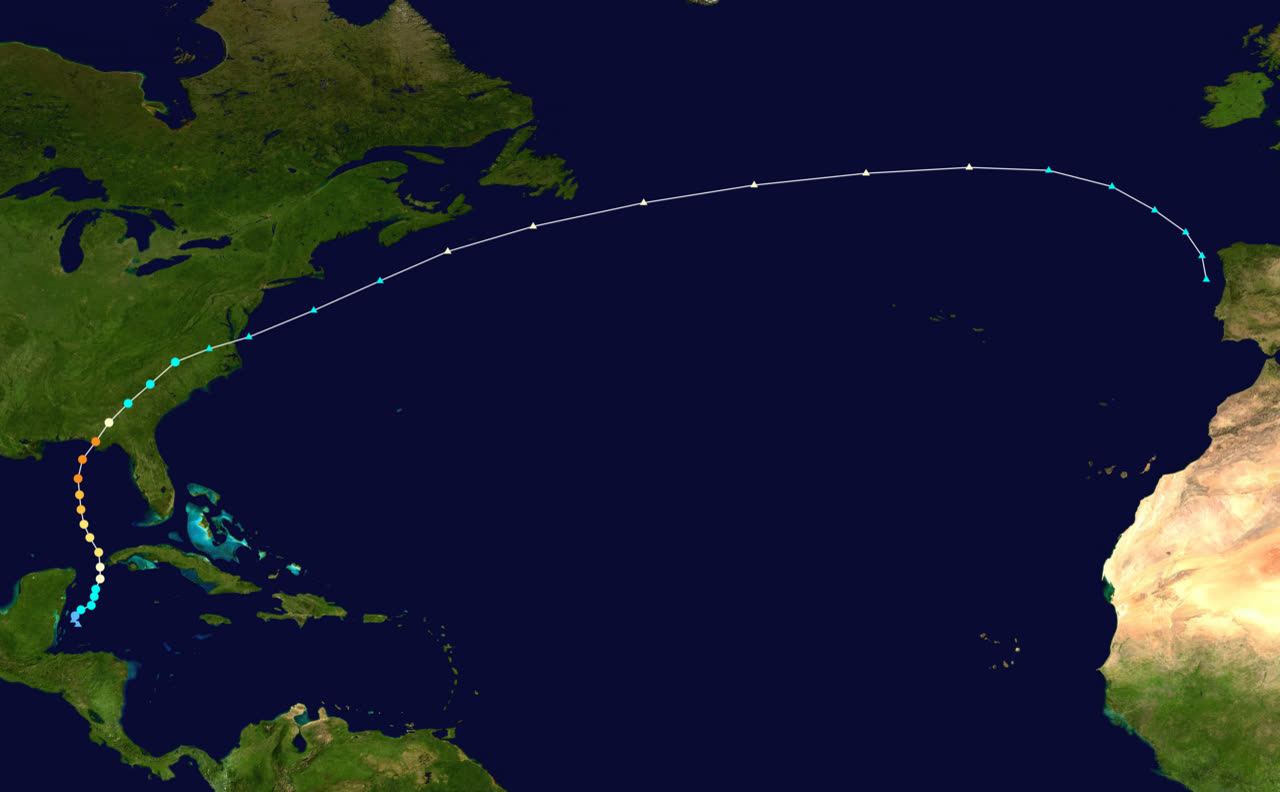
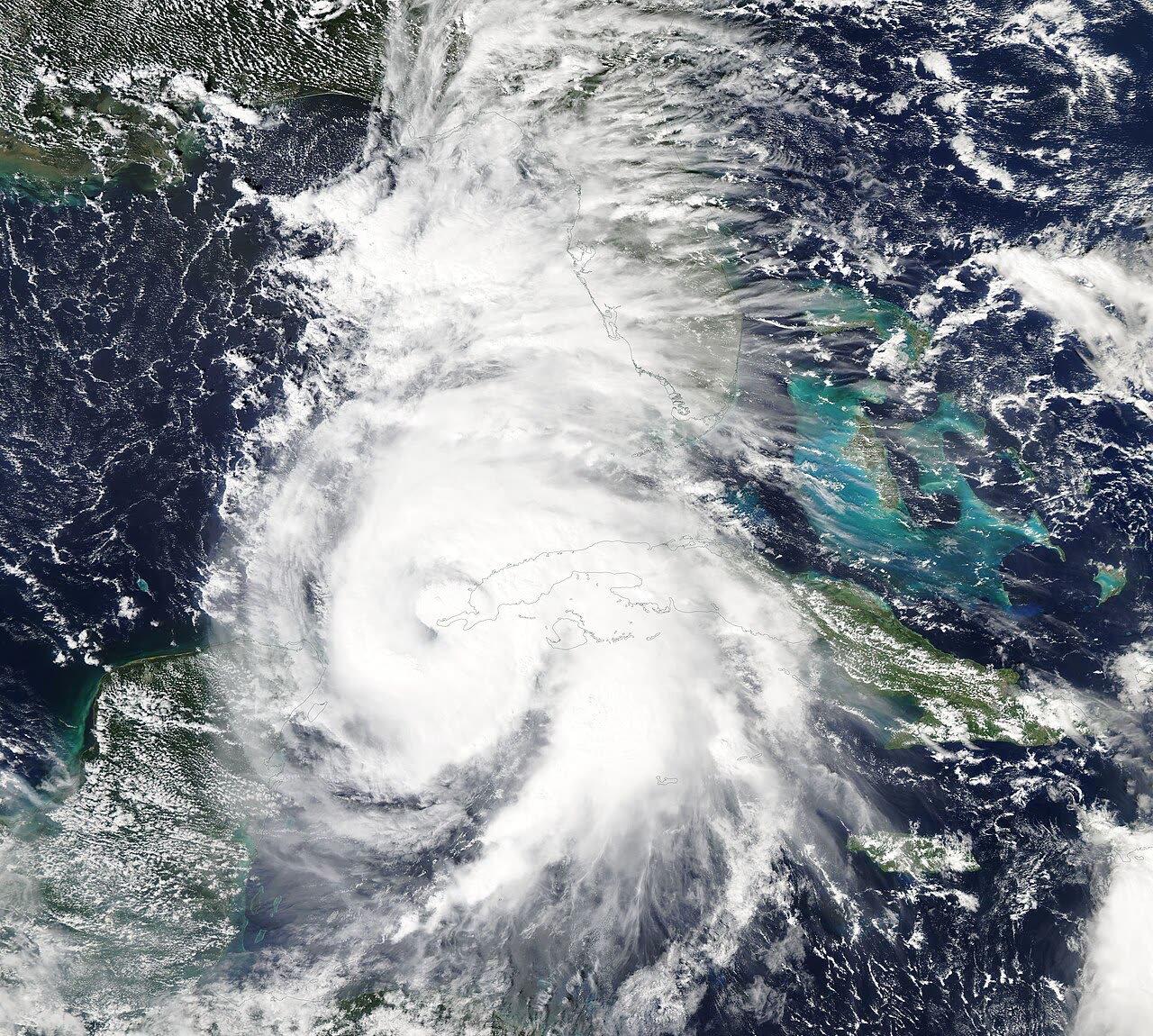
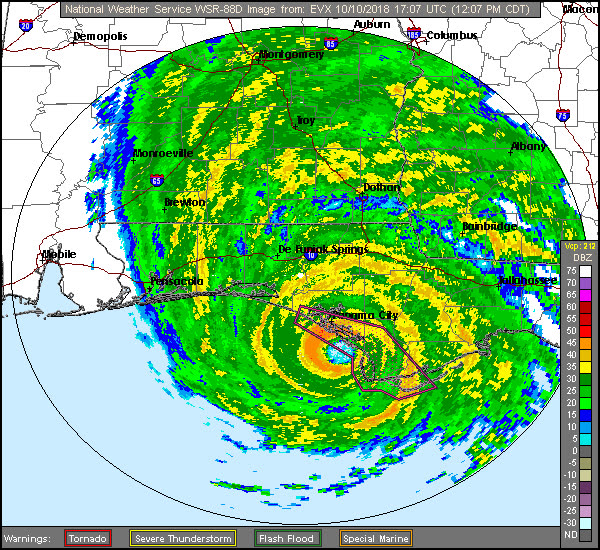
Michael formed from a broad disturbance in the northwestern Caribbean on October 7, 2018. It had three days of ocean between it and the Florida Panhandle, and it used all of them to strengthen.
It never stopped intensifying. Michael crossed the Gulf gaining strength through the final hours before landfall, the opposite of the weakening pattern forecasters often expect near the coast. At 12:30 p.m. CDT on October 10, it struck near Mexico Beach and Tyndall Air Force Base at Category 5 intensity: 160 mph sustained winds, 919 mb central pressure.
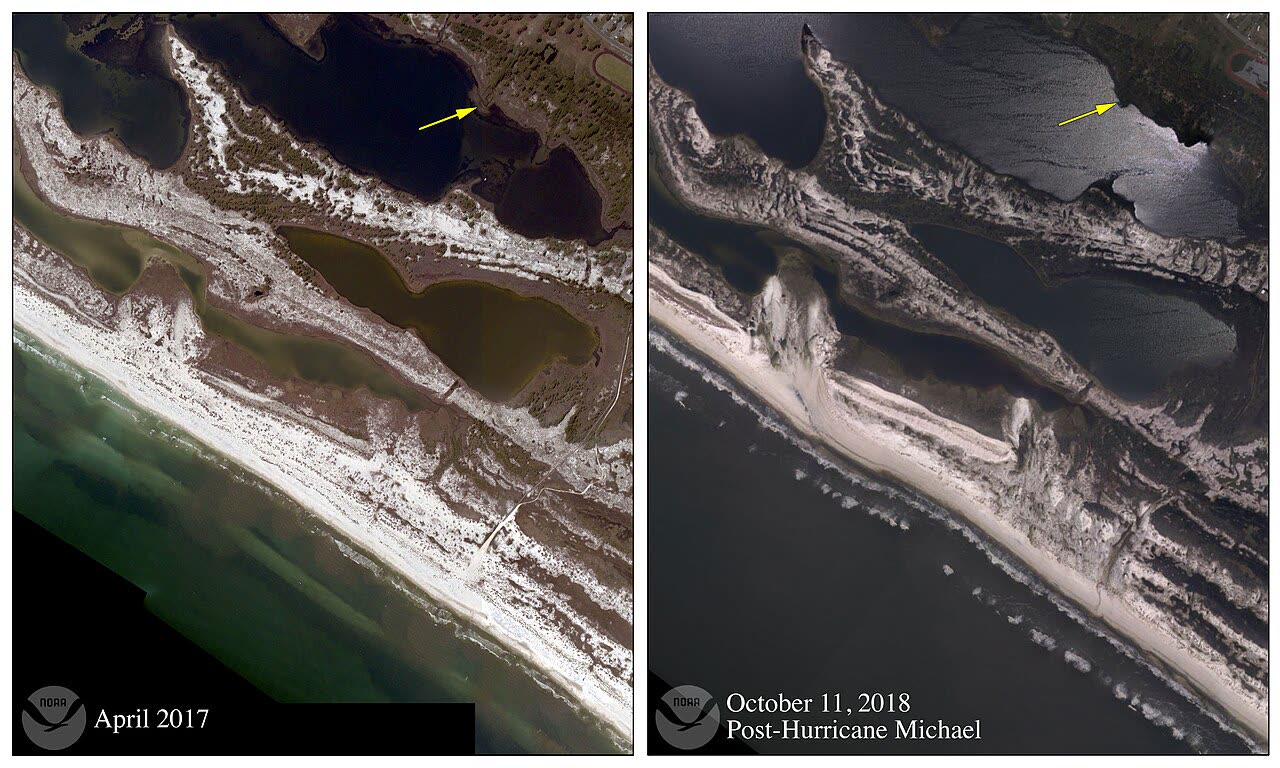
The numbers put it in rare company. Michael was the first Category 5 landfall on the continental U.S. since Andrew in 1992, and its 919 mb pressure ranks among the lowest ever recorded at a CONUS landfall. Storm surge reached 9-14 feet above ground level from Mexico Beach through Port St. Joe.
Michael was still a major hurricane when it crossed into Georgia, the first to do so since 1898. The National Hurricane Center attributes 59 deaths and roughly $25 billion in damage to the storm.
The damage
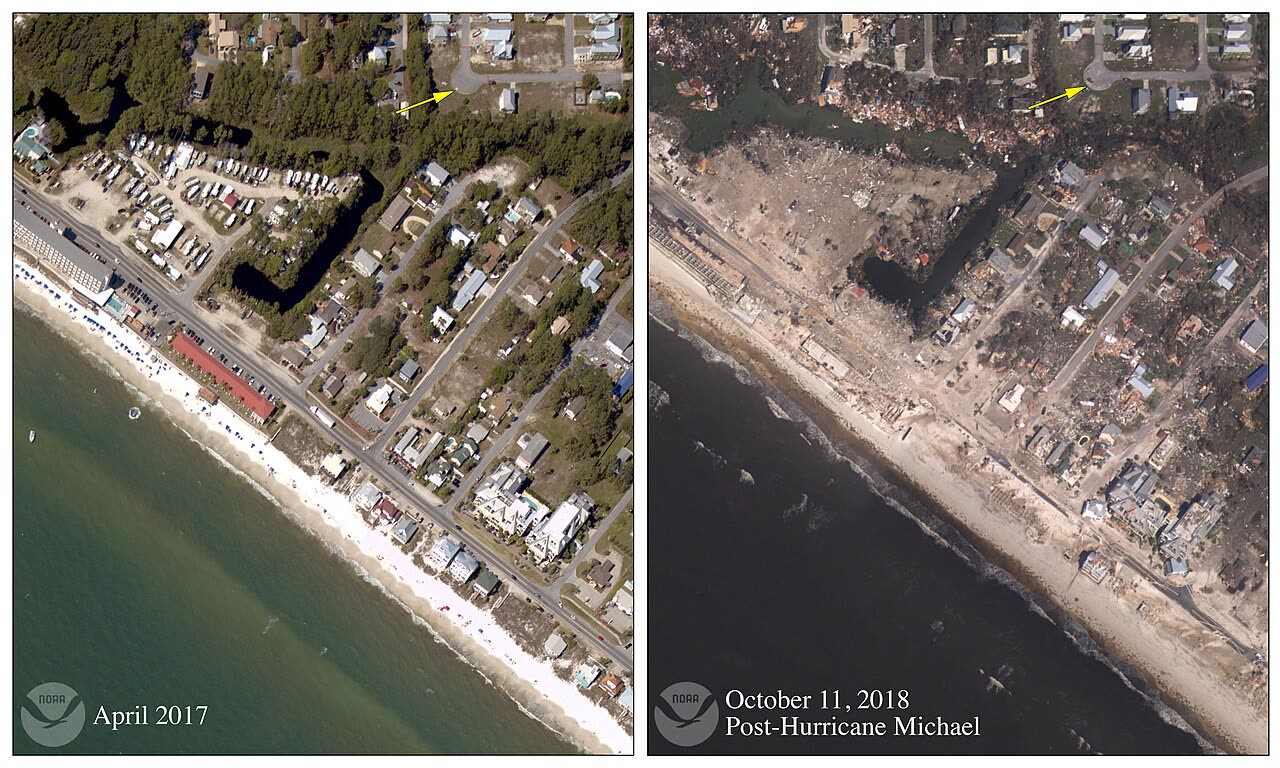
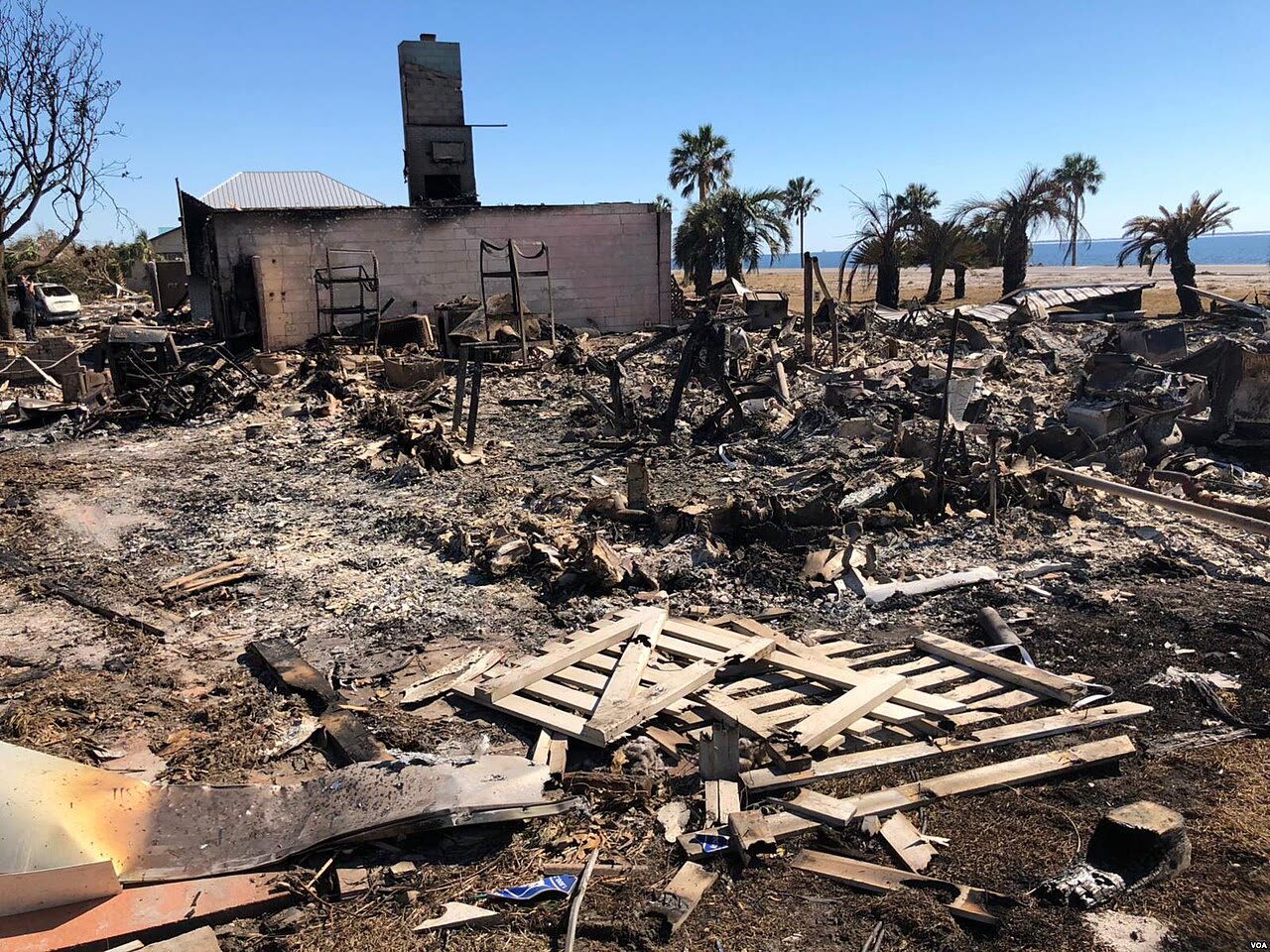
Mexico Beach took the core. Surge and 160-mph winds together leveled most of the town; entire blocks near the waterfront were swept to slab. Tyndall Air Force Base, directly in the eyewall, sustained damage to nearly every structure on the installation.
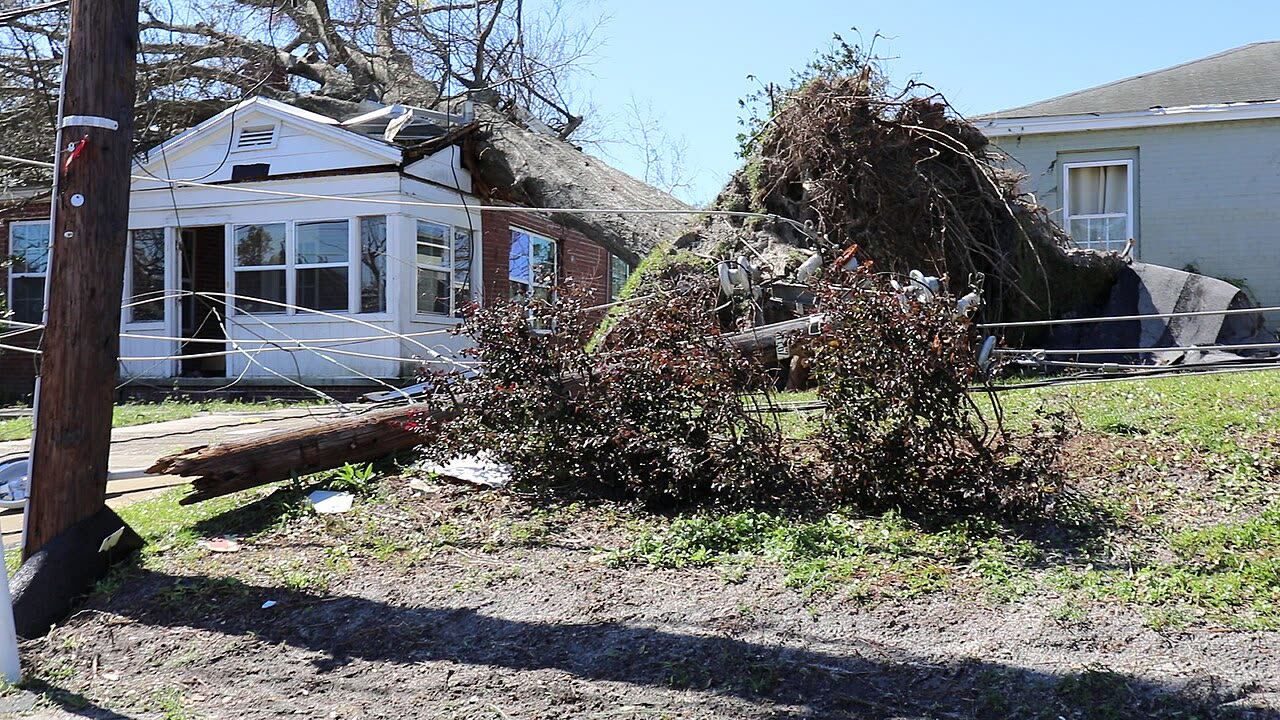
Inland, the story was wind. Panama City, Lynn Haven, and Callaway, miles from the surge zone, lost roofs by the tens of thousands. The damage pattern that would dominate the claims fight was partial roof failure: shingles stripped, decking exposed, then weeks of rain into open structures before tarps or repairs arrived.
The wind field stayed destructive far inland. Timber losses across the Panhandle and southwest Georgia were severe, and rural counties like Jackson and Calhoun, with older housing stock and thinner insurance coverage, saw some of the highest damage rates relative to property values.
The insurance aftermath
The claim count: 149,773 total claims and more than $7.4 billion in estimated insured losses, per the Florida Office of Insurance Regulation's data call (as of October 25, 2019). Bay County alone generated 95,184 claims, nearly 60% of the statewide total.
The problem wasn't the count. It was the pace. One year after landfall, 12,382 residential and 3,773 commercial claims were still open. Two years after landfall, FLOIR data showed 14% of residential claims still without payment. Of claims closed by October 2019, 20,980 had been closed without payment.
The Panhandle became a case study in slow-pay and underpayment disputes. Common patterns in the litigation that followed: initial roof estimates far below replacement cost, disputes over matching (repairing part of a roof or siding versus replacing it), interior water damage attributed to "wear and tear" or maintenance rather than wind-created openings, and depreciation holdbacks that policyholders struggled to recover.
Michael also stressed the carrier side. Several smaller Florida insurers concentrated in the Panhandle were weakened by Michael losses and litigation costs; Florida saw seven insurer insolvencies in the window between Michael (2018) and Ian (2022). Legal costs for Florida insurers exceeded $3 billion in 2019 alone.
The legislative response reshaped Florida claims practice. Assignment-of-benefits reform passed in 2019 (HB 7065). Later sessions (SB 76 in 2021, SB 2-A in 2022) shortened the window to file or reopen a claim, Michael-era policyholders had up to 3 years from the date the hurricane made landfall to file, reopen, or supplement a claim (Fla. Stat. 627.70132, 2018 version); storms after the 2022 reforms get far less time. Michael claims filed under the old rules kept trickling into courts into 2023.
What policyholders learned
- "Wear and tear" denials on wind-damaged roofs were the signature dispute. Policyholders who prevailed typically had pre-storm roof photos, maintenance records, or an engineer's report tying damage to wind uplift rather than age.
- Partial-repair estimates lost to matching arguments. Where carriers proposed patching sections of roof or siding, policyholders argued repaired sections could not match undamaged ones; documented manufacturer discontinuations helped.
- Delay itself became compensable. Interior damage that worsened while claims sat unpaid was documented with dated photos; policyholders who logged every call, adjuster visit, and estimate built the record that later supported bad-faith and appraisal demands.
- Depreciation holdbacks went unclaimed. Many policyholders never submitted proof of completed repairs to recover recoverable depreciation. Those who tracked invoices and filed for the holdback collected it.
- Deadlines mattered. The right to file, reopen, or supplement a Michael claim ran 3 years from the date the hurricane made landfall. Policyholders who discovered underpayment early could still act; today's shorter statutory windows make early documentation more important, not less.
- Public records helped. FLOIR's published claims data (open rates, closed-without-payment rates by county) gave policyholders and their representatives benchmarks to challenge carrier assertions that delays were normal.
Not legal advice; consult an attorney about your specific claim. Damage figures are nominal (not inflation-adjusted) unless noted.