- •Florida has a matching statute: § 626.9744 requires reasonable repairs or replacement of items in adjoining areas when replacements don't match, with the degree of uniformity achievable a statutory factor.
- •It survived 2022-23, but the ground shifted: SB 4-D's 25% roof-rule exception favors repair, and carriers filed endorsements capping matching costs (commonly 1% of Coverage A).
- •South Carolina has no matching statute. The fight runs on policy language, appraisal, and § 38-59-20 improper-claims-practices law.
- •Discontinued product is your leverage: an iTel report proving no current match turns a patch scope into a replacement argument.
- •Matching is an amount-of-loss dispute, which means appraisal, not just litigation, can win it.
The matching problem, in one roof
A hurricane tears shingles off your south slope. The adjuster agrees: wind damage, covered. The estimate arrives priced for four squares of shingles, on a roof whose product was discontinued six years ago. Whatever gets nailed up there will not match in color, profile, or dimension. Your "repaired" roof will announce its patch from the street, and every future buyer's inspector will note it.
That is the matching problem. It appears wherever building materials come in product lines that change and discontinue: shingles, vinyl and fiber-cement siding, floor tile, hardwood plank, carpet. The policy promises to put you back where you were: a house with one roof, not a house with two. Whether the law forces the insurer to honor that promise beyond the strictly damaged area is matching law, and it varies sharply by state. Florida legislated it. South Carolina left it to the policy and the courts.
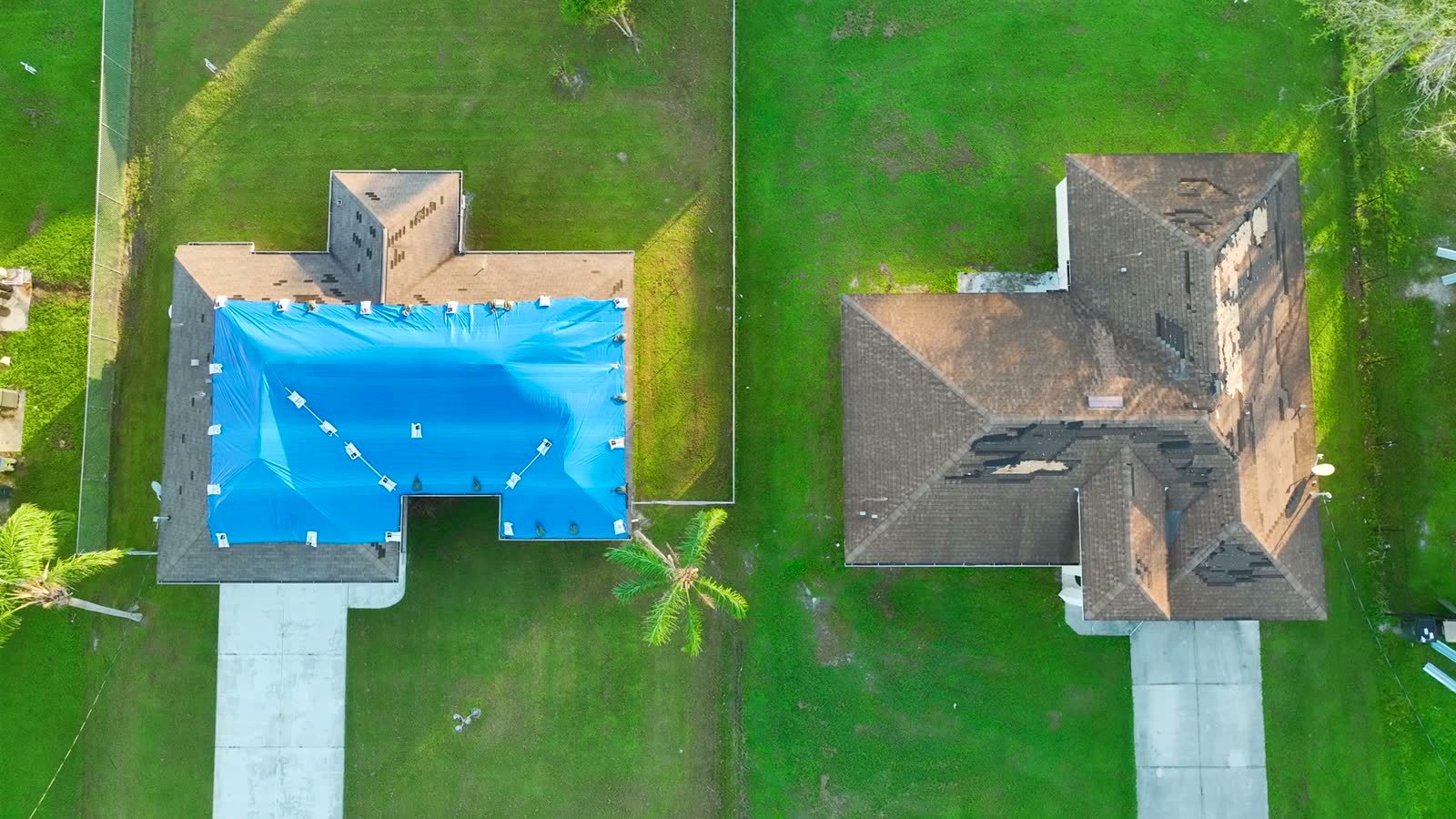
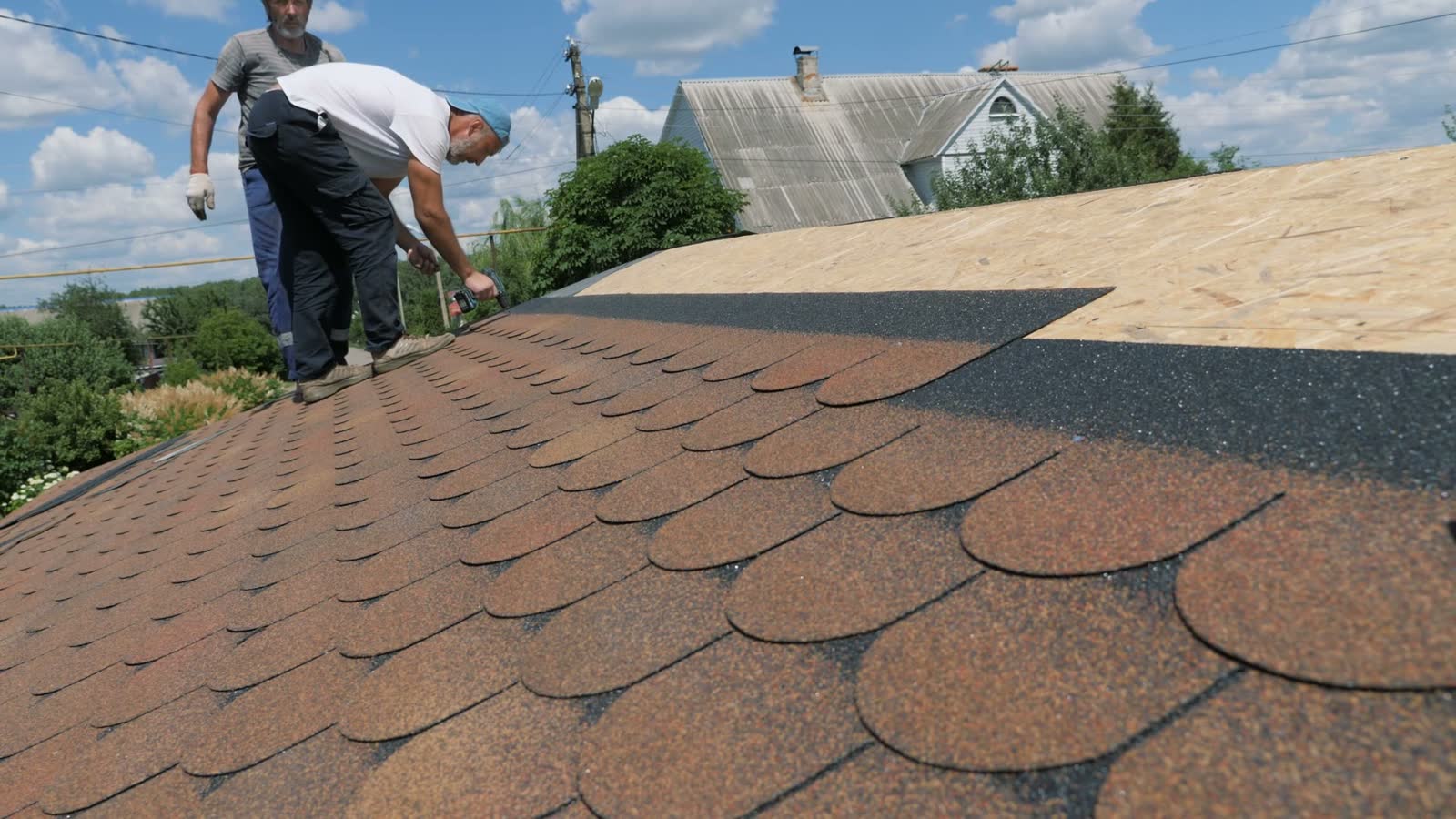
The industry's own vocabulary concedes the point. Adjusters talk about "line of sight," the principle that mismatched materials visible in the same view defeat uniform appearance, and "like kind and quality," the policy standard a discontinued product can never satisfy with a lookalike. The dispute is rarely whether matching matters. It is how far the insurer's obligation extends: the shingle, the slope, or the roof.
Florida's matching statute: § 626.9744
Florida is one of the minority of states with matching written directly into law. Section 626.9744, on the books since 2004, applies to personal-lines residential claims adjusted on a replacement-cost basis, which is most Florida homeowners policies. Its operative subsection:
FLA. STAT. § 626.9744(2) · THE MATCHING DUTY (PARAPHRASED CLOSELY; VERIFY CURRENT TEXT)"When a loss requires replacement of items and the replaced items do not match in quality, color, or size, the insurer shall make reasonable repairs or replacement of items in adjoining areas. In determining the extent of the repairs or replacement of items in adjoining areas, the insurer may consider the cost of repairing or replacing the undamaged portions of the property, the degree of uniformity that can be achieved without such cost, the remaining useful life of the undamaged portion, and other relevant factors."
Read the two halves honestly. The first sentence is the policyholder's weapon: mismatched replacement triggers a duty to address adjoining areas (undamaged property) to restore uniform appearance. The second sentence is the carrier's: the duty is bounded by "reasonable," and the statute hands the insurer a list of factors (cost, achievable uniformity, remaining useful life) to argue a smaller scope. Nearly every Florida matching fight is an argument about how those factors net out on one specific roof, which is why documentation of the mismatch, not the abstract rule, decides cases.
What changed in 2022-23
Section 626.9744 itself was not rewritten in Florida's 2022-23 insurance overhauls, but two changes around it shifted the practical ground under matching claims:
- The 25% roof rule got an exception (SB 4-D, May 2022). Under the Florida Building Code's long-standing "25% rule," repairing more than a quarter of a roof section within 12 months triggered bringing the entire section up to current code, which frequently converted large repairs into full replacements. SB 4-D added § 553.844(5): if the existing roof was built, repaired, or replaced in compliance with the 2007 Florida Building Code or later, only the repaired portion must meet current code, no matter how much is being repaired, and local governments cannot override the exception. For post-2007 roofs, the code-driven path from "big repair" to "full replacement" is gone, leaving § 626.9744 matching as the main remaining argument for a uniform roof.
- Matching endorsements arrived (2022-23 form filings). Florida regulators approved policy endorsements capping what carriers pay to match undamaged property, commonly 1% of the Coverage A dwelling limit. On a $400,000 policy (an example figure) that is roughly $4,000 of matching money on a roof that can cost tens of thousands; actual caps and limits vary by policy. The endorsements price the statutory duty down to a token; whether they can validly cap a duty imposed by statute is an open fight. If your policy renewed after 2022, check the endorsement schedule for matching language before assuming the full § 626.9744 duty applies.
South Carolina: no statute, three levers
South Carolina has no matching statute, no matching regulation, and no controlling appellate decision squarely adopting or rejecting the matching doctrine. In 50-state surveys of matching law, SC sits in the "no direct guidance" column. That does not mean SC policyholders have no matching rights; it means the rights come from three other places:
- The policy itself. Replacement-cost policies promise repair or replacement with material of like kind and quality. A discontinued shingle has no like-kind match, so a spot repair with a lookalike arguably breaches the loss-settlement promise on its face. The argument is contractual, and it is made claim by claim.
- Appraisal. Most SC homeowners policies carry an appraisal clause. Matching goes to the amount and scope of loss, so an appraisal panel can (and panels do) award slope or full replacement where uniformity cannot otherwise be achieved. In a state with no statute, appraisal is where most SC matching fights actually end.
- S.C. Code § 38-59-20. South Carolina's improper claim practices law prohibits, among other things, failing to adopt reasonable standards for the investigation and settlement of claims and attempting to settle for less than a reasonable amount. It is not a private matching right, but it is the hook for an SC Department of Insurance complaint, and a pattern of patch-only settlements on discontinued products is exactly the kind of practice the DOI complaint route exists to surface.
Practical consequence: in South Carolina, the file you build (iTel report, photos showing the mismatch in a single line of sight, contractor letter on repairability) carries the full weight the statute carries in Florida.
Matching rights: Florida vs. South Carolina
What each state gives a policyholder arguing for a uniform roof.
§ 626.9744 · since 2004
A statutory matching duty, on the books for two decades.
Adjoining-areas repair duty
The duty extends to adjoining undamaged areas when replacements don't match; degree of uniformity is a statutory factor.
Reasonableness factors + endorsement caps
2022-23 filings cap matching costs, commonly at 1% of Coverage A.
25% rule, narrowed
SB 4-D (2022) exempts post-2007-code roofs; only the repaired portion must meet current code.
Appraisal · DFS mediation · suit
Mandatory pre-suit notice; 5-year contract suit period.
None
No statute, no regulation, no controlling appellate decision.
Policy language only
"Like kind and quality" loss-settlement wording does the work a statute does in Florida.
Whatever the policy says
No statutory floor or ceiling on the matching obligation.
No 25% statute
IBC-based code with no Florida-style repair-percentage trigger.
Appraisal · SC DOI complaint · suit
§ 38-59-20 improper-practices complaint; 3-year contract suit period.
Discontinued shingles and the iTel report
Shingle product lines turn over constantly: manufacturers retire colors, change dimensions, discontinue entire lines, and disappear in acquisitions. A roof more than a few years old has meaningful odds that its exact product no longer exists. The industry's referee on that question is iTel Laboratories: a physical sample of your shingle goes to the lab, and the report that comes back identifies the manufacturer and product, names the closest current-production match, and states whether a true match is available. Where matching stock exists in held inventory, iTel reserves it for 30 days so a repair can actually proceed.
Carriers order iTel reports as a matter of routine, and treat them as gospel when the report supports a repair. Use the same tool. Your roofer or public adjuster can submit a sample, and if the report comes back discontinued, no match available, you hold independent lab proof that a spot repair cannot restore uniform appearance. In Florida, that proof plugs directly into § 626.9744's adjoining-areas duty. In South Carolina, it is the factual core of the like-kind-and-quality argument.
Read the report critically when it goes the other way. "Closest match" language deserves scrutiny: a comparable current shingle can still differ in exposure dimension, profile thickness, or color blend: differences invisible in a lab and obvious on a roof. Photograph sample boards against your existing field in daylight before conceding a match exists.
The brittleness-test fight
Matching asks whether a repair would look right. Repairability asks whether a repair is physically possible, and on aged asphalt shingles it often isn't. Replacing one shingle requires lifting and re-sealing the shingles around it. Asphalt embrittles with heat and age; brittle shingles crack instead of flexing, so every attempted spot repair manufactures new damage in a ring around the old. The brittleness test, lifting representative shingles the way a repair would and documenting whether they crack, is how that gets proven.
It is also where scopes get fought. A repair-only estimate silently assumes clean lifts. If your roofer's documented, on-video brittleness test shows cracking, the repair scope is not a cheaper option; it is an impossible one, and replacement of the slope or roof becomes the only scope that restores the property. Insist that any carrier repairability opinion identify who performed a lift test, on which slopes, at what temperature, with photos. An estimate that never touched the roof is an assumption, not an inspection.
Roof, siding, flooring: the same fight on three surfaces
Roofs fight over slopes. The carrier's unit is the damaged slope; yours is the roof the street sees. Aerial and street-level photos showing multiple slopes in one view are the exhibit that makes the uniformity argument concrete.
Siding fights over elevations, and is where the "line of sight" phrase was born. Wind strips the west wall; the product is discontinued; the carrier offers one wall in a near-match. Vinyl also fades in sun, so even a technically identical new panel reads differently against ten-year-old field. The argument runs elevation by elevation: any wall visible in the same view as the replacement belongs in the scope.
Interior flooring is the sleeper. Water from a wind-created opening ruins the hallway's wood plank, which flows without a break into the kitchen and living room. Continuous flooring is one "item": a plank transition mid-floor in a discontinued product is a mismatch you live with at eye level every day. Carriers scope the wet square footage; policyholders scope the continuous surface. The same discontinuation-proof logic applies: flooring samples can be lab-matched exactly like shingles.
The repair-only scope
The estimate prices individual shingle replacement (often a few squares) on a roof whose product no longer exists. The scope is technically "repair," practically a mismatch.
Counter: an iTel report proving discontinuation, plus the policy's like-kind-and-quality language. A repair that cannot match is not a like-kind repair.
The brittleness dodge, in reverse
Carrier rejects a repairability argument when it favors you, accepts it when it favors them: brittle shingles that crack on lift make spot repair impossible, but some scopes assume clean lifts anyway.
Counter: a documented brittleness test (on video, by your roofer or engineer) showing surrounding shingles crack when lifted. Unrepairable means replacement.
The slope-by-slope split
Paying full replacement on the damaged slope only, leaving the house two-toned: new architectural shingles on the south face, 12-year-old faded product everywhere else.
Counter: in Florida, § 626.9744's adjoining-areas duty; anywhere, the line-of-sight argument and photos taken from the street showing both slopes in a single view.
The matching endorsement cap
Newer Florida policy forms cap matching costs, commonly at 1% of Coverage A. On a $400,000 dwelling limit, used here only as an example, that is roughly $4,000 toward making anything match; your limit and the cap will differ.
Counter: read the endorsement. Caps apply to matching costs, not to direct physical damage. Damage scoped as damage, not as "matching," sits outside the cap.
Appraisal: where matching disputes actually get decided
Matching is, at bottom, a dispute about the scope and amount of loss: patch price versus replacement price on a covered claim. That places it squarely inside the appraisal clause most homeowners policies carry: each side appoints an appraiser, the appraisers pick an umpire, and the panel's award sets the amount. Florida courts have repeatedly compelled appraisal of matching disputes over carrier objections, treating uniform-appearance scope as an amount-of-loss question rather than a coverage question. In South Carolina, with no statute to argue over, appraisal is where the like-kind-and-quality argument usually lands anyway.
The tactical picture: appraisal costs real money (your appraiser plus half the umpire, often on the order of $1,000-$3,000 total, though it varies) but resolves in months, and an award that prices the full slope or roof is enforceable and hard to unwind. Walk in with the file already built (iTel report, brittleness video, line-of-sight photos, contractor replacement estimate) because the panel prices what the file proves. And check the sequence rules first: newer Florida endorsements alter appraisal mechanics, and post-2022 Florida law layers mandatory pre-suit notice on any path that ends in court.
Full walkthrough of the process, timelines, and costs: appraisal and mediation, step by step.
The rules around the fight
- Matching law: Fla. Stat. § 626.9744, adjoining-areas duty, degree-of-uniformity and reasonableness factors.
- Watch for: matching endorsements (1%-of-Coverage-A caps) on post-2022 policy forms; SB 4-D's 25%-rule exception for post-2007-code roofs.
- Deadlines: 1 year to notice a claim, 18 months supplemental; 60-day pay-or-deny; 5-year contract suit period; mandatory pre-suit notice.
- Escalation: appraisal · DFS mediation · DFS consumer complaint.
- Matching law: none. Rights come from policy like-kind-and-quality language and general claim-practices law.
- Watch for: loss-settlement wording and any matching or cosmetic endorsements; policy-by-policy variation does the work a statute does in FL.
- Deadlines: "prompt" notice per policy; no fixed pay-or-deny statute (reasonableness standard); 3-year contract suit period.
- Escalation: appraisal · SC DOI consumer complaint (§ 38-59-20 improper claim practices) · suit.
Deadlines shown are general rules as of July 2026 and have exceptions: supplemental claims, reopened claims, and policy-specific notice provisions can shorten them. Verify against your policy and current statute.
Matching: the questions everyone asks
My shingles are discontinued. Does the insurer owe me a whole new roof?
Not automatically, but discontinuation changes the claim. If no reasonable match exists, a spot repair cannot restore your roof to pre-loss condition. In Florida, § 626.9744 requires the insurer to make reasonable repairs or replacement of items in adjoining areas, weighing cost, the degree of uniformity that can be achieved, and remaining useful life. In practice that fight is over whether "adjoining areas" means the slope or the whole roof, and it is frequently resolved in appraisal.
What exactly does Florida Statute 626.9744 say?
It applies to personal-lines residential policies adjusted on a replacement-cost basis. When replacement items do not match adjoining items in quality, color, or size, the insurer must make reasonable repairs or replacement of items in adjoining areas. The insurer may consider the cost of the replacement, the degree of uniformity that can be achieved, the remaining useful life of the undamaged portion, and other relevant factors. It has been on the books since 2004.
Does South Carolina have a matching law?
No. South Carolina has no matching statute or regulation. Matching disputes there run on the policy's own language (like kind and quality, loss settlement provisions), the appraisal clause, and, for conduct, the improper claim practices law, S.C. Code § 38-59-20. That makes the policy wording and your documentation matter more in SC, not less.
What is an iTel report and should I get one?
iTel Laboratories analyzes a physical sample of your shingle (or siding, or flooring), identifies manufacturer and product, and reports whether a current-production match exists. Carriers order iTel reports routinely, and so can your roofer or public adjuster. If the report says discontinued/no match, it is the single most important document in a matching claim. Read the report itself: "closest match" is not "match," and comparable-quality substitutes can still fail on profile, dimension, or color blend.
What is a brittleness test?
A repairability test: shingles surrounding the damaged ones are lifted the way a repair would lift them. Aged asphalt shingles often crack rather than flex, meaning every attempted spot repair creates new damage, and repair is not physically feasible. Have it performed and video-documented by your own roofer or engineer; a repair-only scope on a brittle roof collapses once the test is on record.
The carrier offered to replace one slope. My roof will be two different colors. Is that legal?
It is a settlement position, not a final answer. In Florida, the statutory repair duty extends to adjoining areas, and slope-vs-whole-roof is exactly the fight § 626.9744 exists to referee, subject to the statute's reasonableness factors and any matching endorsement on your policy. In South Carolina, the argument runs through the policy's like-kind-and-quality obligation and, in practice, appraisal. In both states, photos showing both slopes in one line of sight are your best exhibit.
Can appraisal decide a matching dispute?
Usually yes. Matching goes to the scope and amount of the loss, which is what appraisal panels decide. Florida courts have repeatedly sent matching disputes to appraisal, and appraisal awards that include full replacement for matching reasons are common. The carrier can still dispute coverage afterward, but an umpire's award that prices uniform appearance is powerful leverage, and often the cheapest way to resolve the fight.
- FL LEGISLATURE Fla. Stat. § 626.9744, claim settlement practices relating to property insurance (full text) ↗
- JIMERSON BIRR Recent changes to Florida's 25% roof replacement rule (SB 4-D, § 553.844(5)) ↗
- CLAIMS JOURNAL Florida insurers imposing new limits on amounts spent to match appearance ↗
- GEN RE New Florida matching endorsements gain momentum ↗
- JUSTIA S.C. Code § 38-59-20, improper claim practices ↗
- MWL LAW "Matching regulations" affecting homeowners' insurance claims, 50-state survey ↗
- IRMI The matching problem in property insurance claims ↗
- NEARMAP / ITEL iTel roof repairability analysis ↗
Not legal advice; consult an attorney about your specific claim.
Matching is a statutory right in Florida, not a courtesy
When storm damage hits part of a roof, siding, or finish and the repair will not match the undamaged sections, matching law decides whether the carrier owes the mismatched area too. Florida statute 626.9744 requires reasonable repairs or replacement of items in adjoining areas, with the degree of uniformity achievable a statutory factor, which can mean replacing a whole slope or wall when the damaged shingles or panels are discontinued. Newer Florida forms may cap matching by endorsement, so read yours; South Carolina has no equivalent statute and runs on policy language and appraisal.
The carrier's counter is almost always cost: it argues the section can be spot-repaired and leans on the cosmetic-versus-functional label to keep the claim small. Defeat that by documenting the actual product, brand, color, profile, and discontinuation status; tile and metal profiles are discontinued far more often than common shingles. A hail claim confined to one elevation still triggers matching if the replacement will not match the adjoining panels. If the carrier concedes matching but depreciates the added sections steeply, review the depreciation worksheet, since the holdback on a full slope dwarfs a patch. When it refuses uniform replacement despite a discontinued product, appraisal or mediation is the standard route in Florida; the free claim review below checks what the carrier owes beyond the damaged section.
Offered a patch on a discontinued roof? Get it priced right.
Upload the estimate, your photos, and the iTel report if you have one. You'll get a straight answer on whether the repair-only scope holds up against matching law, and what a uniform-appearance scope is actually worth.

 HURRICANELAW.PRO
 A comprehensive property-insurance claim resource for policyholders: denied and underpaid claims, coverage and bad-faith law, storm dossiers, carrier profiles, city guides, and the complete claims playbook. Florida and South Carolina.
▸ SEE THE FULL SITE MAP →Coverage summaries, policy-language quotations, dollar figures, deadlines, and chart examples throughout this site are general information based on typical or standard policy forms and are illustrative only: they are not a quote, a guarantee of coverage, or a promise of any outcome. Every insurance policy is different: your own policy, endorsements, and state law control, so read your policy and confirm current statutes. Weather imagery courtesy of NOAA, the National Hurricane Center, and the National Weather Service. Legal services are provided by Halversen Law. Nothing on this site is legal advice; consult an attorney about your specific claim.
Legal matters are handled by Halversen Law, a law firm licensed in Florida and South Carolina.