
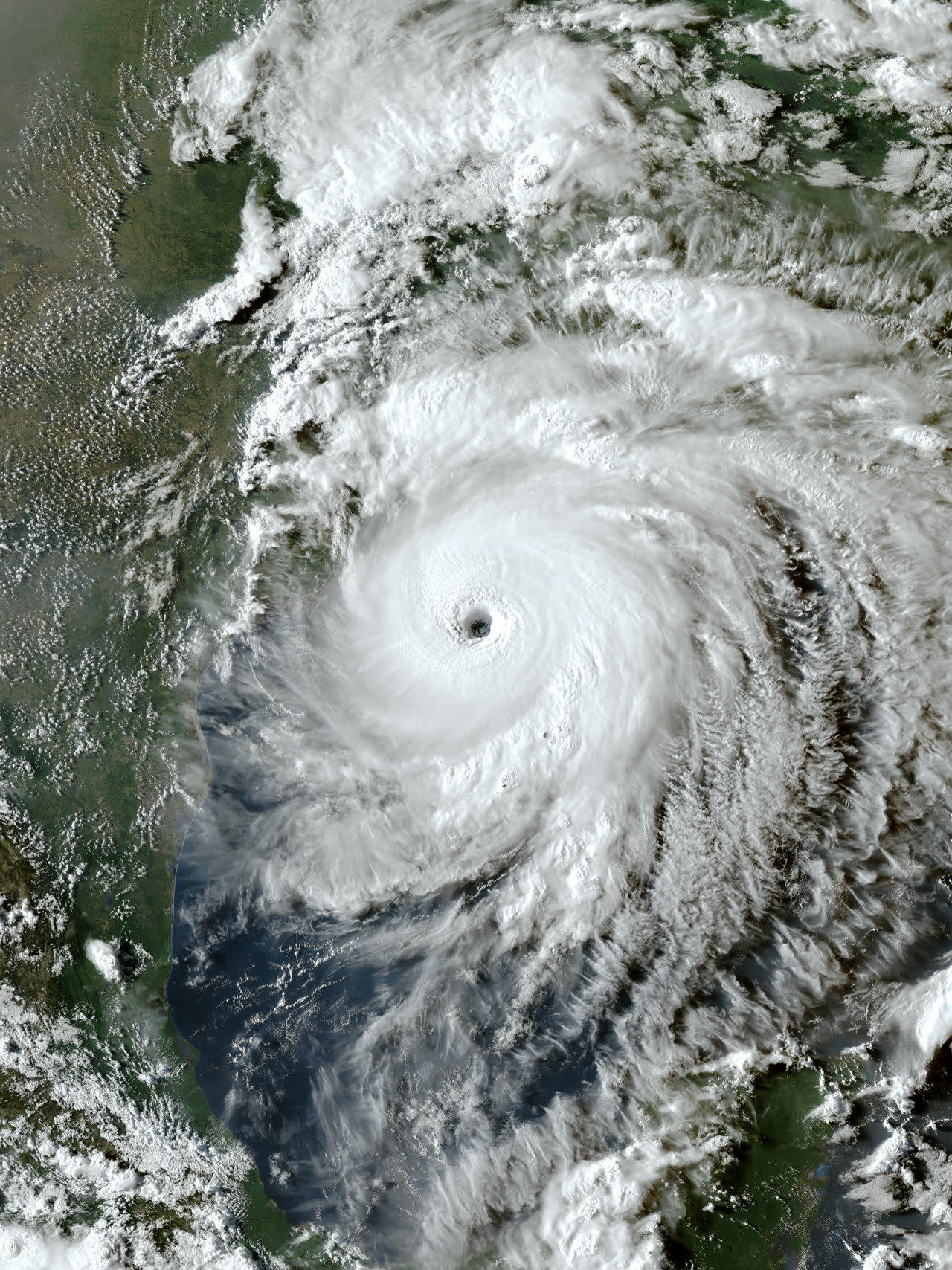
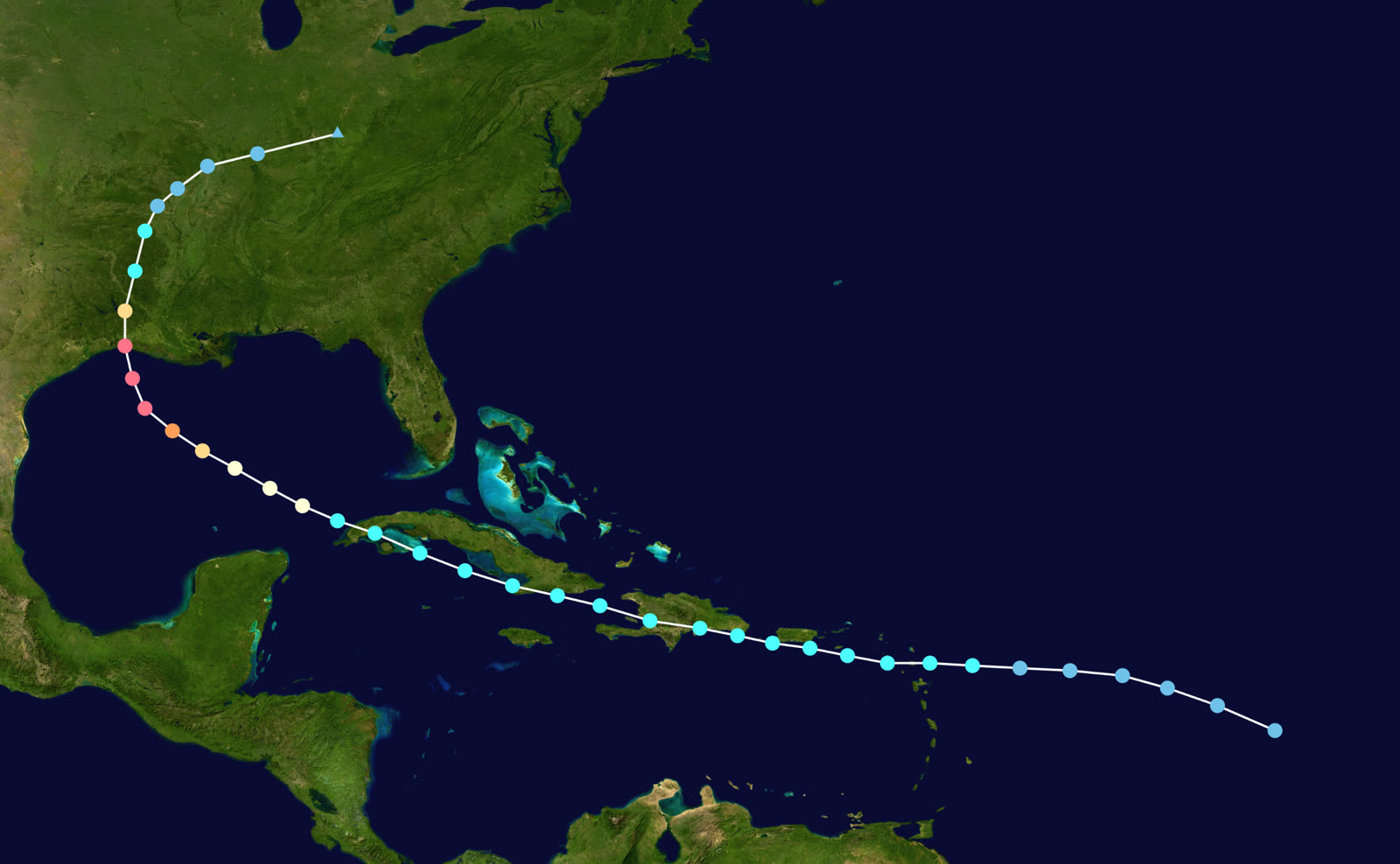
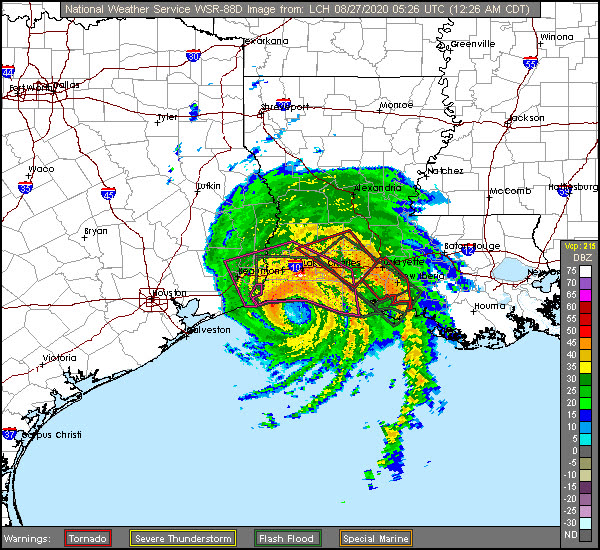
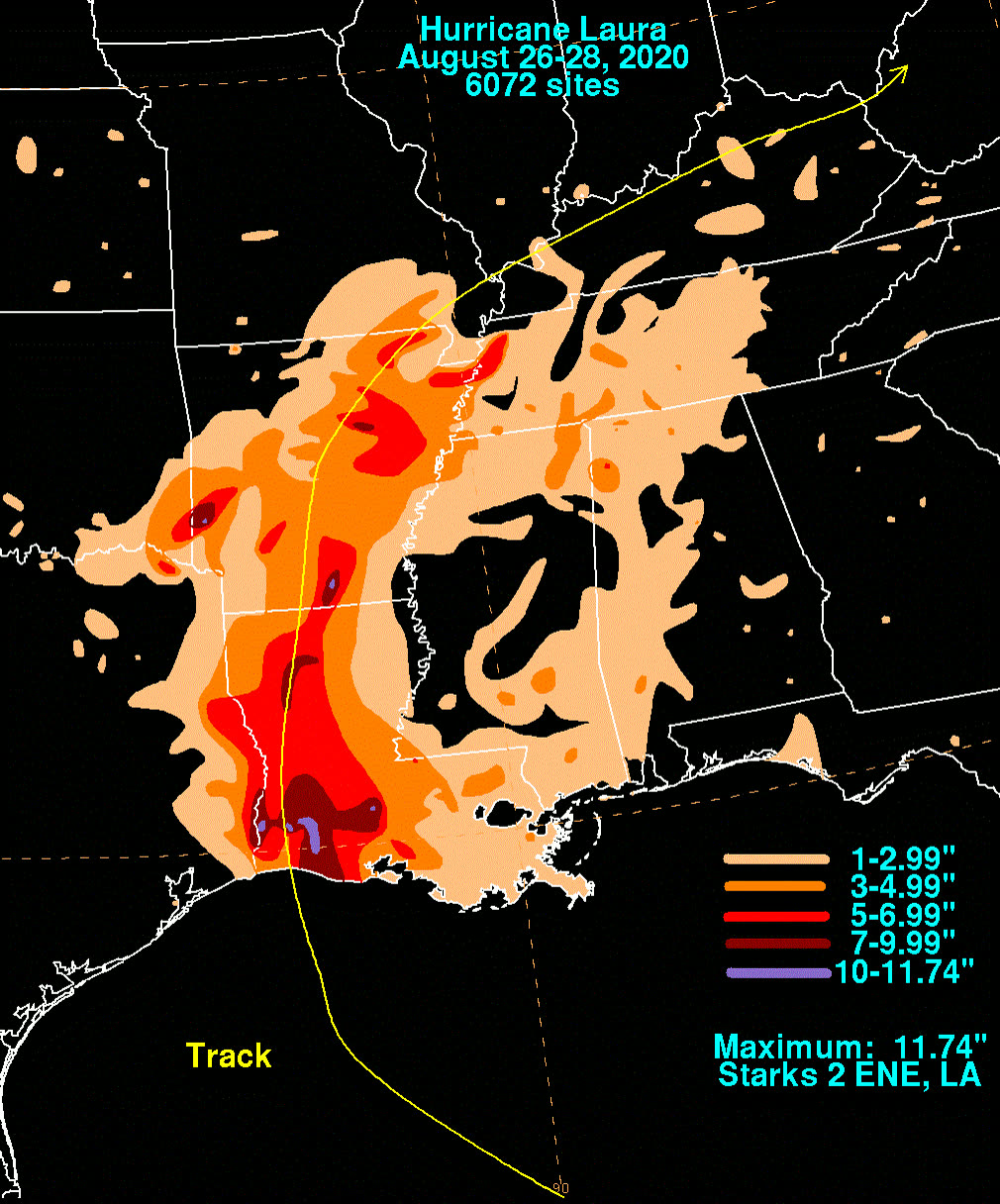
The storm
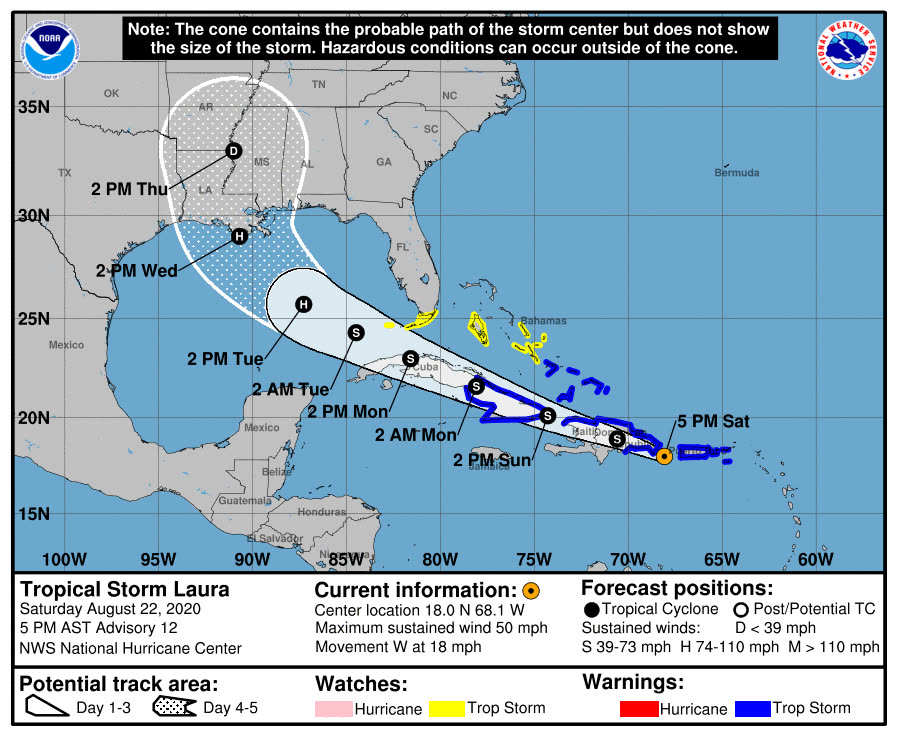
Laura crossed Hispaniola and Cuba as a tropical storm, entered the Gulf on August 25, 2020, and intensified from 65 mph to 150 mph in roughly 36 hours. It made landfall at Cameron, Louisiana at 1 a.m. CDT on August 27 as a Category 4 with a 939 mb pressure, tied with the 1856 Last Island hurricane for the strongest landfall in Louisiana's record.
Surge reaching about 17 feet swept lower Cameron Parish. The eyewall then tracked directly over Lake Charles, a metro area of 200,000, with gusts above 130 mph, and Laura held hurricane strength more than 100 miles inland. Total: about $19 billion in damage and 42 U.S. deaths, many indirect, led by carbon-monoxide poisoning from generators during weeks-long power outages in extreme heat.
The damage
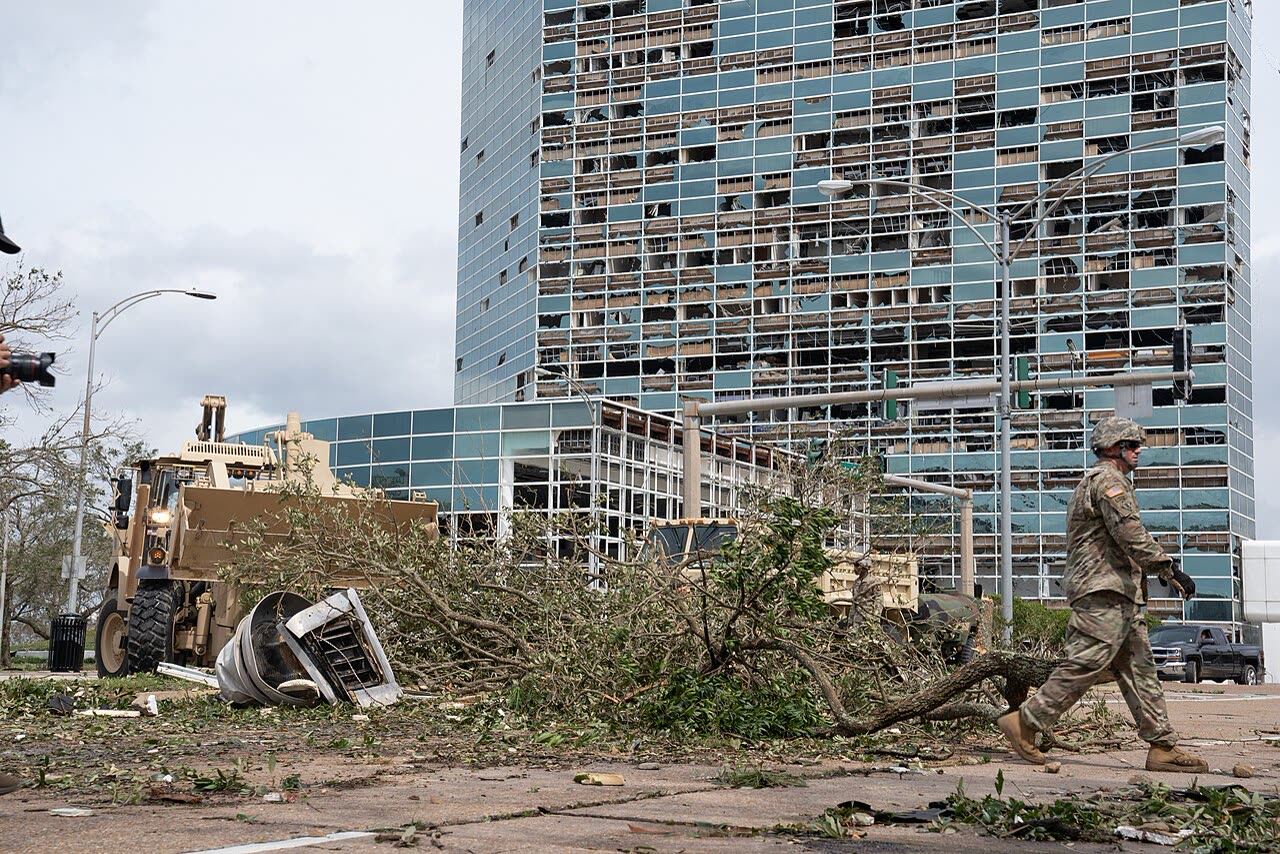
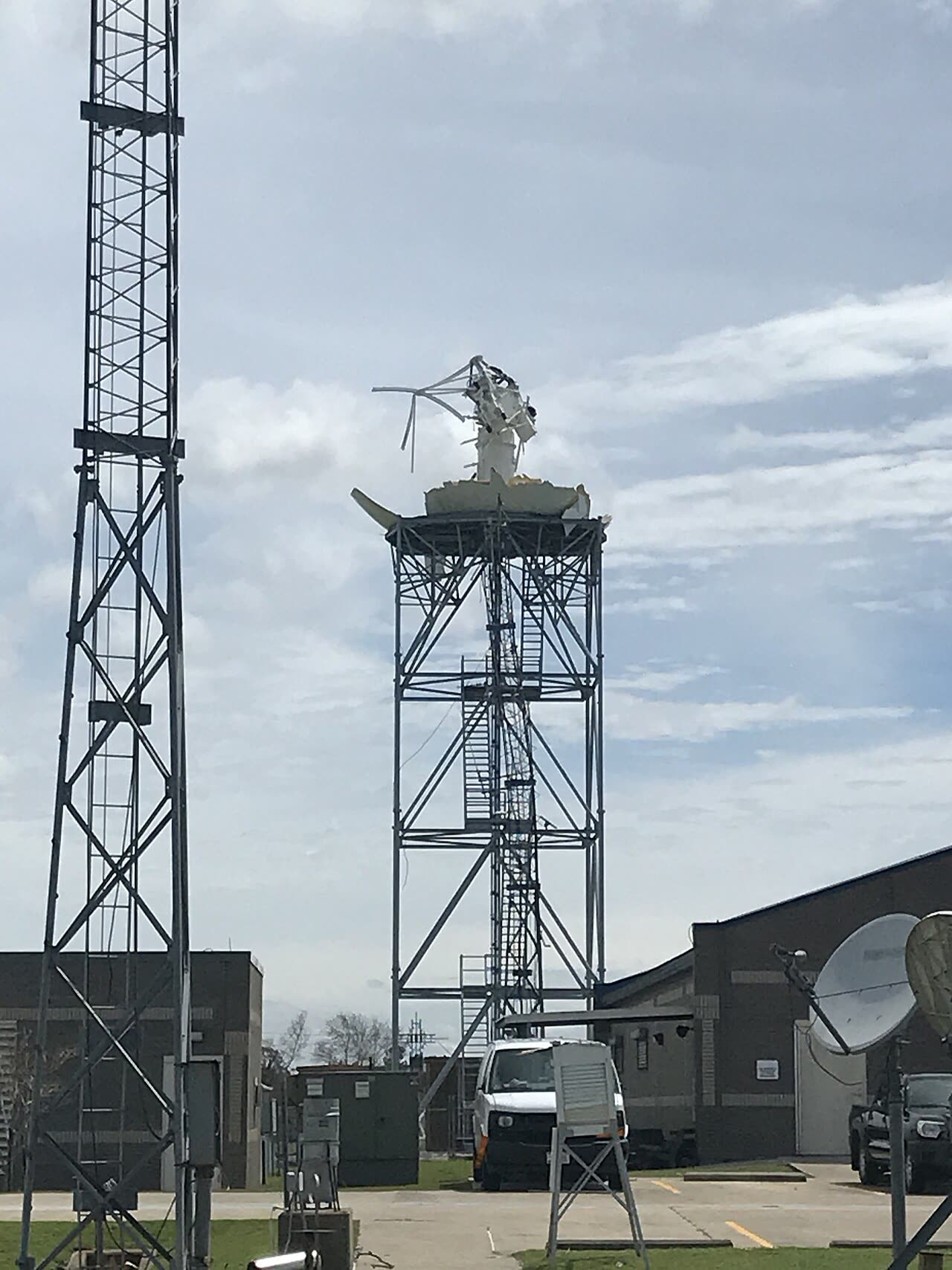
Cameron Parish's coastal communities, Cameron, Creole, Grand Chenier, Holly Beach, were devastated for the second time in 15 years, a repeat of Rita's footprint. In Lake Charles, damage was near-universal: peeled roofs across essentially every neighborhood, the Capital One Tower's glass skin blown out (the building was ultimately slated for demolition), the NWS radar dome shredded, churches and schools opened to the sky. A chlorine-plant fire burned beside I-10 during the storm. Then the sequence turned cruel: Delta's eye came ashore 13 miles east six weeks later, the February 2021 freeze burst pipes in gutted homes, and May 2021 flash flooding soaked them again, four federally declared disasters in nine months for the same city.
The insurance aftermath
Laura was the largest insured-loss event in Louisiana history to that point, on the order of $9 billion of the $23 billion-plus that Laura, Delta, Zeta, and Ida together produced across more than 800,000 Louisiana claims. It was also the event that exposed how thin the state's insurance market had become.
Louisiana's homeowners market was dominated by small, thinly capitalized regional carriers that had grown fast writing coastal policies the national companies wouldn't touch. Laura's claims, then Delta's on the same houses, consumed their reinsurance and their capital. Between July 2021 and September 2022, roughly a dozen insurers writing Louisiana property business failed or were declared insolvent, and more withdrew. The failures orphaned tens of thousands of open Laura and Delta claims, which fell to the Louisiana Insurance Guaranty Association with its statutory caps and slower timelines.
For Lake Charles policyholders, the two-storm sequence made routine claims adversarial. Which storm damaged the roof, Laura or Delta, determined which deductible applied and which claim file paid; carriers and policyholders allocated the same shingles to different storms. Adjuster turnover ran chronic (many claims saw three or more adjusters), depreciation and partial-roof payments drove disputes, and additional-living-expense coverage ran out while contractor capacity didn't exist. Complaints and suits accumulated into a multi-year litigation backlog in the Western District of Louisiana, and recovery advocates spent years pointing out that southwest Louisiana never got a national spotlight, Rita's "forgotten storm" problem, repeated.
The state's responses came after the spiral: guaranty-fund assessments, an incentive fund to recruit new carriers, and the Louisiana Fortify Homes grant program for wind-resistant roofs.
What policyholders learned
- Two storms, one roof, two deductibles. Owners who photographed and dated damage thoroughly after Laura, before Delta, controlled the allocation fight instead of losing it.
- A failing insurer is a deadline problem. Claims still open when a carrier went insolvent moved to LIGA with caps and delays; pushing claims to documented resolution quickly mattered more than policyholders knew.
- Rotating adjusters erase your file. Policyholders who kept their own complete claim record, photos, estimates, every adjuster's name and report, survived the turnover; those who relied on the carrier's file restarted from zero repeatedly.
- ALE limits are a clock. Displacement in a destroyed construction market outlasted 12-month additional-living-expense limits; documenting contractor unavailability supported extensions and bad-faith positions.
- Depreciation and partial-roof payments were the quiet underpayments. Independent estimates, matching-shingle arguments, and Louisiana's Valued Policy Law framed the successful challenges.
Not legal advice; consult an attorney about your specific claim. Damage figures are nominal (not inflation-adjusted) unless noted.