How do I prove roof damage was storm damage, not wear and tear?
Tie the damage to the event. Dated photographs from before and after the storm, the NOAA wind and hail record for that address and date, creased or lifted shingles with directional debris patterns, and an independent inspection that explains the failure mode as impact rather than age.
| Best evidence | Pre-storm photos or an inspection report showing the roof was intact before the date of loss. |
|---|---|
| Storm data | NOAA and NWS records for that location and date: peak gust, hail size, event reports. |
| Physical signs | Creasing, mat fracture, directional patterning, fresh breaks at fasteners, matching collateral damage. |
| Counter-evidence | A carrier engineer report is an opinion. Qualifications, site time, and data relied on are all fair game. |
- • Wear-and-tear denials rest on an exclusion, and the insurer, not you, bears the burden of proving an exclusion applies.
- • Florida follows the concurrent cause doctrine (Sebo, Fla. 2016): if wind is one real cause among several, the loss can still be covered, unless your policy has anti-concurrent-cause wording.
- • Wind leaves signatures age cannot fake: directional creasing at the nail line, folded tabs, clean tear lines on one exposure. Aging is uniform on every slope.
- • Aerial-imagery and engineer-report denials are rebuttable: pre-storm photos of your roof and a rebuttal engineer (commonly a few hundred to a couple thousand dollars, varying by market) usually decide the fight.
- • Deadlines run regardless: FL notice within 1 year of landfall, supplemental claims within 18 months (Fla. Stat. 627.70132). Confirm current law.
Why "wear and tear" leads every denial list
Every homeowners policy excludes wear and tear, and every roof more than a few years old shows some. That overlap makes the wear-and-tear exclusion the most convenient denial in the book: the adjuster does not have to argue the storm never happened, only that your shingles were already gone before it arrived.
The scale of the fight is measurable. After Hurricane Ian, Florida regulators logged 565,101 residential claims; 157,445 of them, roughly 28%, closed without payment (FLOIR data). Wear and tear, pre-existing damage, and below-deductible findings dominated the stated reasons. Many of those files were later reopened and paid once homeowners came back with better evidence. That is the point of this page.
Beating the denial takes three things, in order: the law of causation (what happens when age and wind both contributed), the burden of proof (who has to prove which), and the physical evidence (wind leaves marks age cannot fake). Each is below.
The exclusion, word for word
Two clauses do the work in a wear-and-tear denial. The first is the exclusion itself. Typical HO-3-style wording:
TYPICAL POLICY WORDING · CHECK YOUR OWN FORM "We do not insure … for loss caused by … wear and tear, marring, deterioration; inherent vice, latent defect, mechanical breakdown; … rust or other corrosion, mold, wet or dry rot …"
The second is the lead-in some policies put in front of their exclusions, the anti-concurrent causation (ACC) clause:
ANTI-CONCURRENT CAUSATION LEAD-IN · TYPICAL WORDING "We do not insure for loss caused directly or indirectly by any of the following. Such loss is excluded regardless of any other cause or event contributing concurrently or in any sequence to the loss."
Read your denial letter against your actual policy form. If the letter cites wear and tear but your exclusions have no ACC lead-in (or the lead-in does not attach to the wear-and-tear exclusion), Florida's causation law, next, does most of your arguing for you.
The causation fight: Sebo and the concurrent cause doctrine
A wear-and-tear denial is really a causation argument: the carrier says deterioration, an excluded peril, caused the loss, not wind. But roofs rarely fail from a single cause. When an excluded peril and a covered peril both contribute, courts pick between two doctrines:
When covered and excluded perils combine and no single cause is the sole cause, the loss is covered if a covered peril (wind) is one of the real, concurrent causes. Adopted for all-risk policies by the Florida Supreme Court in Sebo (2016).
Coverage only if the covered peril was the most responsible, the "efficient" cause that set the others in motion. This is the rule the intermediate court applied in Sebo before the Florida Supreme Court rejected it for converging perils.
The facts of Sebo v. American Home Assurance Co., 208 So. 3d 694 (Fla. 2016), look a lot like a hurricane roof file. John Sebo bought a Naples home in April 2005, insured for over $8 million. Within weeks, construction defects let rain in. In October 2005, Hurricane Wilma hit and did more damage. The insurer denied everything except $50,000 in mold coverage, arguing the defects (excluded) caused the loss. A jury sided with Sebo; the Second DCA reversed under efficient proximate cause; and on December 1, 2016, the Florida Supreme Court quashed that decision and held the concurrent cause doctrine governs when independent perils converge and no single cause can be isolated.
Source: Sebo v. American Home Assurance Co., 208 So. 3d 694 (Fla. 2016); 141 So. 3d 195 (Fla. 2d DCA 2013)
Two practical consequences. First: in Florida, "your old roof also contributed" is not, by itself, a winning denial: if wind was a real concurrent cause, the loss can still be covered. Second: the Sebo court pointed out that insurers may contract around the doctrine with explicit anti-concurrent-cause wording, and many post-2016 Florida forms do exactly that. Which rule governs your claim starts with the words on your page. That is why section 02 came first.
Who has to prove what
Wear and tear is an exclusion, and exclusions are the insurer's to prove. Under a Florida all-risk homeowners policy, your initial burden is modest: show the property suffered a loss while the policy was in force. The burden then shifts to the carrier to prove that an exclusion (deterioration, pre-existing damage, neglect) actually bars coverage (Jones v. Federated National Ins. Co., 235 So. 3d 936 (Fla. 4th DCA 2018)). If the insurer can't carry that burden, it pays.
South Carolina allocates it the same way, with an extra step that matters in roof cases: the insurer must prove not just the exclusion's wording but a causal connection between the excluded condition and the loss it is refusing to pay (Boggs v. Aetna Casualty & Surety Co. line of cases). An aging roof that was keeping the water out until the storm is not a causal story. It is a description.
Practical translation: a denial letter that recites "wear and tear observed" without an inspection report, causation analysis, or photos has not carried anyone's burden. Your first response is a written demand for the complete claim file: adjuster photos, notes, and any engineering opinions.
Wind signatures vs. aging signatures
Causation law gets you to the table; the roof itself wins the argument. Wind damage and age damage look different, fail different parts of the shingle, and distribute differently across the roof. Learn the difference and you can read your own roof before any expert does.
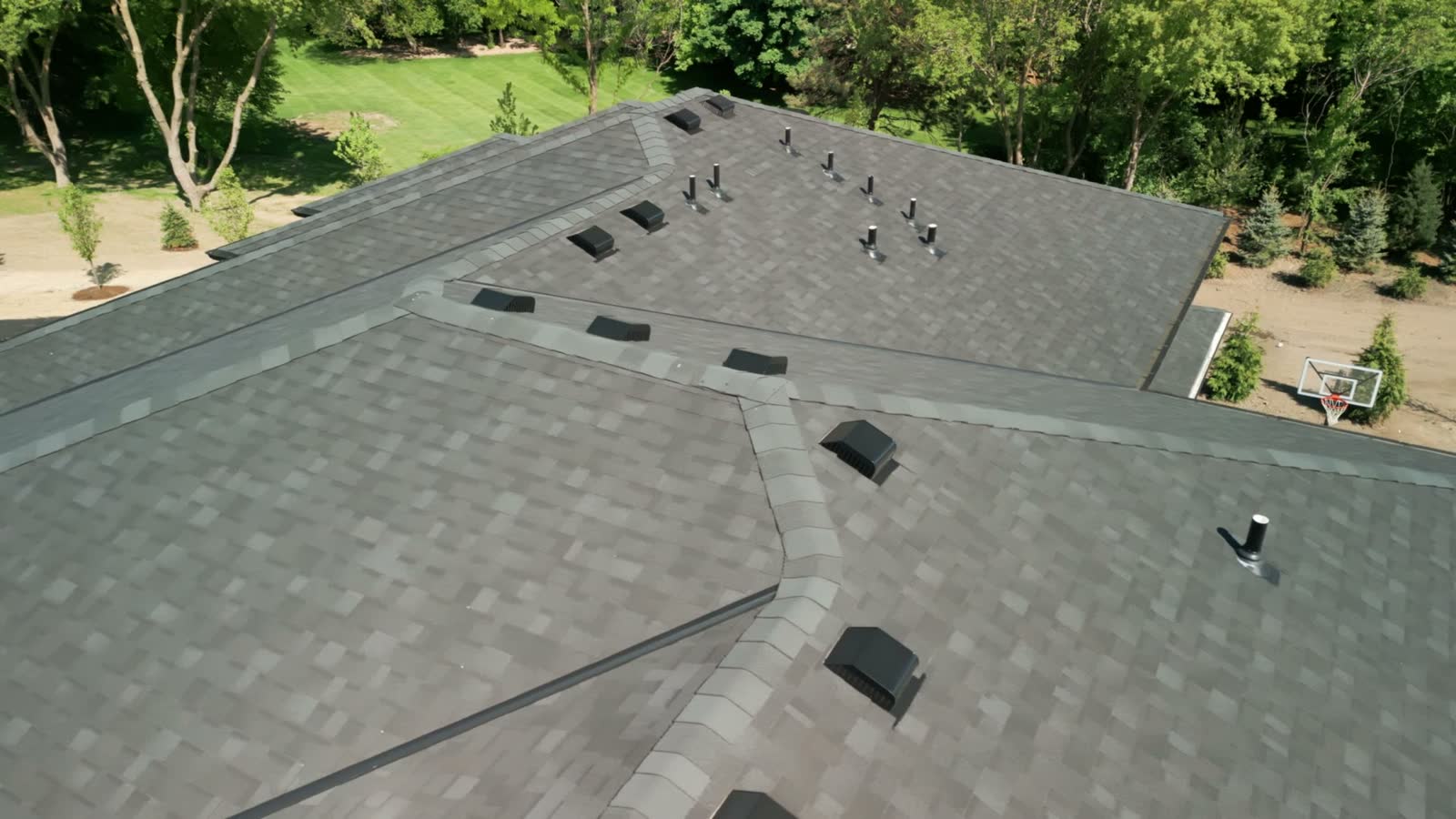
The distribution is often more persuasive than any single shingle. Uplift suction peaks at roof edges, corners, and ridges, so wind damage clusters there and on the windward exposure; deterioration has no reason to prefer one slope over another. Photograph the whole roof plane by plane; the pattern is the proof. The 10-photo protocol covers the shot list.
"Our imagery shows pre-existing damage"
Carriers increasingly subscribe to aerial and satellite roof-imagery services and cite pre-storm captures as proof your roof was "already damaged." Treat the claim like any other piece of evidence: demand the exhibit. Ask, in writing, for the images themselves, their capture dates, their resolution, and the analyst's report that interpreted them.
Then attack the gap. Aerial captures can be months or years old by landfall; low-resolution overheads read staining, prior patching, shadows, and lichen as "damage"; and an image showing an imperfect roof does not show a failed one. The legal frame from section 04 still applies: pre-existing damage is an exclusion-side argument, and the burden of proving it (with evidence, not pixels alone) sits with the carrier.
Your counter-exhibits beat their subscription: dated ground-level photos, the inspection report from your purchase, roofer invoices, even a real-estate listing. The Storm History Lookup adds the wind side: what actually hit your address, and when.
The engineer report and the rebuttal
When the file gets contested, the carrier sends an engineer, and the report that comes back often says some version of the same thing: "no evidence of wind uplift; damage consistent with age, thermal cycling, and deterioration." Understand what that document is: an opinion from an expert retained and paid by the party that benefits from a denial. And understand what it is not: final.
Read it like a lawyer will. How long was the engineer on the roof? Which slopes were walked? Does the report engage with the directional pattern, or does it discuss shingle age in the abstract? Does the same phrasing appear in reports on other claims? Then get your own: a licensed engineer's rebuttal report tying the crease pattern, tear lines, and collateral damage to the recorded wind field is the single most effective document in an internal appeal, an appraisal, or a courtroom.
Find one through the experts directory. If the numbers in dispute justify help, a public adjuster or a property-insurance attorney can manage the expert fight for you.
The condition-before dossier
Every wear-and-tear fight reduces to two questions: what did the roof look like before the storm, and what did the wind measurably do at your address? Six documents answer both. Assemble them once; they serve the internal appeal, the DOI complaint, appraisal, and suit.
Deadlines run while you assemble it. In Florida, notice of a new claim is due within 1 year of landfall and supplemental claims within 18 months (Fla. Stat. § 627.70132); South Carolina policies require "prompt" notice and suits face a 3-year contract limitation. The deadline countdown tracks yours by storm and state.
Florida vs. South Carolina
- Causation: concurrent cause doctrine for converging perils (Sebo, Fla. 2016), unless the policy carries enforceable anti-concurrent-cause wording.
- Burden: insured proves loss in the policy period; insurer proves the exclusion (Jones, 4th DCA 2018).
- Deadlines: 1-year notice, 18-month supplemental (§ 627.70132); insurer pays or denies within 60 days of proof of loss; 5-year contract suit limit.
- Escalation: DFS mediation and civil-remedy process; appraisal if the policy provides it.
- Causation: no supreme-court adoption of either doctrine for property claims; courts enforce the policy as written, so the ACC wording (or its absence) matters even more.
- Burden: insurer must prove the exclusion and its causal connection to the loss (Boggs line).
- Deadlines: "prompt" notice per policy; no fixed pay-or-deny statute (reasonableness standard, § 38-59-20 improper-practices rules); 3-year contract suit limit.
- Escalation: SC DOI consumer complaint; appraisal per policy; bad-faith claims recognized at common law.
Statutes, cases, and deadlines above are general rules as of July 2026. Exceptions apply, and policy wording controls. Verify against your policy and current law, or have counsel do it.
Wear-and-tear denial FAQ
My roof is 15 years old. Can the insurer deny the claim for age alone?
No. Age is not a cause of loss; it is a condition. An older roof is still covered against wind; the insurer must show the damage it is refusing to pay for was actually caused by an excluded peril like deterioration, not just that the roof is old. Storm-consistent damage patterns on an old roof are still storm damage.
What is an anti-concurrent causation clause?
Policy wording that excludes a loss whenever an excluded peril contributes to it "directly or indirectly … regardless of any other cause or event contributing concurrently or in any sequence." It is the insurer’s contractual answer to Florida’s concurrent cause doctrine. Whether your policy has one, and what perils it attaches to, is the first thing to check in a wear-and-tear denial.
Who has to prove the damage was wear and tear?
The insurer. Under an all-risk homeowners policy, you prove a loss happened while the policy was in force; the burden then shifts to the carrier to prove an exclusion applies (Jones v. Federated Nat’l Ins. Co., Fla. 4th DCA 2018). South Carolina puts the same burden on the insurer, including proving the causal connection between the exclusion and the loss.
The insurer says aerial photos show my roof was already damaged. Now what?
Demand the images, their capture dates, and their resolution. Then answer with your own record: listing photos, inspection reports, permits, and dated photos of the roof before the storm. Low-resolution aerials taken months or years apart routinely mistake staining, patching, or shadows for damage, and the insurer still bears the burden on the exclusion.
Their engineer says there is no wind damage. Is that the end?
No. It is one retained expert’s opinion, and you are entitled to your own. A rebuttal inspection by a licensed engineer typically costs on the order of $600-$1,500 (fees vary by market and scope) and is the single most effective document in appraisal or litigation. Request the full engineer report and the adjuster file first; the boilerplate is often visible.
What did Sebo v. American Home Assurance actually decide?
The Florida Supreme Court held in December 2016 that when covered and excluded perils combine to cause a loss and no single cause can be isolated, the concurrent cause doctrine applies: the loss is covered if a covered peril (like wind) is one of the real causes. The court also noted insurers can contract around it with explicit anti-concurrent-cause language, which is why post-2016 policies increasingly carry that wording.
- Sebo v. American Home Assurance Co., 208 So. 3d 694 (Fla. 2016) ↗ · Florida Supreme Court: concurrent cause doctrine applies where perils combine and none is the sole proximate cause.
- American Home Assurance Co. v. Sebo, 141 So. 3d 195 (Fla. 2d DCA 2013) · The reversed intermediate decision that had applied efficient proximate cause.
- Jones v. Federated National Ins. Co., 235 So. 3d 936 (Fla. 4th DCA 2018) · Burden allocation under all-risk policies: insured proves loss in the policy period; insurer proves the exclusion.
- Boggs v. Aetna Casualty & Surety Co. (S.C. 1979) · South Carolina: insurer bears the burden of establishing an exclusion and its causal connection to the loss.
- Fla. Stat. § 627.70132, notice of property insurance claim ↗ · 1 year to give notice of a new claim; 18 months for supplemental claims.
- NHC Tropical Cyclone Report, Hurricane Ian (AL092022) ↗ · 150-mph sustained winds at the Cayo Costa, FL landfall, Sept. 28, 2022.
- FLOIR Hurricane Ian claims data ↗ · 565,101 residential claims; 157,445 (~28%) closed without payment.
Wear and tear is the carrier's cheapest denial
Every policy excludes wear and tear, so it is the first label a carrier reaches for: the roof failed from age, not the storm. The distinction is factual. Wind damage is sudden and directional, creased shingles on the windward slope, fasteners pulled clean; wear is gradual and uniform, granule loss and heat cracking across every slope. A roof can carry both, and the carrier blames the pre-existing condition for storm damage.
Beat it with dated evidence and a weather record: pre-storm photos, prior inspections, and permits fix the roof's condition before the loss; the storm record fixes wind speed and direction, together showing sudden failure aligned with the wind. A wind or hurricane claim reclassified as wear is the same dispute behind most roof denials, and failure patterns differ by roof type. Photograph before any tarp or repair using a documented protocol: once patched, the wear argument wins by default. A licensed public adjuster can scope the loss to survive the carrier's engineer report, and the free claim review below reads the report against the storm record.
Denied under a wear-and-tear exclusion? Find out if it holds.
Upload the denial letter, the adjuster or engineer report, and your roof photos. You'll get a straight answer on whether "wear and tear" survives the causation law and the physical evidence, and what to do next if it doesn't.

 HURRICANELAW.PRO
 A comprehensive property-insurance claim resource for policyholders: denied and underpaid claims, coverage and bad-faith law, storm dossiers, carrier profiles, city guides, and the complete claims playbook. Florida and South Carolina.
▸ SEE THE FULL SITE MAP →Coverage summaries, policy-language quotations, dollar figures, deadlines, and chart examples throughout this site are general information based on typical or standard policy forms and are illustrative only: they are not a quote, a guarantee of coverage, or a promise of any outcome. Every insurance policy is different: your own policy, endorsements, and state law control, so read your policy and confirm current statutes. Weather imagery courtesy of NOAA, the National Hurricane Center, and the National Weather Service. Legal services are provided by Halversen Law. Nothing on this site is legal advice; consult an attorney about your specific claim.
Legal matters are handled by Halversen Law, a law firm licensed in Florida and South Carolina.