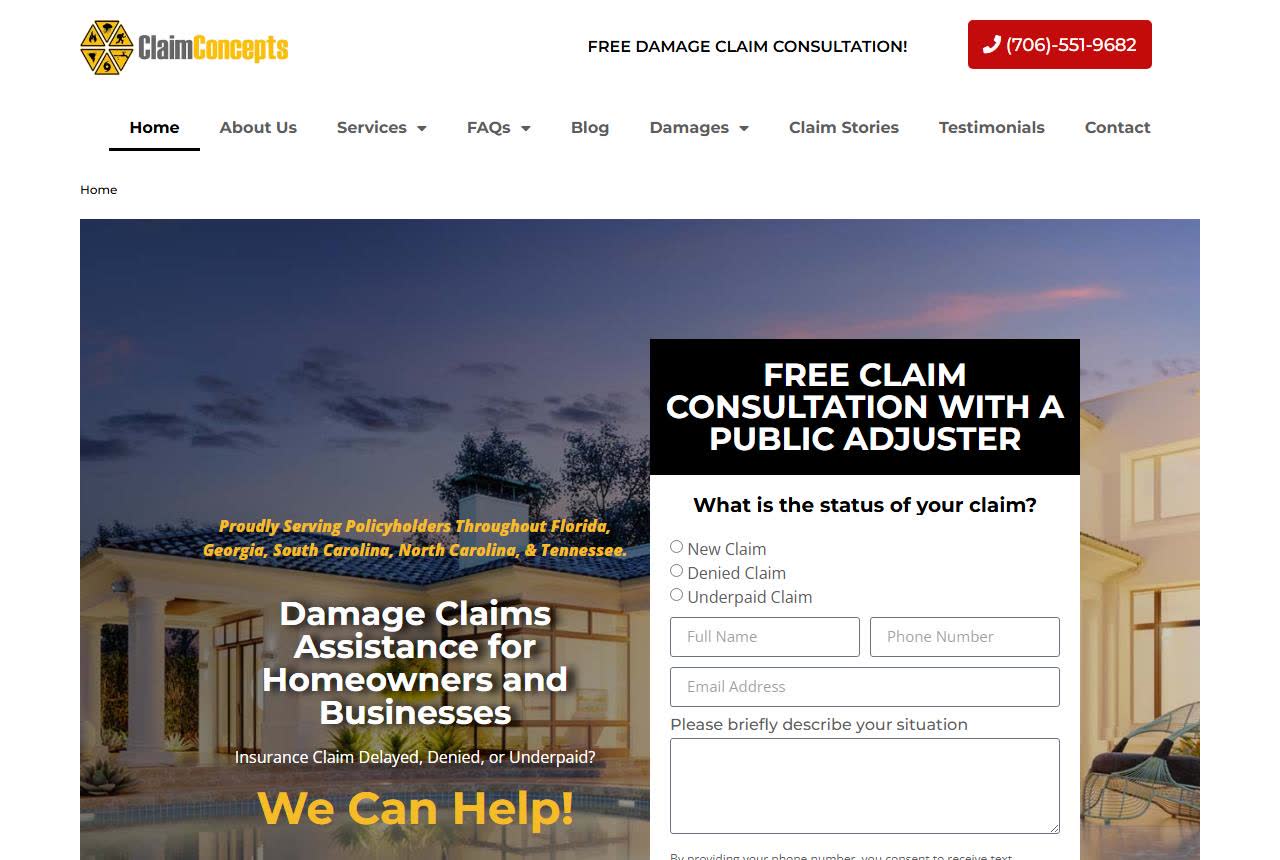
Why policyholders call Claim Concepts Public Adjusters
Claim Concepts was born out of a disaster. When founder Greg Roover watched his own family rebuild after the Northridge Earthquake with a public adjuster in their corner, he saw firsthand what it means to have a professional advocate fighting the insurance company. He founded the firm in 2006 and has spent roughly two decades turning that lesson into recoveries for policyholders.
This is a boutique, family-owned operation that says the quiet part out loud: they are not the firm that will sign up any and every claim that walks through the door. They accept legitimate claims, build detailed and defensible estimates, and back them up with real tools, FLIR thermal imaging, Matterport 3D cameras, and moisture meters that document damage carriers cannot wave away.
The experience runs deep on both sides of the table. Roover carries the Senior Professional Public Adjuster designation and a resume that includes ICC Certified Residential Building Inspector and NFIP Certified Flood Adjuster credentials. Veteran adjuster Morgan 'Eric' Thomas has worked insurance claims since 1989, once sitting on the carrier side as an independent and general adjuster, knowledge he now uses to pull apart lowball offers.
Licensed across Florida, Georgia, South Carolina, and beyond, Claim Concepts handles hurricane, fire, water, mold, smoke, hail, lightning, tornado, flood, and marine losses. Everything runs on contingency, no upfront cost, built on a single promise: We Work For You, Not the Insurance Company.
What a public adjuster does
A public adjuster is the only kind of adjuster licensed to work for you, the policyholder, not the insurance company. They document the loss, build a detailed scope and estimate, read the policy for coverage you may have missed, and negotiate the payout with the carrier, working on a percentage of what you recover.
A public adjuster is not a contractor and not an attorney: they cannot make repairs, file suit, or give legal advice. See what a public adjuster actually does and when to hire one.
The fee, in Florida & South Carolina
Florida caps a public adjuster's fee at 20% of the claim payment, dropping to 10% for claims from a declared state of emergency (Fla. Stat. § 626.854). The fee applies only to what the insurer pays; it may not be charged on your deductible.
South Carolina sets no statutory percentage cap; the fee is negotiated in the written contract, which must carry the disclosures required by S.C. Code Title 38, Chapter 48. Read the percentage and what it applies to before you sign.
Full fee guide → · Read your contract and the current statute.
Get the exact legal name and license (or NPN) number, then confirm an active public adjuster license in the state where your property sits. Do it on the official roster, never take the number on a business card at face value.
Florida Department of Financial Services licensee search →A public adjuster, or an attorney?
A public adjuster is the right call when the carrier agrees the loss is covered but the check is too low. When the carrier denies coverage outright, alleges misrepresentation, sits on the claim past the statutory deadlines, or acts in bad faith, that is legal territory a public adjuster cannot enter.
If your claim was denied rather than merely underpaid, start with a free attorney review; see public adjuster vs. attorney, why claims get denied, and the deadlines that protect your rights.
We believe in public adjusters, and we want the good ones to get found and get hired. HurricaneLaw.pro features Claim Concepts Public Adjusters to help policyholders connect with an experienced advocate. We are not affiliated with Claim Concepts Public Adjusters; this profile is compiled from the firm's own public website and materials, and our links to them are meant to send real business their way. Always confirm current licensing yourself on the state roster above before you hire anyone. A firm that would like its listing updated or removed can reach us through the contact page. Not legal advice; consult an attorney about your specific claim.
Denied, not just underpaid? Talk to an attorney first.
Send the denial letter and your declarations page. You'll get a straight read on whether this is a valuation fight for an adjuster or a coverage fight that needs a lawyer.

 HURRICANELAW.PRO
 A comprehensive property-insurance claim resource for policyholders: denied and underpaid claims, coverage and bad-faith law, storm dossiers, carrier profiles, city guides, and the complete claims playbook. Florida and South Carolina.
▸ SEE THE FULL SITE MAP →Coverage summaries, policy-language quotations, dollar figures, deadlines, and chart examples throughout this site are general information based on typical or standard policy forms and are illustrative only: they are not a quote, a guarantee of coverage, or a promise of any outcome. Every insurance policy is different: your own policy, endorsements, and state law control, so read your policy and confirm current statutes. Weather imagery courtesy of NOAA, the National Hurricane Center, and the National Weather Service. Legal services are provided by Halversen Law. Nothing on this site is legal advice; consult an attorney about your specific claim.
Legal matters are handled by Halversen Law, a law firm licensed in Florida and South Carolina.